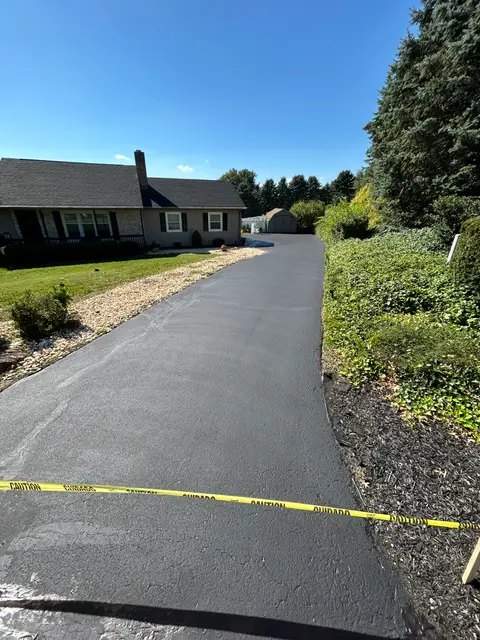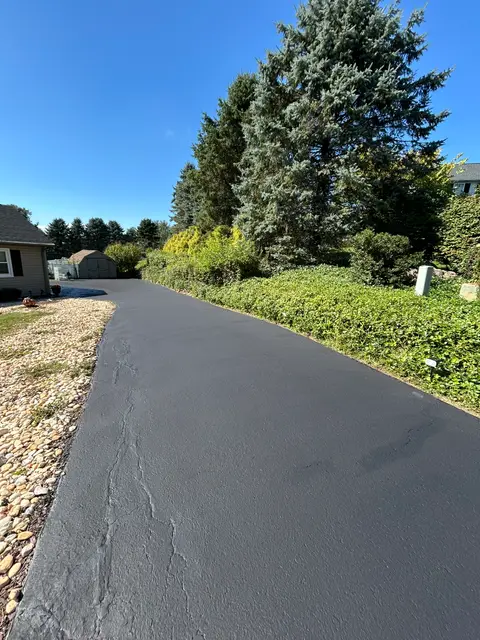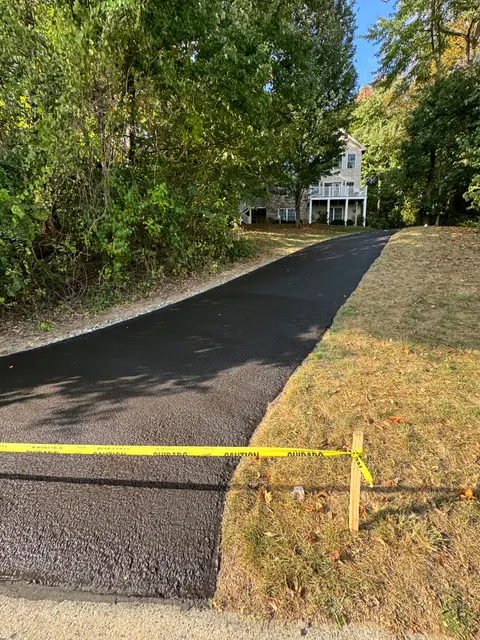
Most sealcoating and striping jobs go smoothly. When one does not, the reason is almost never the asphalt. It is a car that did not get moved, a sprinkler that came on at 2 a.m., a delivery truck that showed up in the middle of a wet lot, or a tenant who never heard the lot was closed. All of those are avoidable with a little preparation.
This is the checklist we wish every customer had before we arrive. It is split into what to do the week before, the day before, the morning of, and after we leave, with separate notes for homeowners and for businesses.
The week before
Confirm the date and the weather plan. Sealer and traffic paint both need a dry surface, temperatures above about 50 degrees, and no rain during the cure window. If rain is in the forecast, the job moves. We will call you, but it helps if you know the date is weather dependent and have a backup day in mind.
Walk the surface with us, or send photos. If anything has changed since the estimate, a new crack, a soft spot, an oil stain from a visiting car, tell us now. Small additions are easy to handle on the day if we know about them.
Think about access. We need to get a truck and equipment to the pavement. For a driveway, that means the street in front of your house should be clear. For a lot, we need the entrance open and a place to stage the truck.
Plan your parking. Whatever we are working on has to be empty of cars for the day, and for sealcoating, for the cure time afterward. Figure out where the cars will go.
For businesses: notify everyone who parks there. Tenants, employees, delivery drivers, cleaning crews, the trash hauler. A short email or a posted notice a week ahead saves a lot of trouble.
The day before
Move the cars. Every vehicle off the surface before we arrive. For driveways, that includes the cars in the garage if they will need to come out during the cure time. Once the sealer is on, the garage is closed off until it cures.
Turn off the sprinklers. Irrigation that comes on overnight will ruin fresh sealer and can streak fresh paint. Turn the system off the night before and leave it off until we tell you the surface is cured.
Clear the surface. Trash cans, basketball hoops, planters, children's toys, hoses, anything sitting on the asphalt needs to be moved. We will blow off dirt and leaves, but we cannot move your belongings.
Trim the edges. If grass has grown over the edge of the driveway or lot, trimming it back lets us seal to the true edge of the asphalt. We handle normal edge cleanup, but a badly overgrown edge takes time away from the job.
Check the trash schedule. If pickup falls on the day of the job, put the cans at the curb the night before and let us know so we can work around them.
For businesses: reschedule deliveries. A box truck pulling across a freshly sealed lot leaves tire marks that do not come out. Push deliveries to another day or route them to a part of the lot we are not working on.
The morning of
Be reachable. You do not have to be home or on site, but someone should be reachable by phone in case a question comes up.
Keep pets inside. Dogs and cats walk through sealer and then walk through your house. It does not come out of carpet.
Keep kids and bikes off. Fresh sealer looks dry long before it is. Children and bicycles are the most common cause of footprints and tire marks in a new coat.
Leave the garage as it will be for the next two days. If a car needs to come out, it needs to come out before we start.
Point out anything special. Decorative concrete, a new walkway, a fresh garage door, a drain you want kept clear. We protect edges carefully as a matter of course, but we would rather hear about your concern than guess.
While we are working
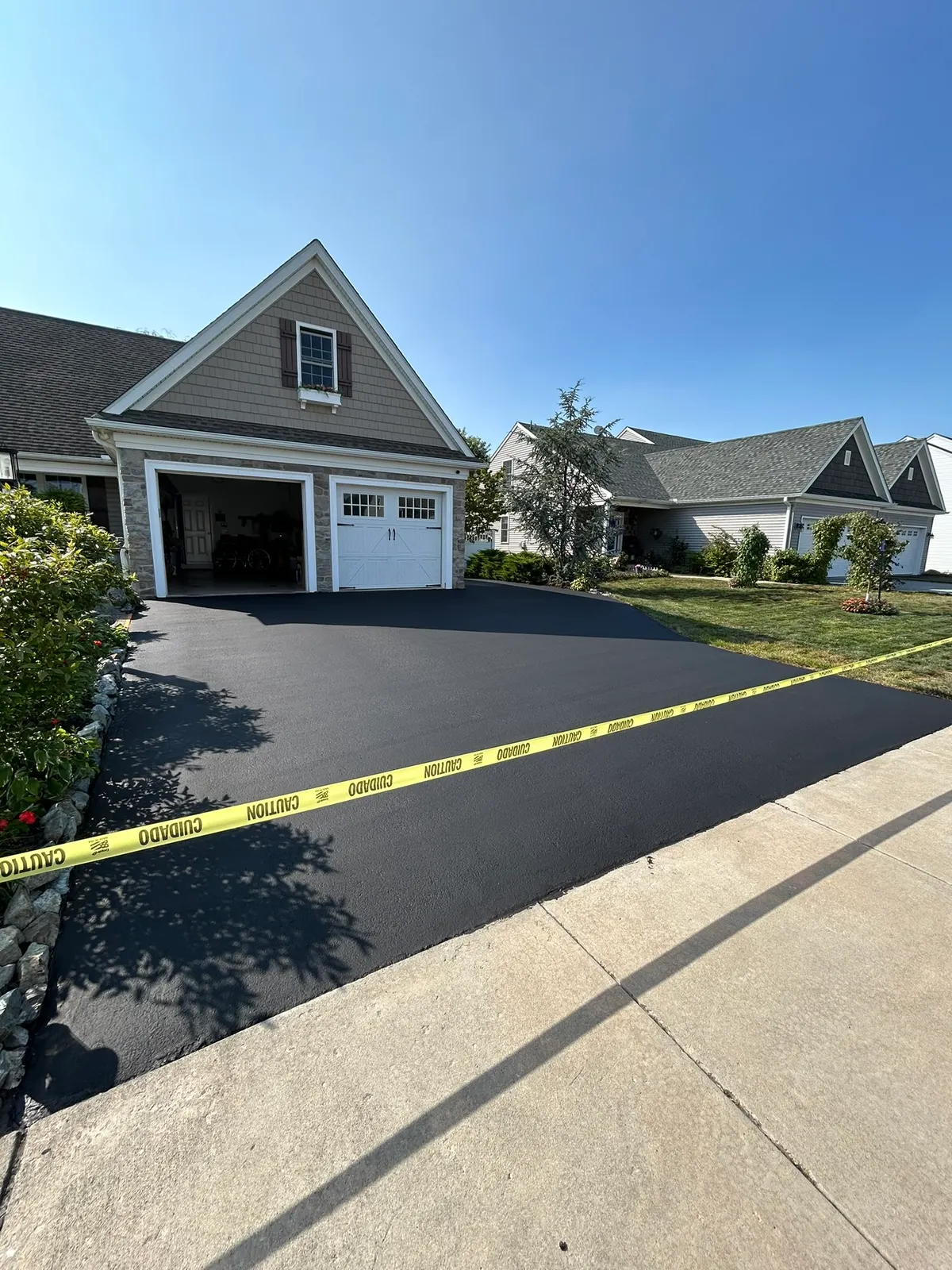
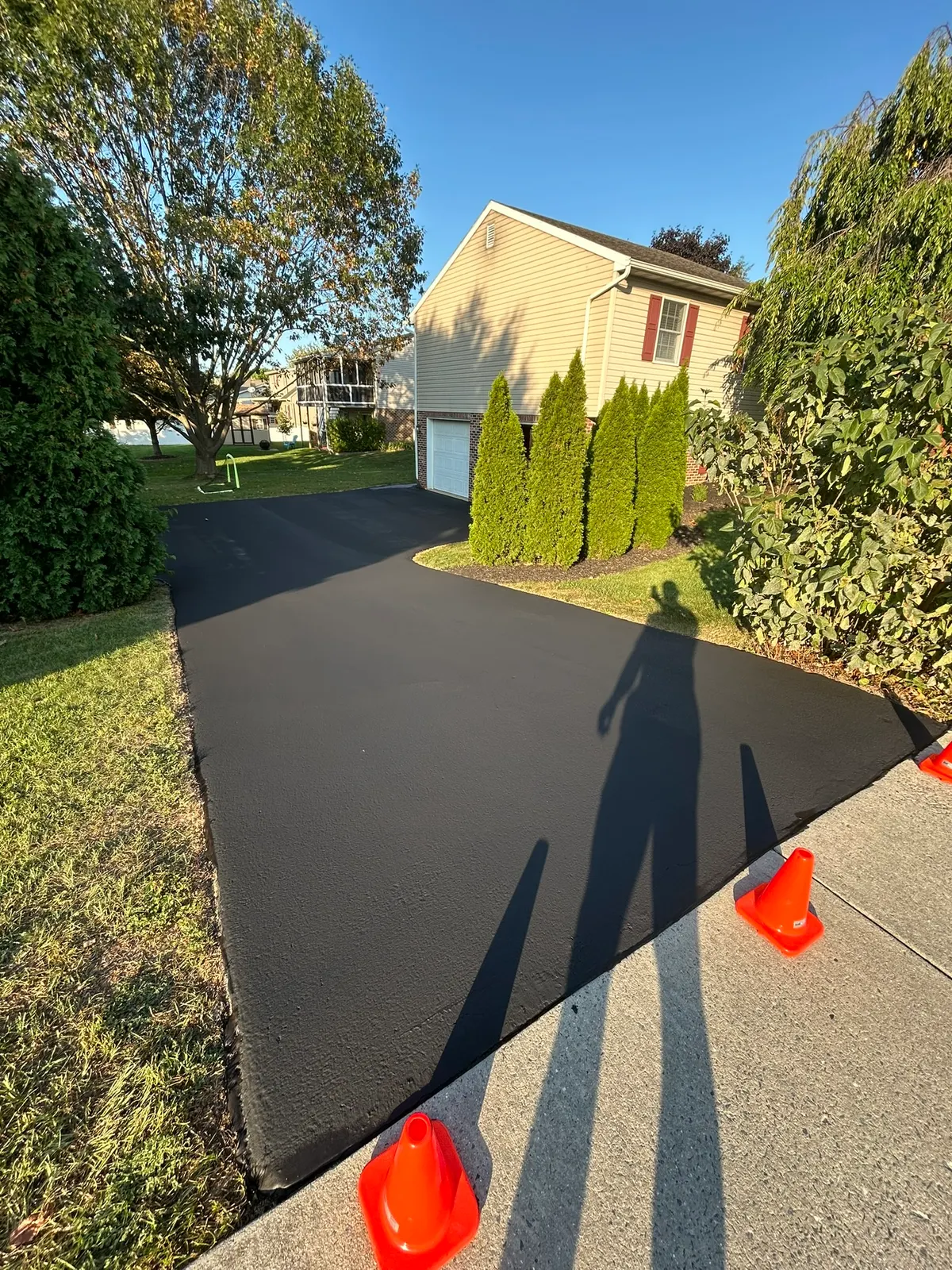
The best thing you can do during the job is stay off the surface. We will put up cones and tape, and we will tell you where you can and cannot walk.
If you need to leave the house during a driveway job, plan to park on the street. If you need to get something from the garage, get it before we start.
For businesses, keep an eye on the cones. Customers move them. If you see someone about to drive onto a wet section, a word from you is faster than one from us across the lot.
After we leave: sealcoating
Sealcoating has the longest cure time of anything we do.
- Walking: stay off completely for the first several hours. We give you a specific time.
- Driving: usually 24 to 48 hours, depending on temperature, humidity and shade. Shaded, cool or humid days push toward 48.
- Sprinklers: off until the surface is fully cured.
- Turning the wheel while parked: avoid it for the first couple of weeks. A tire pivoting on fresh sealer can scuff it.
- Trash cans and heavy objects: wait until the surface is fully cured before dragging anything across it.
- Leaves: if trees are dropping, blow leaves off the surface during the first day or two. Wet leaves on fresh sealer leave marks.
- Rain: a light rain after the first few hours generally will not hurt a properly applied coat. A downpour in the first hour can. That is why we watch the forecast and reschedule when it looks wrong.
After we leave: striping
Traffic paint is faster.
- Dry to the touch: usually within an hour in warm, dry weather.
- Light traffic: typically within a few hours. We will tell you when the cones can come down.
- Full cure: paint continues to harden for a day or two. Avoid turning tires on fresh lines where you can.
- Sealcoat first, then paint: if we sealcoated your lot, the lines go on after the sealer has cured, usually a day or two later. The lot is drivable in between.
For property managers: a one page plan
A lot with tenants needs a little more coordination. This is the plan that works.
- Pick the day and a backup day. Weather dependent, communicated to everyone.
- Notice to tenants and staff a week ahead, with the date, what will be closed, and where to park.
- Signs at the entrances the day before, so visitors see the plan before they pull in.
- Deliveries and trash pickup moved or routed away from the work area.
- Sections, not the whole lot. We work in phases so part of the lot stays open. Night or early morning work for retail.
- A contact on site or by phone during the job.
- Cones respected until we say otherwise.
- Re-striping scheduled after sealcoating cures.
For HOAs and shared driveways
Shared drives have the same needs with more people involved. The two things that matter most: every resident gets the notice, and every resident knows where to park during the cure. A clear message with the date, the hours and the alternate parking location avoids most of the friction.
What we take care of
You do not need to clean the surface, fill the cracks or prep anything beyond clearing it. We blow off dirt and debris, scrape edges, treat oil spots with primer, fill cracks where that is part of the job, cut in edges by hand, and clean up after ourselves. Cones and tape go up when we finish and come down when the surface is ready.
Frequently asked questions
Do I need to be home?
No, as long as we can reach you by phone and the surface is clear. For a driveway, we do like to walk the finished job with you at the end if you are around.
What if it rains after you leave?
Light rain after the first few hours generally does not affect a properly applied sealcoat. A heavy rain in the first hour can. We reschedule when the forecast is wrong, and if weather does damage a fresh coat, we come back.
Can I walk on the driveway to get the mail?
Not until the time we give you. Footprints in fresh sealer are permanent until the next coat.
How soon can I park my car in the garage again?
When the driveway is cured for driving, usually 24 to 48 hours.
What about my sprinklers?
Off the night before, and off until the surface is cured. This is the single most common cause of a ruined coat.
My lot has a dumpster in the work area. What happens?
Ask your hauler to pull it the day before, or we work around it and leave that footprint for the next time. Let us know in advance.
Ready to schedule?
A little preparation makes the job faster and the result better. Lancaster Lines & Asphalt seals, fills, patches and stripes across Lancaster County, and we walk you through all of this when we schedule. See our sealcoating page and parking lot striping page, or request a free quote.