How to Repair Cracks in an Asphalt Driveway (and When to Call a Pro)
October 3, 2026 · 7 min read


Seal the cracks
Water gets into small cracks, freezes, and turns them into potholes. We heat rubberized sealant to about 400 degrees and fill cracks the right way, so they stay filled through a Pennsylvania winter.
5.0 on GoogleFully insuredFree written estimates
Lancaster Lines & Asphalt
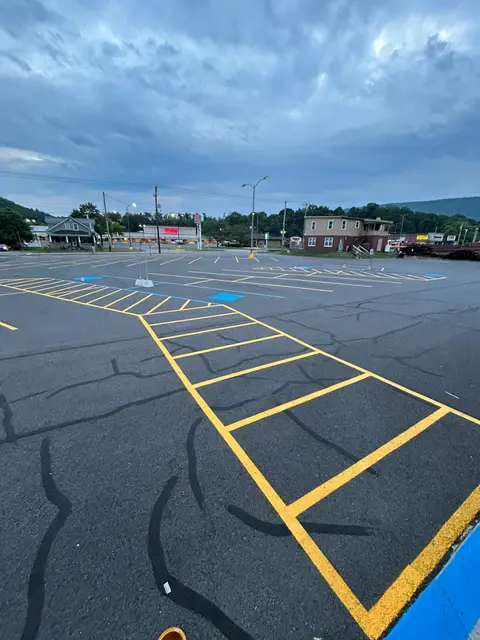
A crack in asphalt is not the problem. The water that gets in through the crack is. Once it is under the surface, it softens the base. When temperatures drop, it freezes and expands, pushing the pavement apart. When it thaws, it leaves a void. Repeat that a few dozen times in a Lancaster County winter and you have a pothole.
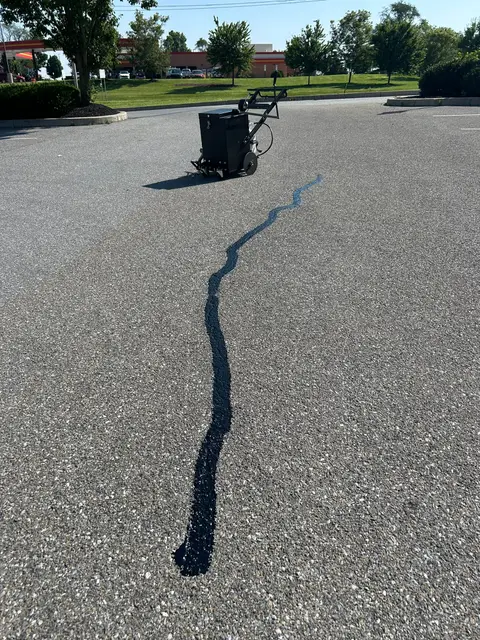
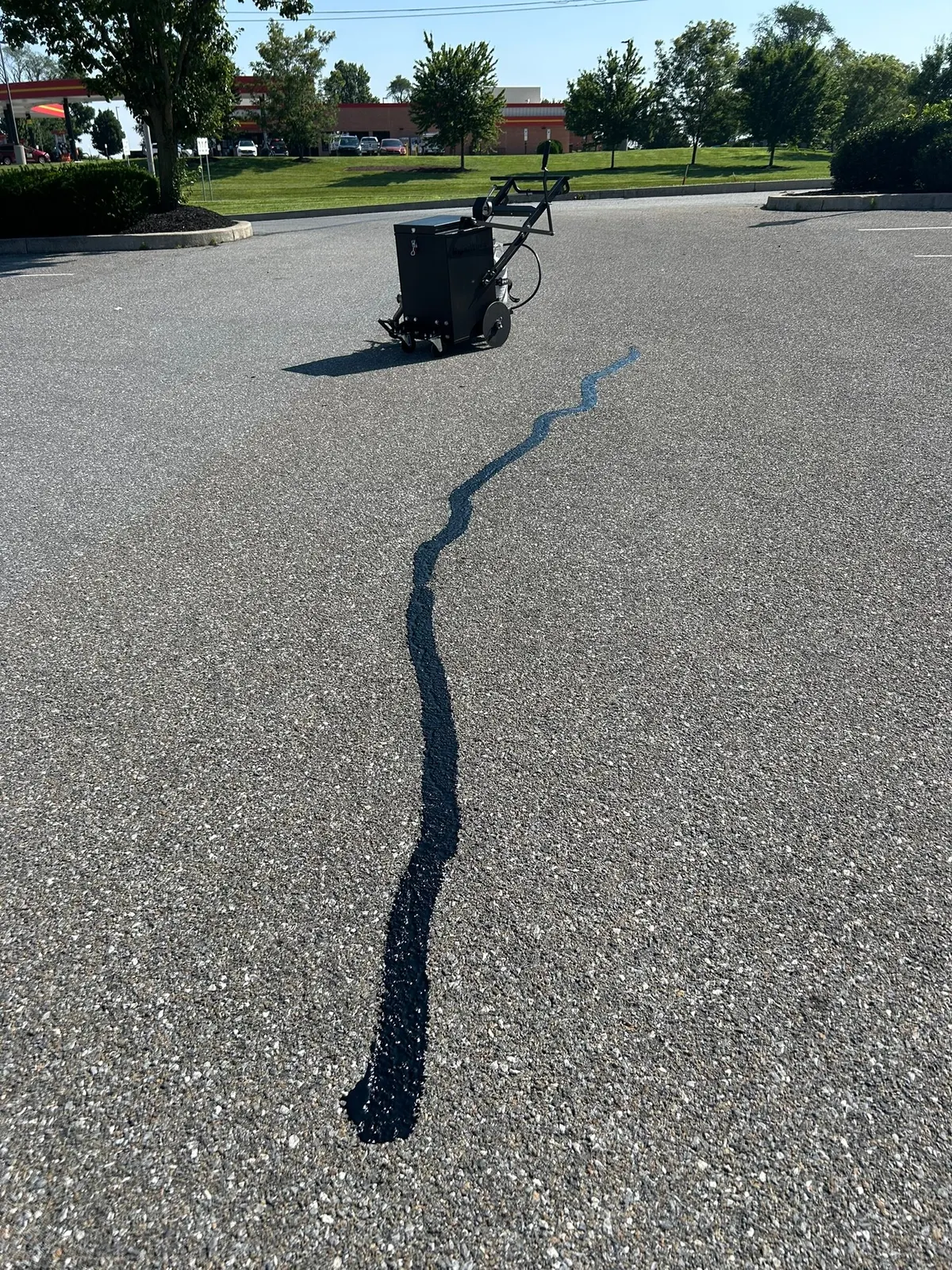
Hot pour crack sealing stops that cycle. We clean the crack, heat a rubberized sealant in a melter, and fill the crack from the bottom up. The rubber stays flexible, so it moves with the pavement as temperatures swing. That is what makes it different from the cold-pour bottle you buy at the hardware store.
Fall is the best season for crack filling in this area. Cracks are at their widest in cold weather, which means they take more material, and filling them before winter keeps water from doing damage. We also fill before sealcoating, because sealer by itself does not fill a crack.
What is included
We walk the pavement and decide which cracks need filling and which are structural and need other repair.
Dirt, debris and vegetation blown or scraped out so the rubber can bond.
Rubberized sealant heated to about 400 degrees F and applied from the bottom up.
Material squeegeed flush so it does not create a bump for cars or plows.
A short cure time, then you can drive on it.
We schedule crack filling and sealcoating together when it makes sense.
Check your property
How it goes
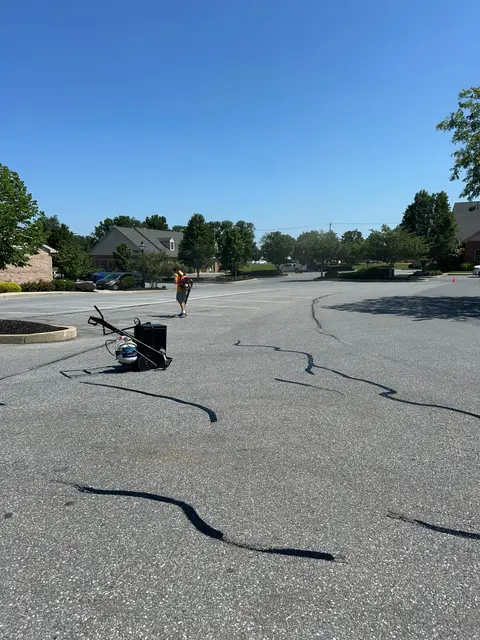
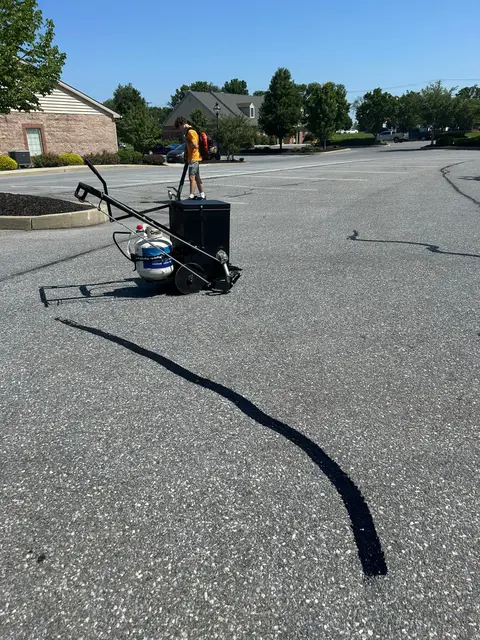
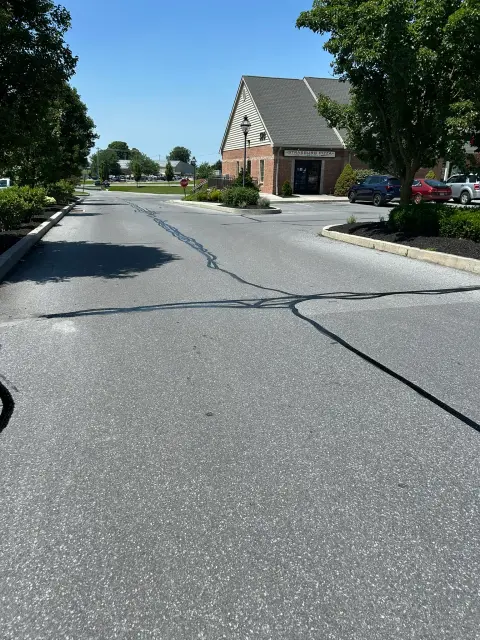
We map the cracks and decide what can be sealed.
Blow out debris and clear vegetation.
Heat the rubber and fill the cracks from the bottom up.
Squeegee flush and let it cure before traffic returns.
Lancaster Lines & Asphalt work
Questions for Lines & Asphalt
Keep going
 SealcoatingCommercial lot and residential sealcoating that protects asphalt from water, sun, salt and oil.
 Asphalt & Pothole RepairSquare-cut, base-checked, hot mix repairs that stay put, plus temporary patches in winter.
 Driveway Sealing & SealcoatingResidential driveway sealcoating with crack filling, hand-cut edges and two coats.
 Parking Lot MaintenanceA simple yearly plan: fill cracks, patch holes, sealcoat and re-stripe in the right order.
Free estimate from Lancaster Lines & Asphalt
Tell us what you see and where the property is. We call back within one business day, look at the job, and give you a written price.