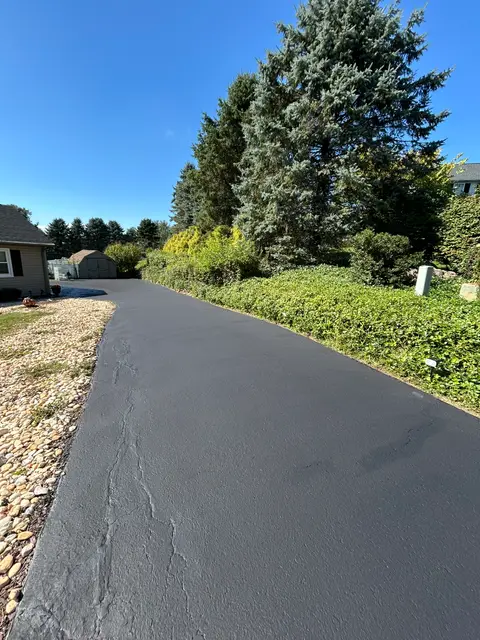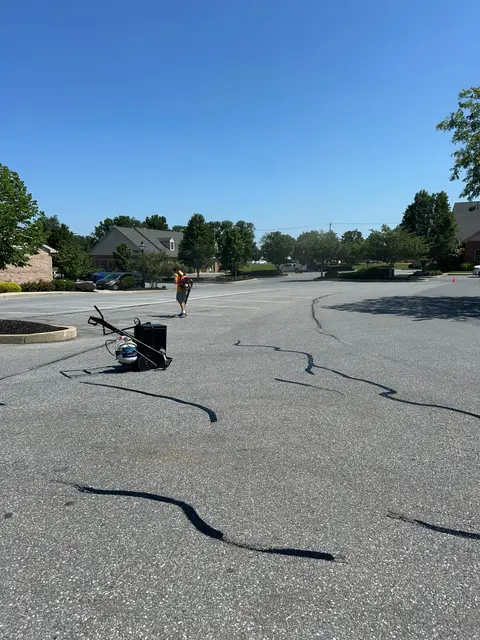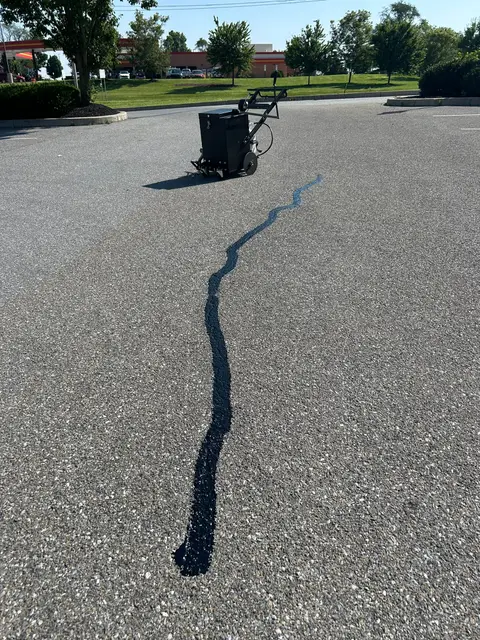
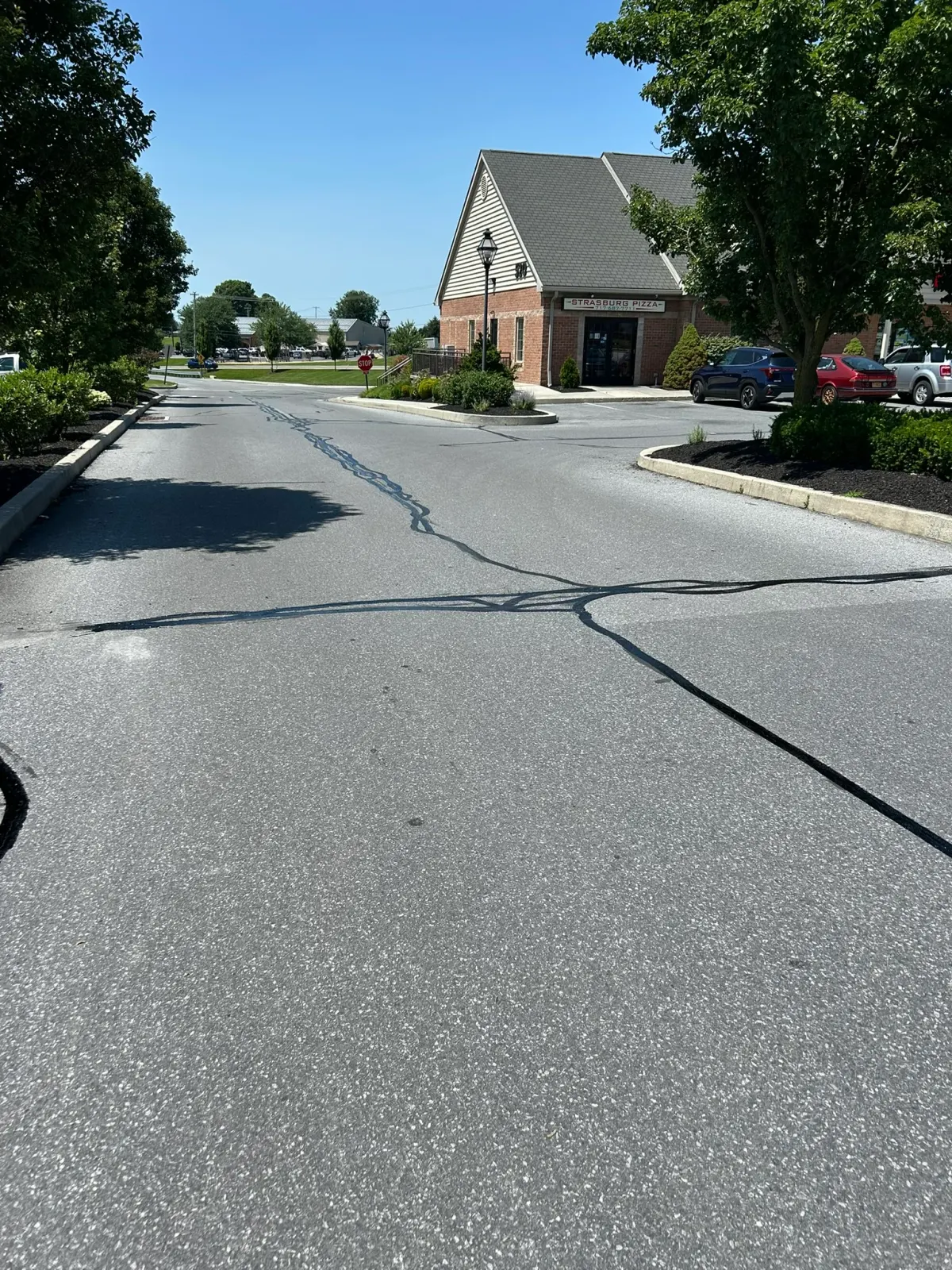
Let’s guess how you got here. You walked out to your driveway or parking lot, spotted a crack that definitely wasn’t there last year, and typed “crack filling cost” into your phone before your coffee got cold. Smart move. Because that crack is not decoration, it’s a straw, and your asphalt is drinking rainwater through it every time it storms.
Here’s the honest answer up front: most residential crack filling jobs in Lancaster County land between $400 and $800. Bigger commercial lots run more, tiny jobs still hit our $400 minimum, and there are a few things that can push the number up or down. This post breaks down all of it, how pricing works, what makes it move, when crack filling is the wrong tool entirely, and how to get more value out of the same visit. No fluff, no “call for pricing” runaround.
How Crack Filling Is Actually Priced: Per Foot vs. Per Job
There are two ways contractors quote crack filling, and it helps to know both so nobody can play games with you.
- Per linear foot. The contractor measures the total length of cracks and multiplies. In our area, hot pour crack sealing typically runs $1 to $3 per linear foot depending on crack width, depth, and how much prep the pavement needs. A driveway with 150 feet of cracking might land around $400 to $500.
- Per job (flat rate). For most residential work, we walk the property, measure, and give you one number. Same math underneath, you just don’t have to do it. This is the typical range; the exact quote is free and takes about a day.
Either way, ask what’s included. A real quote covers cleaning the cracks (more on why that matters below), the material itself, and the labor. If a quote seems suspiciously cheap, something on that list got skipped, and it’s usually the cleaning, which is the part that makes the repair last.
Why There’s a $400 Minimum (It’s Not Greed, It’s Physics and Diesel)
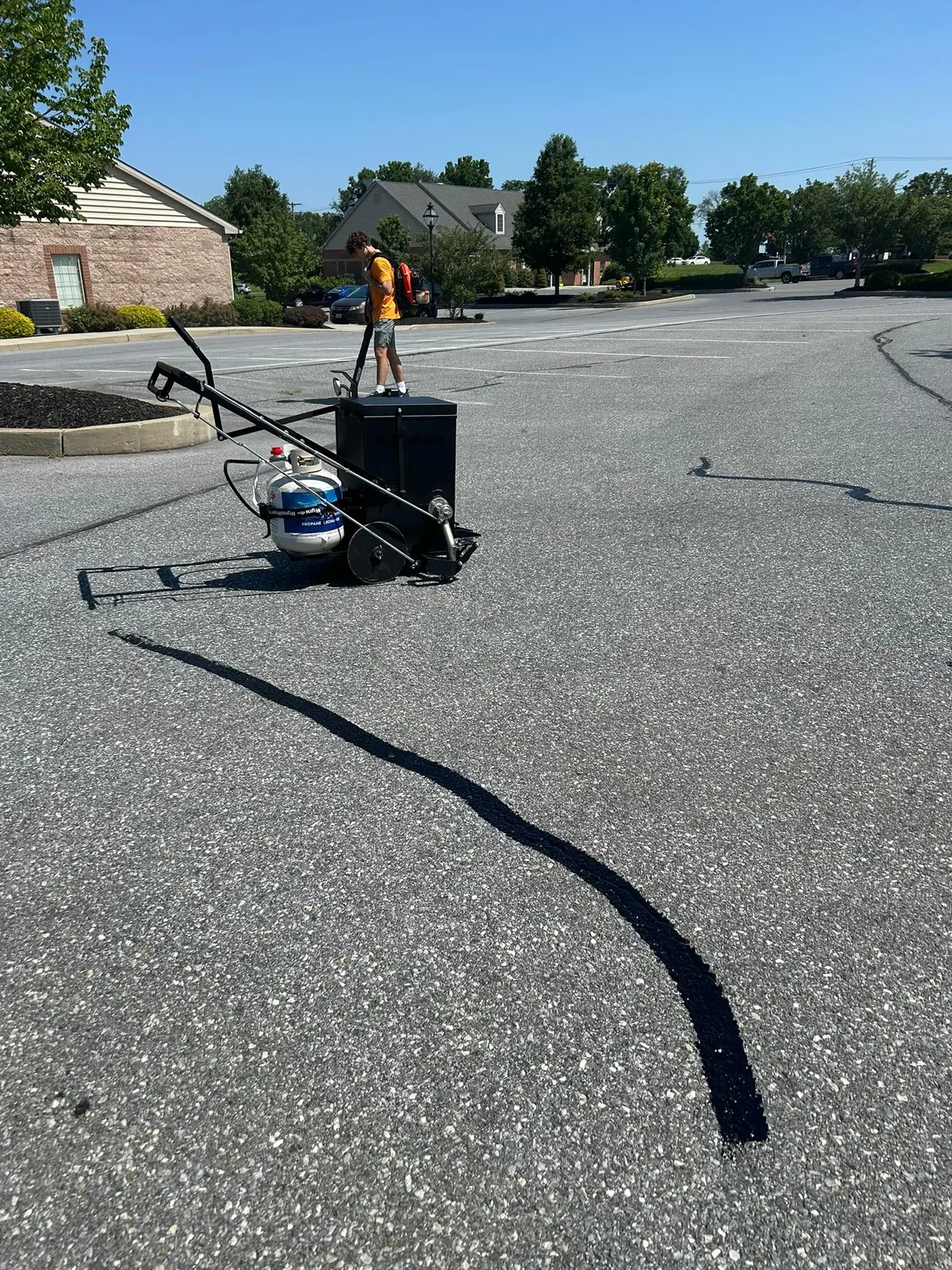
Our minimum service call is $400, and here’s the honest reason. Hot pour crack sealing uses rubberized sealant that has to be heated to roughly 400°F in a purpose-built melter before it can go anywhere near your pavement. That machine takes time to fire up, material to load, and a trailer to haul. Whether we fill 40 feet of cracks or 400 feet, the setup cost is nearly identical.
So if you have one lonely 10-foot crack, the smart play is usually to bundle it with something else, sealcoating is the classic pairing, and we’ll get to why in a minute. Or wait until you have a few more feet of cracking to justify the visit. We’d rather tell you that than take your money for a job that doesn’t make sense.
The 5 Factors That Move Your Price Up or Down
1. Total linear footage. The big one. More feet of crack means more material and more time. The good news: the price per foot usually drops as footage climbs, because that setup cost gets spread across more work.
2. Crack width and depth. A hairline crack sips material. A gaping inch-wide canyon gulps it. Cracks wider than about an inch may need backer rod or patching material first, which adds cost. Cracks narrower than a quarter inch often can’t accept sealant properly at all, sometimes the honest answer is “not yet.”
3. How dirty the cracks are. Every crack gets blown out with compressed air, and vegetation gets routed out before any sealant goes in. A crack full of dirt, weeds, and last October’s leaves takes longer to prep. Skip the prep and the sealant bonds to the dirt instead of the asphalt, then peels out by spring like a bad sticker. Cleaning isn’t an upsell; it’s the whole ballgame.
4. Access and layout. A wide-open commercial lot in New Holland is faster to work than a narrow driveway with cars, landscaping, and a basketball hoop to work around.
5. Whether you bundle services. Crack filling plus sealcoating in one visit is cheaper than two separate appointments, because the mobilization cost, truck, crew, setup, only happens once.
When Crack Filling Is the WRONG Answer (We’ll Tell You)
Here’s where we lose some sales on purpose. Crack filling works on linear cracks, the long, single cracks that run across your pavement like a river on a map. It does not fix alligator cracking, which is that spiderweb pattern of interconnected cracks that looks like, well, an alligator’s back.
Alligator cracking means the problem is underneath the asphalt, the base layer has failed. Pouring sealant into a spiderweb is like putting a fresh bandage on a broken arm: technically you did something, but the arm is still broken. That area needs to be cut out and patched, or if it covers most of the surface, you’re looking at an overlay. Our post on pothole repair vs. full repaving walks through that decision in detail.
If a contractor quotes you crack filling over alligatored asphalt without mentioning any of this, get a second opinion. You’d be paying for a repair with a lifespan measured in months. The Federal Highway Administration draws the same line in its pavement preservation guidance: sealing is for working cracks, not structural failure.
The Combo Move: Crack Filling + Sealcoating
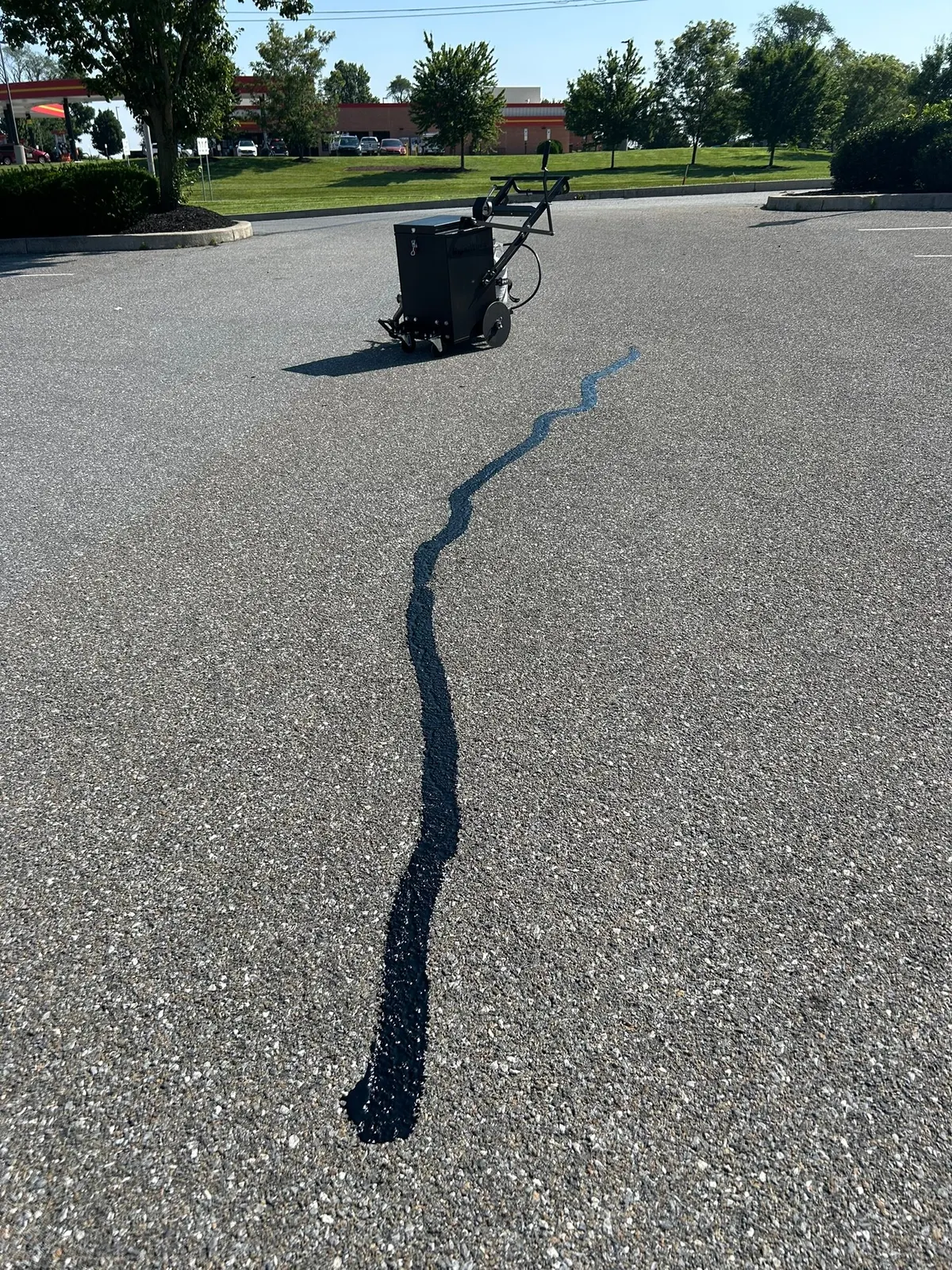
If your asphalt is old enough to crack, it’s old enough to be oxidizing too, that’s the graying, rough surface that shows up around year three or four. The smartest maintenance dollar in Lancaster County is spent on both problems in one visit: hot pour the cracks first, then sealcoat the whole surface over top.
Why this order matters: sealcoat alone will not fill a crack. It’s a surface treatment, a few mils thick. Pour it over an open crack and you’ve painted the problem, not fixed it. But crack fill plus sealcoat seals the wound and protects the skin around it. A typical driveway combo lands in the $400–$700 sealcoating range plus crack footage, and you save real money versus booking them separately. If you’re new to sealcoating, our explainer on what sealcoating is and why it matters covers the basics.
What You’re Actually Paying For (The Process)
Watch a crew do this right and the price makes sense. Here’s what a proper hot pour job looks like, and this video shows the real thing:
- Clean and clear. Compressed air blows every crack free of dirt, moisture, and vegetation. Dirty crack = failed seal. Non-negotiable.
- Heat the material. Rubberized sealant melts to around 400°F, hot enough to flow like syrup and bond to the crack walls.
- Fill from the bottom up. The wand pushes sealant deep into the crack, not just across the top. This is what the cheap methods skip.
- Strike off and cure. The surface gets leveled, and the sealant is ready for traffic within a few hours, often less.
That flexible rubber then stretches and compresses with your pavement through Lancaster County’s dozens of freeze-thaw cycles each winter. That flexibility is the entire reason hot pour outlasts anything from a squeeze bottle. The Asphalt Institute classifies crack sealing as one of the highest-return preventive treatments in pavement maintenance, cheap insurance against expensive failure.
The Cost of Waiting (Spoiler: It’s Bigger)
Here’s the math that makes crack filling the best deal in asphalt. Water gets into an open crack, soaks into the stone base underneath, and freezes. Water expands about 9% when it freezes, every single time. One winter here delivers dozens of freeze-thaw cycles, each one jacking the crack wider and shoving the base apart grain by grain.
The progression is predictable: a $2-per-foot crack this fall becomes a pothole by April, and pothole repair starts in the hundreds per patch. Let it keep going and you’re pricing an overlay in the thousands. Homeowners in Quarryville and across the county call us every spring wishing they’d made the call in September. Filling cracks is the cheapest thing we do, and it prevents the most expensive things we do.
Crack Filling Cost FAQ
How much does crack filling cost in Lancaster County?
Most residential jobs run $400 to $800, with hot pour sealing typically $1–$3 per linear foot. Our minimum service call is $400. Commercial lots are quoted by total footage, and the per-foot rate drops as the job gets bigger. Exact quotes are free, typical ranges above, real numbers after we measure.
How long does hot pour crack filler last?
Done right, clean cracks, proper temperature, filled from the bottom up, expect 3 to 5 years or more from hot pour rubberized sealant. Cheap cold pour products from a bottle often fail within one or two winters because they dry rigid and crack instead of flexing.
Can cracks be filled in winter?
Sometimes, but it’s not ideal. Hot pour sealant can technically be applied in cooler weather than sealcoating, but the cracks must be completely dry, and winter in Lancaster County rarely cooperates. Fall is the sweet spot: cracks are at a moderate width, surfaces are dry, and the seal is in place before the freeze-thaw season starts.
Can’t I just use crack filler from the hardware store?
You can, and for one small crack it beats doing nothing. But the squeeze-bottle stuff is cold pour: it sits on top of the crack, dries hard, and pops out when the pavement moves. Hot pour rubber at 400°F bonds to the crack walls and flexes with every freeze and thaw. It’s the difference between a product designed for a shelf and one designed for a Pennsylvania winter.
Is crack filling worth it on an older driveway?
Usually yes, if the cracking is linear. If your driveway is mostly alligator cracking or crumbling at the edges, we’ll tell you honestly that filler is a Band-Aid and quote you the repair that actually fits. Sometimes that’s patching, sometimes an overlay. An honest assessment costs nothing.
Get a Real Number for Your Property
Ranges are nice; your actual quote is better. Lancaster Lines & Asphalt handles crack filling across Lancaster County, driveways, parking lots, and everything between. We’ll measure, give you a straight number, and tell you honestly if crack filling isn’t the right fix. Request your free quote online or call 717-808-1600. Those cracks aren’t going to drink less water on their own.