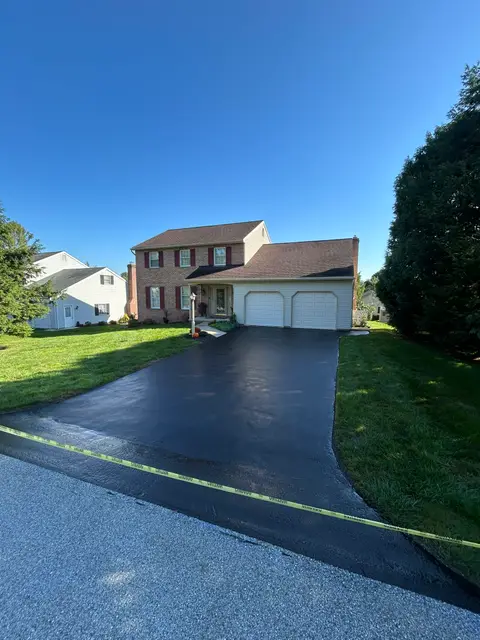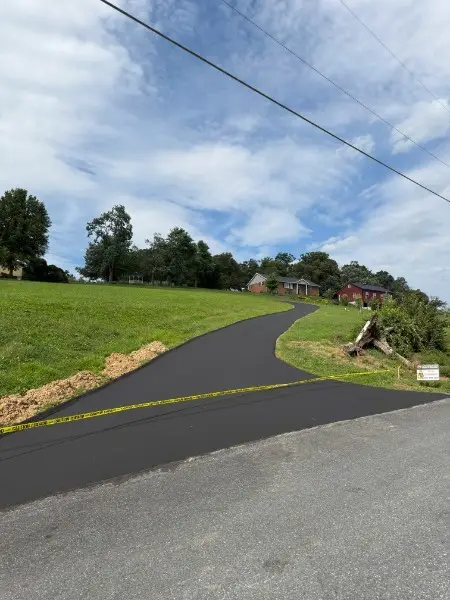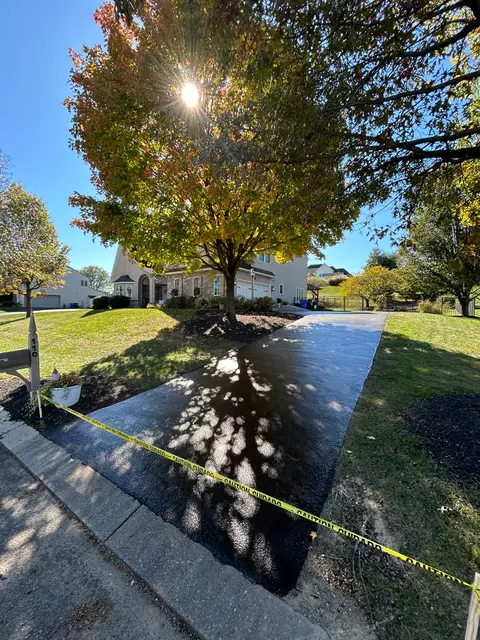
If you have ever seen a crew spraying black liquid across a parking lot or driveway, you have seen sealcoating. To most people it looks like paint for pavement. That is close, but it undersells what the product is and what it is for. This guide explains what sealcoating is made of, what it does for asphalt, what it cannot do, and how to tell whether your pavement needs it.
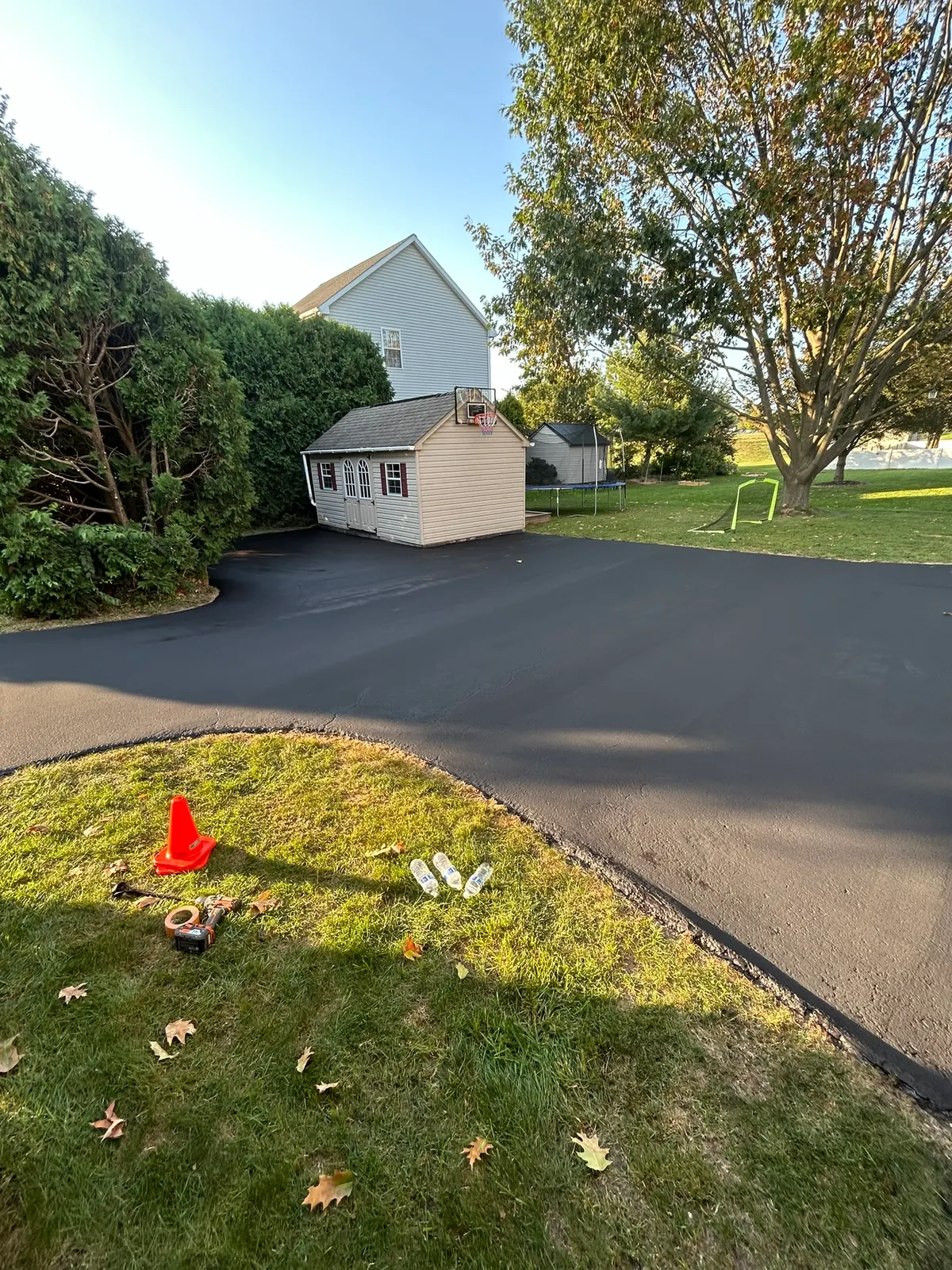
What sealcoating is
Sealcoating is a thin protective layer applied to the top of an asphalt surface. The layer is a liquid that is sprayed or squeegeed on, dries into a black, flexible film, and bonds to the pavement below. It is usually only a few hundredths of an inch thick, which is the point. It is a surface treatment and not a repair.
The comparison we use is sunscreen or a coat of varnish. It protects what is underneath from the things that wear it out, and it needs to be renewed every few years.
What is in it
Sealer is not just black paint. A professional sealcoat typically includes:
- A binder. In our case, a water-based asphalt emulsion. This is what makes the film stick and gives it flexibility.
- Fillers. Fine mineral fillers add body and help the sealer fill tiny pores in the surface.
- Sand. Silica sand is added for traction, so that the finished surface is not slippery when wet.
- Additives. Small amounts of polymers or other additives help the film cure evenly and resist scuffing.
There are different types of sealer on the market. Asphalt emulsion and acrylic products are common, and some products are made with refined coal tar. Coal tar sealers have been restricted in a number of states and cities because of environmental concerns. If you are getting quotes, it is fair to ask what is in the product and what the manufacturer's mixing instructions are. A professional crew should be able to tell you right away.
What it does for the pavement
It slows oxidation
The sun dries out the binder in asphalt over time. That is what turns a driveway from black to gray and eventually makes it brittle. Sealer sits on top and takes the ultraviolet exposure instead.
It keeps water out
Asphalt is more porous than it looks. Rain and melting snow seep into the surface. In Pennsylvania, that water freezes and thaws dozens of times each winter, and every cycle pushes the pavement apart a little. Sealer closes the surface pores so less water gets in. We explain how this plays out in why driveways get potholes every spring.
It resists oil, fuel and salt
Petroleum products soften asphalt. Sealer is much more resistant, so drips and spills stay on top rather than soaking in. Salt tracked in over the winter does less damage when it cannot get into the surface.
It restores the appearance
A fresh sealcoat gives pavement a deep black color that sets off paint lines and the rest of the property. For a business, that is part of the first impression. For a homeowner, it is curb appeal.
What it does not do
This is where a lot of misunderstanding comes from, so it is worth being plain about it.
- It does not fill cracks. A crack that is wide enough to catch a fingernail needs hot rubber crack filler. Sealer over an open crack just covers the problem for a few weeks. Read more on how hot pour crack filling works.
- It does not fix potholes or soft spots. Those need a proper repair, which we describe in how we fix potholes.
- It does not add structural strength. Sealer is a protective layer. If the base underneath is weak, sealing does not change that.
- It does not make bad asphalt good. On a surface that is already crumbling, sealing is a waste of money.
- It is not permanent. It wears away with traffic, sun and weather, which is why it gets renewed.
How it is applied
The method matters more than the product. A proper job goes like this:
- Inspection. We look at the surface to decide whether sealing is the right choice at all.
- Cleaning. The surface is blown off, weeds are scraped out of edges, and oil spots are treated with primer.
- Crack filling. Cracks that need it are filled with hot rubber before sealing.
- Edge work. The perimeter is cut in by hand with a brush so that sealer stays where it belongs.
- Two coats. Sealer is applied in two even coats, not one thick one. Thin coats cure properly and last longer.
- Cure. The surface stays closed to traffic for 24 to 48 hours depending on weather.
The full version is in what actually happens when we sealcoat your driveway.
When to do it
Timing depends on the pavement and the weather.
Age of the asphalt. New asphalt needs six to twelve months to cure before it is sealed. After that, the first seal usually goes on in the second year, and the pavement is resealed every three to four years.
Season. Sealer needs a dry surface and temperatures above roughly 50 degrees, with no rain during the cure. In Lancaster County, that means late spring through early fall. We go into more detail in the best time to sealcoat in Pennsylvania.
Condition. The best time to seal is while the pavement is still solid. If you wait until it is cracked and crumbling, you have missed the window and repair becomes the better option.
Driveways and commercial lots
The principles are the same for both, but the details differ.
Driveways are small, so the main concerns are the edges, cracks and oil spots. A driveway job is usually a one-day project, and the cure window is the main inconvenience.
Commercial lots are bigger and busier. Sealing a lot is usually coordinated with crack filling and striping, and it is scheduled around business hours, often in sections so that part of the lot stays open. After sealing, the lines are repainted. We cover that order of work on our parking lot maintenance page.
How long it lasts
Plan on three to four years for a typical driveway and two to three years for a busy commercial lot. Wear shows up first where tires turn, in the wheel paths, and at entrances. When the black starts to look gray and thin in those spots, it is time to plan the next coat.
What it costs
Most residential driveways in Lancaster County run $400 to $700 to seal, with a $400 minimum job. Commercial lots are priced by square footage after a site visit. Crack filling and repairs are priced separately. For the full breakdown, see how much sealcoating costs in Lancaster, PA.
Questions to ask any contractor
You can learn a lot about a sealcoating crew from a few questions.
- What product do you use? You should get a straight answer, and the name of a manufacturer or a type, not a vague reply.
- How many coats? Two thin coats are better than one thick one.
- What prep do you do? Cleaning, edge work, oil spot priming and crack filling should all be part of the answer.
- What temperature and weather do you need? A crew that says it can seal in any weather is not being careful.
- How long until I can drive on it? The answer should be a range, usually 24 to 48 hours, and the crew should leave cones or tape.
- Are you insured? Ask for proof, especially for a commercial property.
- Can I see a written price? It should state the area, the number of coats and anything excluded.
Common mistakes to avoid
- Choosing the cheapest quote. A very low price usually means thin sealer, one coat, or skipped prep.
- Sealing too soon. Fresh asphalt needs time to cure first.
- Sealing over open cracks. The cracks come right back through.
- Sealing too often. Extra coats build up and flake off.
- Driving on it too early. Give it the full cure time.
We wrote about more of these in 7 sealcoating myths Lancaster homeowners still believe.
Frequently asked questions
Is sealcoating worth it?
For pavement that is still in good shape, yes. It costs a small fraction of what repaving costs and it extends the life of the surface. For pavement that is already failing, no.
Does sealcoating make a driveway slippery?
A good sealcoat includes sand for traction, and the finished surface has a textured finish. A fresh coat can be slick when it is very wet or has not fully cured, so give it time.
Will sealer smell or stain?
Water-based sealer has a mild smell while it cures. Fresh sealer can stain concrete, siding or shoes before it dries, which is why edge work matters and why you should stay off it until it is cured.
Can I seal in the fall?
Yes, as long as temperatures are above about 50 degrees and the surface is dry with no rain in the forecast. Fall is also the best time to fill cracks.
How do I know if my driveway needs it?
Look at the color and the surface. If it is gray, rough and showing loose stones, and the surface is still solid, it is probably time. If you are not sure, send us a few photos.
Get a straight answer
If you are in Lancaster County and want someone to look at your pavement, we are happy to help. We will tell you whether sealcoating makes sense, whether cracks need to be filled first, and what it will cost. See our sealcoating page or request a free quote.