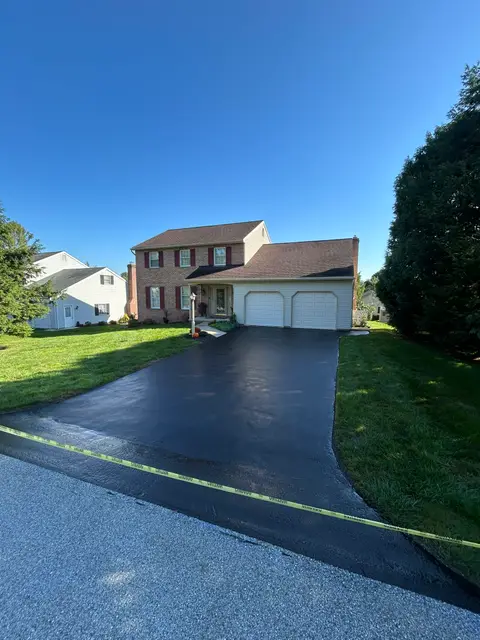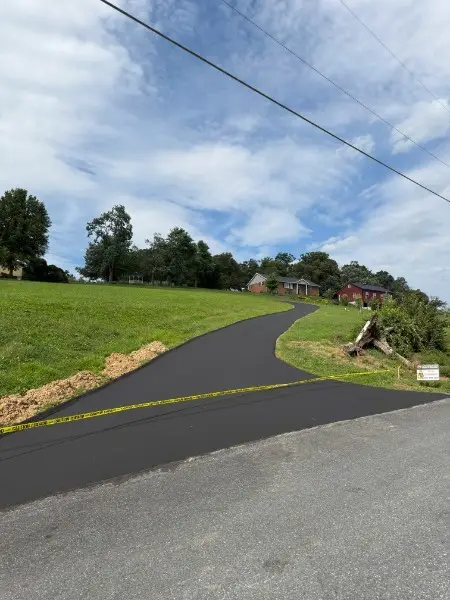
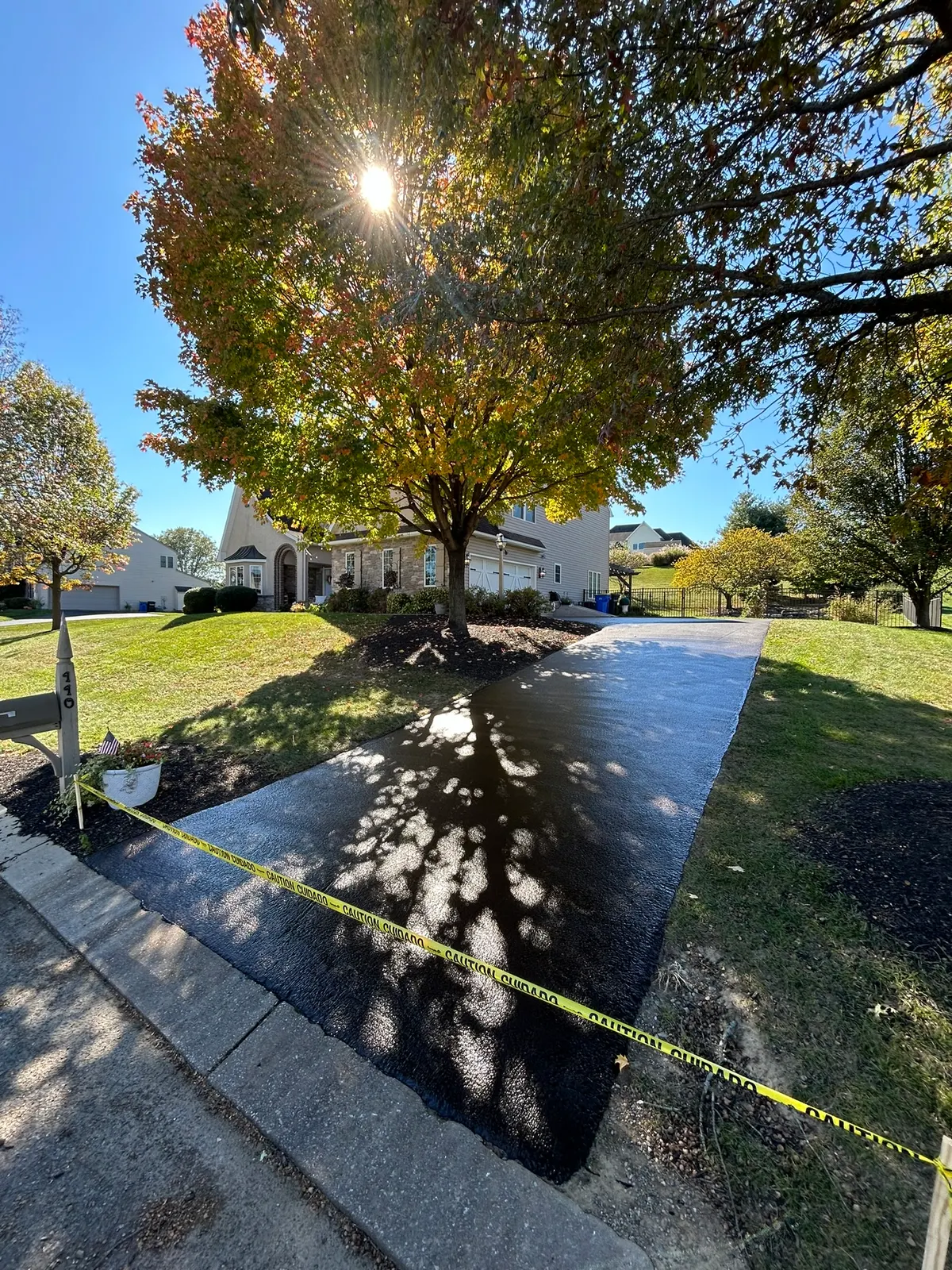
It’s a gorgeous 55-degree Saturday in early April, and you’re staring at your gray, tired driveway thinking: today’s the day. You call a sealcoating company, and instead of taking your money, the owner says, “Let’s wait a few weeks.”
Wait, a contractor turning down work? What’s the catch?
No catch. Just chemistry. I’m Ruvim, owner of Lancaster Lines & Asphalt, and the timing of a sealcoat job matters almost as much as the workmanship. Sealed at the right time, your driveway gets 3–4 years of protection. Sealed at the wrong time, you get a streaky film that fails by spring, and someone still cashes the check. Here’s exactly when to sealcoat in Pennsylvania, when not to, and why we’ll sometimes tell you no.
Why Timing Matters: What Sealer Needs to Cure
Water-based sealer cures by evaporation, the water leaves, the asphalt emulsion stays and hardens into a protective film. For that to happen properly, it needs three things:
- Warmth. Surface and air temperatures above roughly 50°F, and staying there overnight, not just at 2 PM.
- Dryness. A dry surface going on and no rain during the 24–48 hour curing window.
- Reasonable humidity. Muggy air slows evaporation; the sealer sits soft longer and stays vulnerable longer.
Miss any of the three and the film cures weak, thin, or not at all. Material standards from groups like the Asphalt Institute all assume proper application conditions, the best sealer in the world can’t outrun a 40-degree night.
The Pennsylvania Sealcoating Window
In Lancaster County, the practical season runs from mid-May through early October, give or take a couple of weeks depending on the year. Inside that window, here’s how the months stack up:
- Mid-May–June: Excellent. Warm days, mild nights, and the driveway gets a full season of protection before its first winter.
- July–August: Good, with caveats. Heat speeds curing, but extreme heat and humidity need technique adjustments (more on that below).
- September–early October: Very good. Warm surfaces, lower humidity, and you’re sealed right before salt season starts.
- Late October onward: Coin-flip territory. Some years cooperate. Most don’t.
Spring vs. Fall: Which Is Actually Better?
The Case for Late Spring
Sealing in May or June means your driveway wears its new armor through the whole summer and goes into winter at full strength. It’s also the right moment to fix whatever the previous winter broke, our spring asphalt checklist walks through the post-winter damage inspection we recommend before any sealing happens.
The catch: early spring specifically is a trap. April in Pennsylvania looks warm on the news and drops to 38°F at night. The surface holds winter moisture, rain is frequent, and sealer applied in those conditions cures badly. That’s why we say late spring.
The Case for Early Fall
September might be the quiet champion. The pavement is warm from months of summer, humidity drops, rain patterns settle, and the fresh sealcoat goes into its first winter at maximum strength, right before PennDOT starts brining the roads and your tires start carrying that salt home. Salt plus freeze-thaw is exactly the one-two punch sealcoat exists to block, so timing the application just before salt season is smart sequencing.
The catch: everyone else figures this out too, so fall calendars fill up. If you want a September slot, don’t call in September.
The Verdict
Both work. Late spring gives the coating a summer to shine; early fall gives it fresh armor for winter. What matters far more than the month is the week, specifically, the temperatures and the forecast for your actual job date.
Summer Heat and Humidity: The Fine Print
July and August work fine, most of our season lives there, but hot weather has its own rules. On a 95-degree day, blacktop surface temperatures can pass 130°F, and sealer hitting a surface that hot can flash-dry on contact instead of bonding into the pores. So on heat-wave days we start early, sometimes mist the surface to knock the temperature down, and watch coat thickness carefully.
Humidity is the opposite problem: a thick, muggy Lancaster County afternoon slows evaporation, stretching cure times toward the 48-hour end of the range. Neither is a reason to skip summer, they’re reasons to hire someone who adjusts for them instead of spraying on autopilot. Here’s what a well-run job looks like in motion:
When We’ll Tell You No
Here’s the section the title promised. There are jobs we turn down, and the reasons are worth knowing because they’re the same reasons other contractors should turn them down.
“Can you squeeze us in this November?”
Almost always no. By November, Lancaster County nights sit well below 50°F, and sealer applied over cold nights cures weak, it can look fine in December and peel off in chunks by March. A contractor who takes that job is betting your money on a warm snap. We’d rather book you for May and have it last four years.
“The forecast says rain, but can you still come?”
No, we reschedule. Rain inside the curing window streaks the finish or washes sealer off entirely. Watching us postpone your job by three days is mildly annoying. Watching your new sealcoat run into the lawn is worse. The forecast wins every time.
“Our driveway was just paved, seal it before winter?”
No, and this one surprises people. Fresh asphalt needs 6–12 months to cure before its first sealcoat. Seal it early and you can trap the oils it’s still releasing, causing the coating to fail and the asphalt to cure wrong. If your driveway went in this summer, the best thing you can do before winter is nothing. Call us next season.
“It’s cracked everywhere, just seal over it?”
Also no. Cracks need hot-pour rubberized filler before sealing, or water keeps getting in underneath the fresh coat and winter finishes the demolition. If the cracking is widespread, we’ll tell you honestly whether crack filling plus sealcoat makes sense or whether the driveway is past that stage.
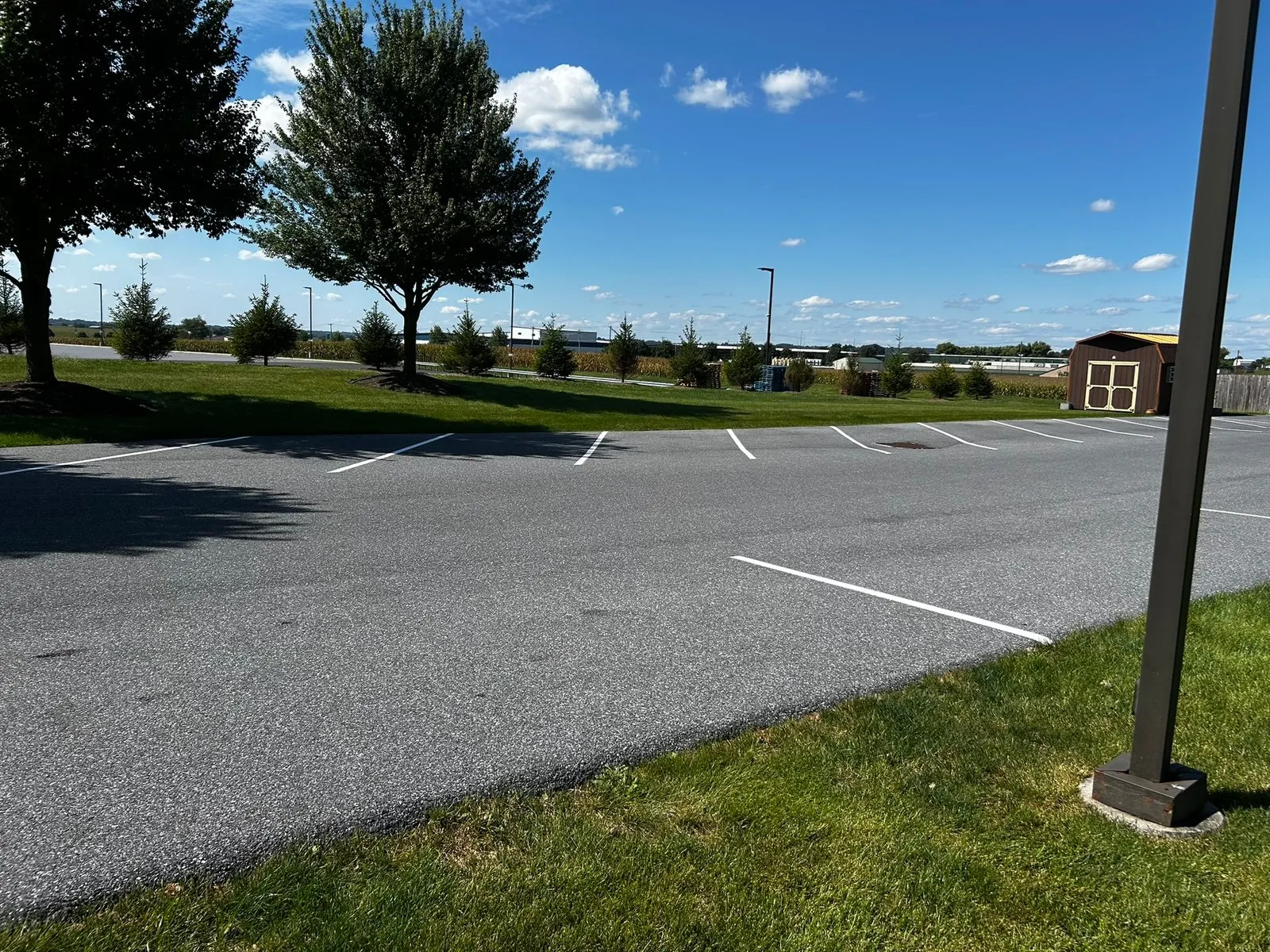
Signs Your Driveway Is Due This Season
Timing the season is one half; knowing whether your driveway needs sealing at all is the other. Walk out and check for these:
- Color. Deep black means the old coat is still working. Gray or whitish means the binder is oxidizing and the surface is exposed.
- Water behavior. After a rain, does water bead and run off, or soak in and darken the surface? Soaking in is your driveway asking for help.
- Loose stone. If you can sweep up gravel that used to be part of the driveway, the surface is raveling, seal it before that accelerates.
- Hairline cracking. Small surface cracks now are big filled cracks later. Catch them while sealer plus minor crack filling still solves it.
- The calendar. If it’s been 3–4 years since the last coat, you’re due even if it still looks passable from the porch.
Two or more of those and this season is your season. None of them and your driveway was recently sealed? Skip a year, sealing healthy sealer just builds up layers that eventually peel.
What Happens If You Miss the Window
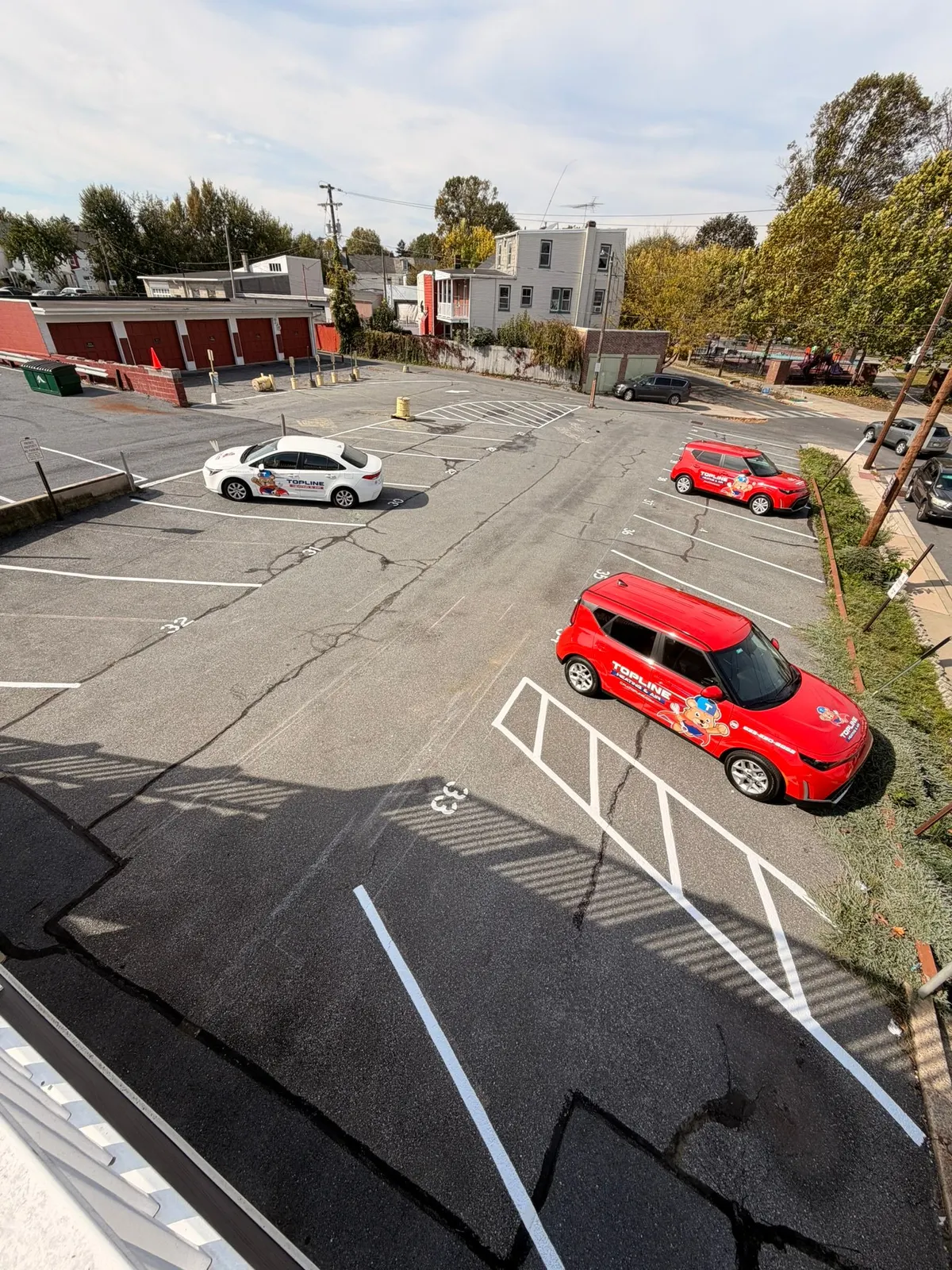
Skipping a season isn’t a catastrophe, asphalt fails slowly, then quickly. But here’s the sequence a bare driveway runs through during one Lancaster County winter: water finds every pore and hairline crack, freezes, and expands about 9%, wedging the pavement apart a little more with each cycle. We get dozens of those cycles between December and March. Meanwhile road salt tracked in from every trip you take keeps the surface wet and working even on days it should be frozen solid and harmless.
One missed season usually costs you nothing visible. Two or three missed seasons is when hairline cracks become real cracks, edges start crumbling, and the quote you eventually call for includes repair work that a $400–700 sealcoat would have prevented. The cheapest year to sealcoat is always this year, not because I’m selling it, but because asphalt only moves in one direction.
Planning Your Year Around It
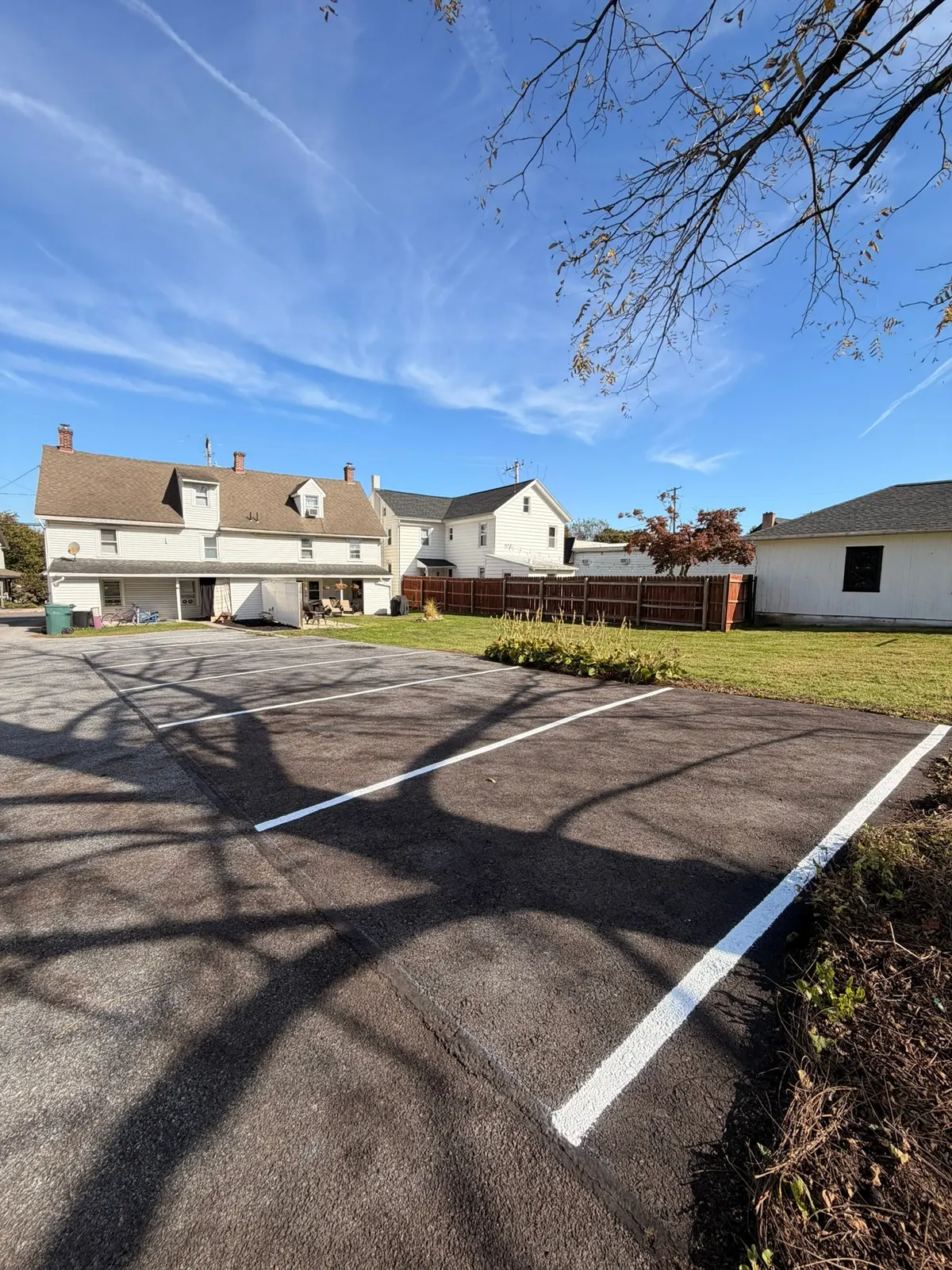
If your driveway is due, going gray, roughly 3–4 years since its last coat, here’s the simple play:
- Book early. Call in March or April for a late-spring slot, or midsummer for September. Good weather weeks go fast.
- Fix cracks in the same visit. Bundled crack filling costs less than a separate trip and has to happen before sealing anyway.
- Budget $400–700 for a typical driveway ($400 is our minimum job), and expect the driveway to be car-free for 24–48 hours after.
- Stay flexible on the exact day. If we move you for weather, that’s the process working, not failing.
We run this schedule across the whole county, from Gap to Mount Joy, and the payoff for getting the timing right is real: a coat applied in the right window protects for years. If you’re still weighing whether it’s worth it at all, Top 5 Reasons to Sealcoat Your Driveway makes the case with numbers.
FAQ: Sealcoating Timing in Pennsylvania
What months can you sealcoat in Pennsylvania?
Realistically mid-May through early October in Lancaster County. The requirement is temperatures above about 50°F around the clock and a dry 24–48 hour curing window, not just a warm afternoon.
Is spring or fall better for sealcoating?
Both are excellent; the specific week matters more than the season. Late spring protects the driveway all summer; early fall seals it right before salt season. Early spring and late fall are where jobs go wrong.
How much does sealcoating cost, and does the season change the price?
A typical Lancaster County driveway runs $400–700, with $400 as our minimum job. The season doesn’t change our pricing, but waiting too many seasons does, because a driveway that cracks while you wait needs repairs before it needs sealer.
What if rain is forecast for my scheduled day?
We reschedule, usually by just a few days. Sealer needs a dry surface and a rain-free curing window, and no honest contractor sprays ahead of a storm. Your deposit and your spot in line don’t change.
How long until I can park on the new sealcoat?
24–48 hours for vehicles, depending on heat and humidity. Walking on it is fine sooner. Give it the full window, fresh sealer holds a grudge against impatient tires.
Grab a Good-Weather Slot Before They’re Gone
If your driveway is due and you want it done inside the right window, not squeezed into the wrong one, request your free estimate or call/text me at 717-808-1600. I’ll tell you honestly whether your driveway needs sealing this season, next season, or not yet at all, and we’ll put you on the calendar for a week the weather can’t ruin. Full details on our Lancaster sealcoating service page.