Every March, like clockwork, Lancaster County driveways sprout potholes the way lawns sprout dandelions. One week your asphalt is fine; the next, there’s a crater where your tire used to go. It feels random, maybe even personal. It’s neither. Your driveway is being dismantled by one of the most quietly destructive forces in nature: ordinary water, doing one weird trick that physicists have known about forever and asphalt has never learned to cope with. Here’s why potholes form, explained properly, with the science, the local weather math, and the two boring maintenance habits that break the whole cycle.
Water Is Weird (And Your Driveway Pays for It)
Almost everything in the universe shrinks when it gets cold. Metal shrinks. Air shrinks. Your enthusiasm for going outside shrinks. Water, being the drama queen of molecules, does the opposite. When it freezes, it expands by about 9 percent.
Nine percent doesn’t sound like much until you remember that water is basically incompressible and doesn’t negotiate. When it freezes inside a confined space, it doesn’t politely stop expanding because there’s no room. It generates enormous pressure, enough to split boulders, burst cast-iron pipes, and crack engine blocks. Geologists call the rock version “frost wedging,” and it’s how mountains get taken apart. Your driveway is made of stone and asphalt binder. To ice, it’s just a very flat mountain.
How the Water Gets In: Cracks, the Unlocked Front Door
New asphalt is nearly waterproof. Rain hits it, sheets off, ends up in the grass. No drama.
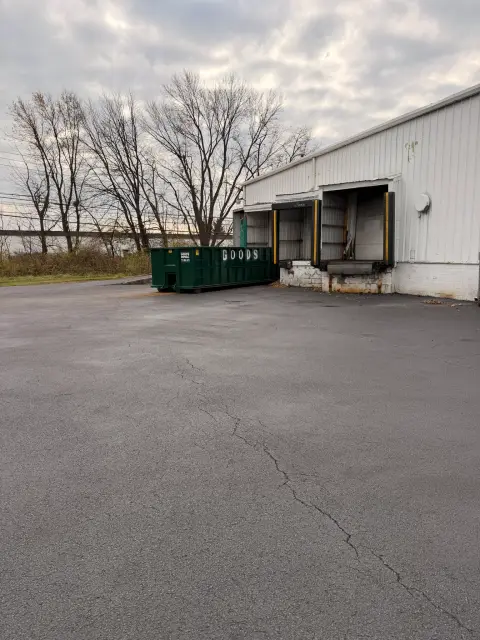
But asphalt ages. Sun oxidizes the binder, the black glue holding the stones together, and the surface turns gray, brittle, and cranky. Then it cracks: from age, from traffic, from the ground shifting underneath. And every crack, even a skinny one you could barely fit a coin into, is an unlocked front door with a neon VACANCY sign. Water doesn’t need an invitation. It flows into the crack, through the asphalt layer, and down into the stone base underneath, which is exactly where you don’t want it, for reasons that are about to become violently clear.
This is why we bang on endlessly about crack filling. It’s not cosmetic. It’s locking the door.
The Freeze-Thaw Cycle: Nature’s Slow-Motion Jackhammer
Here’s where Lancaster County’s weather turns from picturesque to structural. A freeze-thaw cycle is simple: temperature drops below freezing, water in and under your pavement turns to ice and expands 9 percent, prying everything apart. Then it warms up, the ice melts, and the water trickles deeper into the new, slightly larger gaps it just created. Repeat.
If we lived somewhere that froze in December and thawed in March, one cycle, in and out, this would be survivable. We do not. Pennsylvania winters hover right around the freezing line, crossing it constantly: freezing nights, above-freezing afternoons, a warm spell in January, a cold snap in April. A typical Lancaster County winter delivers dozens of freeze-thaw cycles, the pavement equivalent of being hit with a tiny jackhammer, once a day, all winter, in the same spot. The Federal Highway Administration ranks freeze-thaw cycling among the primary drivers of pavement deterioration nationwide, and our corner of the map is smack in the high-cycle zone. Ironically, Minnesota has it easier: things freeze in November and stay frozen. One long freeze is a nap. Forty short ones are a demolition schedule.
From Crack to Crater: The Biography of a Pothole
Put it all together and a pothole’s life story reads like a four-act play, performed entirely at your expense:
- Act One, The Crack. Sun and age open a small crack. Water moves in. Nobody notices. (Autumn.)
- Act Two, The Heave. Freeze-thaw cycles pump away underground. Ice lenses form in the base, lifting and dropping the asphalt above them. The crack widens; the base stone gets churned and shoved around. (All winter.)
- Act Three, The Void. Spring melt drains the water away, and here’s the cruel twist: the water leaves, but the space it carved stays. Now there’s a hollow under the surface, and the asphalt above it is a bridge with nothing holding it up. (March.)
- Act Four, The Collapse. Your car drives over the bridge. A passenger vehicle applies roughly a ton of force per wheel, several times a day. The unsupported asphalt flexes, fractures, and caves in. Chunks kick out, and congratulations: it’s a pothole. (The morning you’re already late.)
Notice the timeline: the hole appears in spring, but it was manufactured all winter, and the door was left open the previous fall. That’s the part you can actually control.
Why Lancaster County Is Basically Pothole Paradise
If you wanted to design a region for maximum pothole production, you’d want three ingredients. First, plenty of precipitation spread through the year, so there’s always water available for the freezing. Check, we get a healthy dose of rain and snow in every season. Second, a winter that oscillates around 32°F instead of committing to real cold, so the freeze-thaw counter keeps spinning. Check, with enthusiasm, our January thaws and April frosts are practically a local tradition. Third, lots of pavement that’s been working hard for decades: farm lanes, rural routes, older driveways, business lots that see trucks daily. Check, check, check.
None of this is a reason to despair, it’s a reason to plan. Pavement in our climate doesn’t survive on luck; it survives on maintenance timed to the calendar. The homeowners around here with 25-year-old driveways and zero potholes aren’t lucky. They fill cracks in the fall and keep the surface sealed, which is the whole game.
Why It Always Happens in the Same Spots
Potholes are creatures of habit because water is. Low spots where puddles linger, the driveway edge where runoff collects, the seam along an old patch, the shady stretch that stays wet two days longer than the rest, these are pothole nurseries. If you patched a hole and it came back in the same spot, the water source was never addressed, and possibly the patch was a “throw-and-go” special. (We explained the difference between that and a real repair in our post on pothole repair vs. full repaving, and how we do it right on our pothole repair service page.)
How to Break the Cycle (Two Boring Habits That Work)
You can’t change the physics of water and you can’t cancel a Pennsylvania winter. What you can do is refuse to let the water in. Two habits handle that:
Habit one: fill cracks the season they appear. Hot rubberized crack sealant closes the door before the freeze-thaw season starts, and it stays flexible through the cold so it doesn’t just crack again. Fall is the ideal window, you’re sealing the pavement right before winter tries its 40-cycle jackhammer routine.
Habit two: sealcoat on schedule. Sealcoating replenishes the waterproof surface that the sun keeps burning off, slowing the oxidation that creates cracks in the first place. If you’re fuzzy on what it actually does, our explainer on what sealcoating is and why it matters covers it without the sales pitch. The Asphalt Institute‘s guidance on pavement preservation says the same thing engineers have said for decades: a dollar of prevention beats five dollars of repair, every year, forever.
Already Have a Pothole? Here’s Your Move
If the freeze-thaw factory already shipped you a finished product, don’t panic, but don’t wait, either. A pothole grows fastest right after it forms, because now water pools in the hole and traffic hammers its exposed edges. A hole that costs a few hundred dollars to patch in May can need double that by September.
The right fix is a cut-and-patch with hot mix: square out the edges, rebuild the base, compact in layers, seal the seam. We cover real prices in our breakdown of pothole repair costs in Lancaster, PA. And if the hole showed up in the middle of winter, a temporary cold-patch fill is a smart stopgap until plants open in spring, just don’t let anyone sell you a bag of cold patch as a permanent repair.
Watch Freeze-Thaw Damage Get Fixed Properly
This Old House did a nice segment on repairing pothole damage the right way, worth a watch if you want to see the process before you call anyone:
Frequently Asked Questions
Why do potholes always show up in spring?
Because winter builds them and spring reveals them. Freeze-thaw cycles spend all winter carving voids under the surface; when the melt drains away, the asphalt is left spanning empty space, and spring traffic punches through. The hole you see in March was started by a crack the previous fall, which is also why the road crews and the pothole complaints both peak in the same six-week window every year.
Can a driveway without cracks still get potholes?
It’s much less likely, but poor drainage can attack from below, water seeping in from the edges or rising from saturated ground can still soften the base. If puddles sit against or on your pavement for days, that’s a drainage problem worth fixing regardless of cracks.
Does sealcoating prevent potholes?
Indirectly but meaningfully. Sealcoating keeps the surface waterproof and slows the oxidation that causes cracking, and cracks are how water gets in to start the freeze-thaw damage. Sealcoating plus prompt crack filling addresses the cause; patching addresses the result.
How fast does a small pothole become a big one?
Fast, often one season. Once a hole exists, it collects water, its edges are exposed to direct impact, and every pass of a tire flakes off more material. Potholes grow on compound interest, which is why fixing them small is always the cheap option. A dinner-plate hole in May is routinely a trash-can-lid hole by Labor Day.
Is there a “pothole-proof” asphalt?
No, anything with water in a freezing climate is playing this game. But well-built asphalt with good drainage, sealed cracks, and a maintained surface can go decades without a single pothole. The physics never changes; the access to water does.
Beat Winter to the Punch
Whether you’ve got cracks that need sealing before the next freeze or a fresh spring crater that needs a proper patch, we can help, anywhere in Lancaster County, from Leola to Gap. Get your free quote or call 717-808-1600. The water is patient. Be less patient than the water.