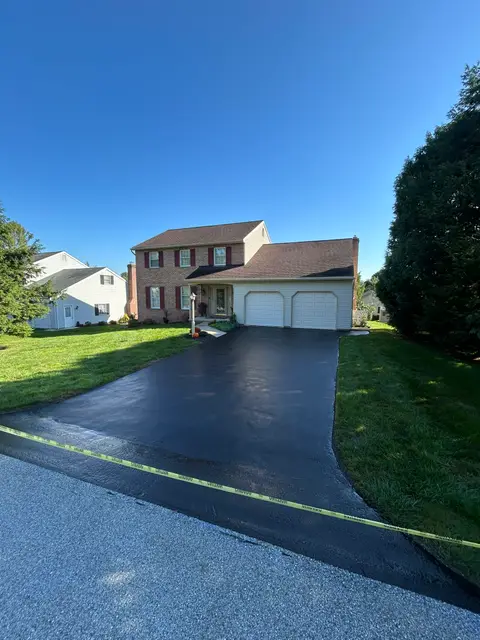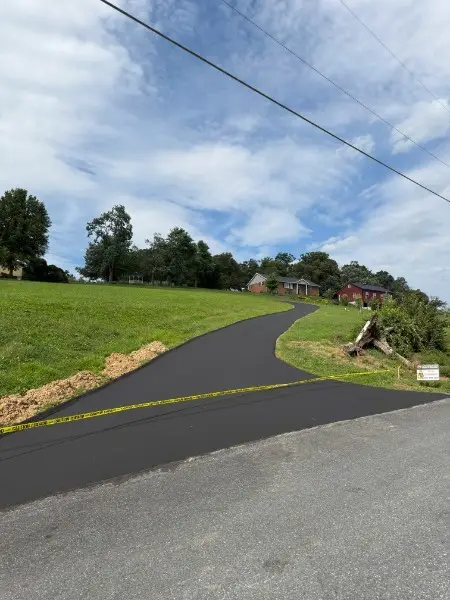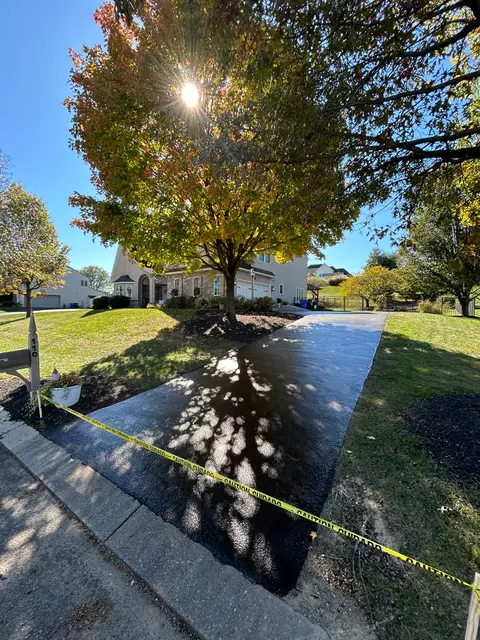
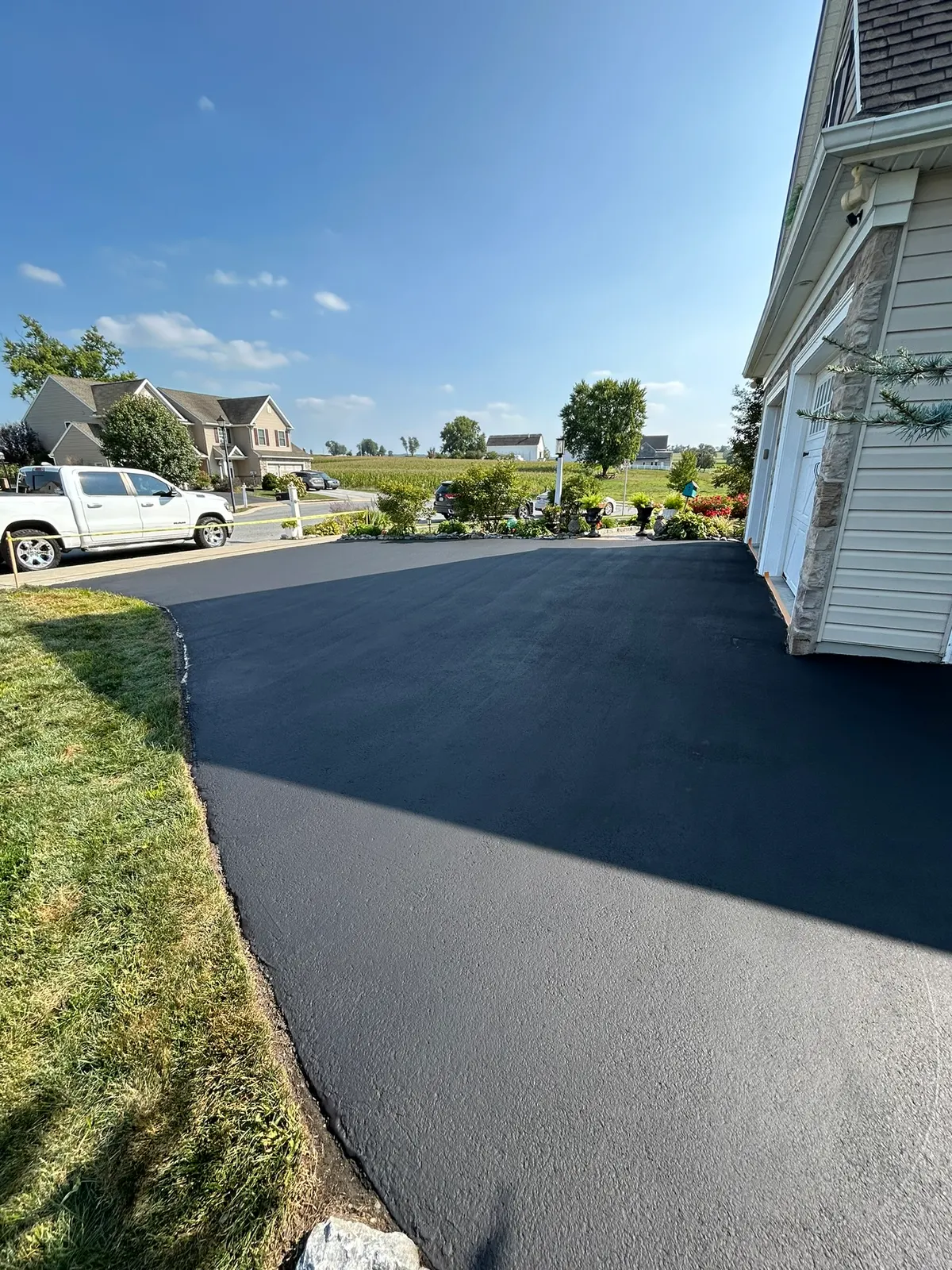
You got three quotes for sealcoating your driveway. One guy said $150. Another said $650. The third one never called back. Now you’re staring at your cracked, gray driveway wondering if everyone in the asphalt business is just making numbers up.
They’re not. But sealcoating pricing has more moving parts than most homeowners realize, and the cheapest quote is almost never the one you want. I’m Ruvim, owner of Lancaster Lines & Asphalt, and I’m going to walk you through exactly what sealcoating costs in Lancaster, PA in 2026, real numbers, no fluff, including the ones that make people wince.
Short version: our minimum job is $400, a typical residential driveway runs $400–700, and if someone offers to do it for $99, keep your hand on your wallet. Here’s the long version.
What You’re Actually Paying For
Sealcoating looks simple from the sidewalk. A crew shows up, spreads black liquid, leaves. What could that possibly cost?
Here’s what’s baked into a legitimate quote:
- Commercial-grade sealer. We use a water-based asphalt emulsion with sand additive for traction. It’s not the watery stuff from the hardware store shelf, it’s mixed to spec and applied in two coats.
- Prep work. Blowing off debris, scraping vegetation out of edges, cleaning oil spots, and treating them with primer so the sealer actually sticks.
- Edge work by hand. We cut in the edges with a brush, along your garage, sidewalk, and lawn, so the sealer goes where it should and not on your grass or siding.
- Two full coats. One coat looks fine for a season. Two coats is what actually protects the asphalt underneath.
- Insurance, equipment, and a crew that shows up. Boring, yes. Also the difference between a business and a guy with a bucket.
If you want the full background on what sealcoating actually does for your asphalt, we broke that down in What Is Sealcoating and Why Does It Matter. The one-line summary: it’s sunscreen for your driveway, and Lancaster County sun, salt, and freeze-thaw cycles are brutal without it.
Real 2026 Sealcoating Prices in Lancaster, PA
Every driveway is different, but after sealing hundreds of them across Lancaster County, the ranges are pretty predictable. Here’s what you can expect to pay in 2026:
- Small driveway (1–2 cars, up to ~800 sq ft): $400, that’s our minimum, and small driveways usually land right on it.
- Average driveway (2 cars with some extra length, 800–1,500 sq ft): $400–550.
- Large driveway (long runs, turnarounds, parking pads, 1,500–2,500 sq ft): $550–700.
- Extra-large or shared driveways (2,500+ sq ft): $700 and up, quoted individually.
These are typical ranges, not promises, the exact quote is free and takes a day or two. Commercial lots are a different animal entirely and priced by square footage, condition, and striping needs. If that’s you, start with our sealcoating service page and we’ll go from there.
Why do prices vary within those ranges? That’s the next section, and it’s the part most contractors won’t explain.
What Makes the Price Go Up
Cracks That Need Filling First
Sealer is a surface coating. It is not a crack repair product, no matter what the bucket at the store implies. If your driveway has cracks wider than a pencil, they need hot-pour rubberized crack filler before any sealer touches the surface. Otherwise water keeps getting in, freezes, expands, and your fresh sealcoat is decorating a driveway that’s quietly falling apart underneath.
Crack filling adds cost, but bundling it with sealcoating is cheaper than booking it separately, and way cheaper than the pothole that crack becomes in two winters. Details on our crack filling service page.
Heavy Oxidation
Asphalt that’s gone gray and rough drinks sealer like a sponge. A badly oxidized driveway can absorb noticeably more material than a driveway that was sealed three years ago. More material, more cost. This is also the best argument for sealing on a regular schedule instead of waiting until the surface looks like elephant skin.
Edges, Curves, and Obstacles
A straight rectangle is fast. A driveway with landscaping borders, a basketball hoop, a drainage grate, and a stone walkway crossing it means more brush work by hand. Hand work is slow, and slow costs more. We don’t skip it, sloppy edges are the first thing you notice from the street, but it does show up in the number.
Oil Spots and Stains
Oil and sealer don’t get along. Every oil spot needs to be cleaned and primed or the sealer peels right off it by spring. A driveway where somebody’s pickup has been marking its territory for a decade takes extra prep time.
Why the $99 Special Is a Trap
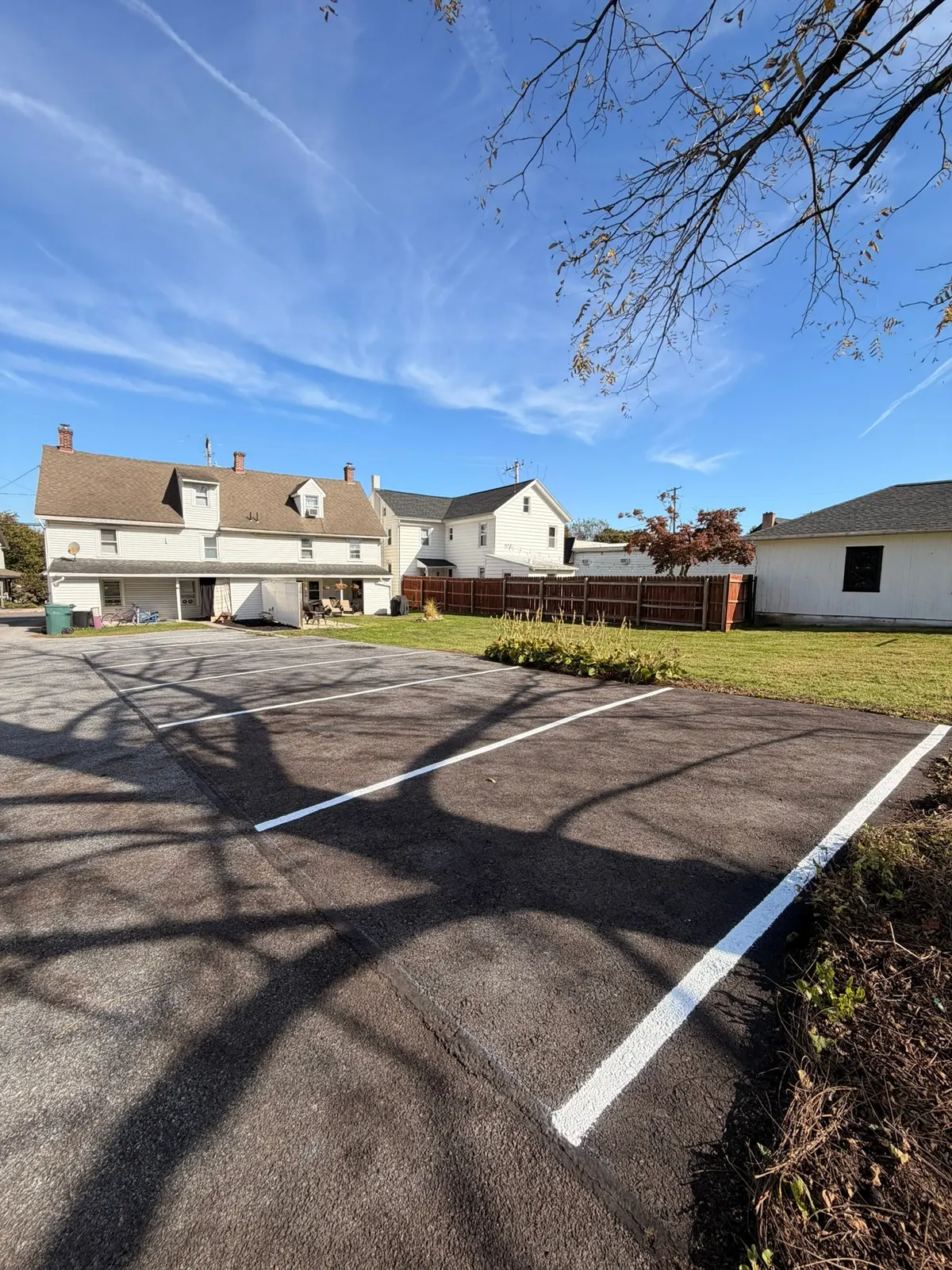
Every summer, flyers show up on Lancaster County doorsteps offering driveway sealing for $99–150. Let’s do the math together, because the math is the whole story.
Quality sealer for an average driveway costs a contractor real money, often more than $99 in material alone if it’s applied at proper thickness in two coats. So how does the $99 guy make a profit? Simple: he doesn’t apply proper material at proper thickness. The usual tricks:
- Watering down the sealer until it’s basically black-tinted water.
- One thin coat, sprayed fast, no edge work, no prep.
- Using leftover or bottom-shelf material with no sand additive.
- No insurance, no callback number that works after August.
The result looks black for about six weeks. Then it fades, streaks, and peels, and you’ve paid $99 to make your driveway look worse than before. The industry has been fighting this reputation problem for decades, the Asphalt Institute publishes actual material and application standards precisely because “black liquid on the ground” covers everything from engineered protection to scam juice.
Why Our Minimum Is $400 (and Why That Protects You)
Our minimum job is $400. Some people hear that and blink. Fair. Here’s the honest reasoning.
By the time we load the rig, drive to your place, blow off and prep the surface, hand-cut the edges with a brush, spray two full coats, and clean up, even the smallest driveway takes a crew a few hours plus material. Below $400, the only way to make the job work is to cut something, coats, prep, material quality, or insurance. We’re not willing to cut any of those, so the floor is the floor.
The upside for you: at $400–700 every 3–4 years, sealcoating is one of the cheapest forms of home maintenance that exists. Compare that to repaving, which runs thousands. The National Asphalt Pavement Association has plenty of data on pavement preservation, and the pattern is consistent: a dollar spent maintaining asphalt saves several dollars in reconstruction later. We listed the biggest payoffs in Top 5 Reasons to Sealcoat Your Driveway if you want the full case.
When You Shouldn’t Pay for Sealcoating at All
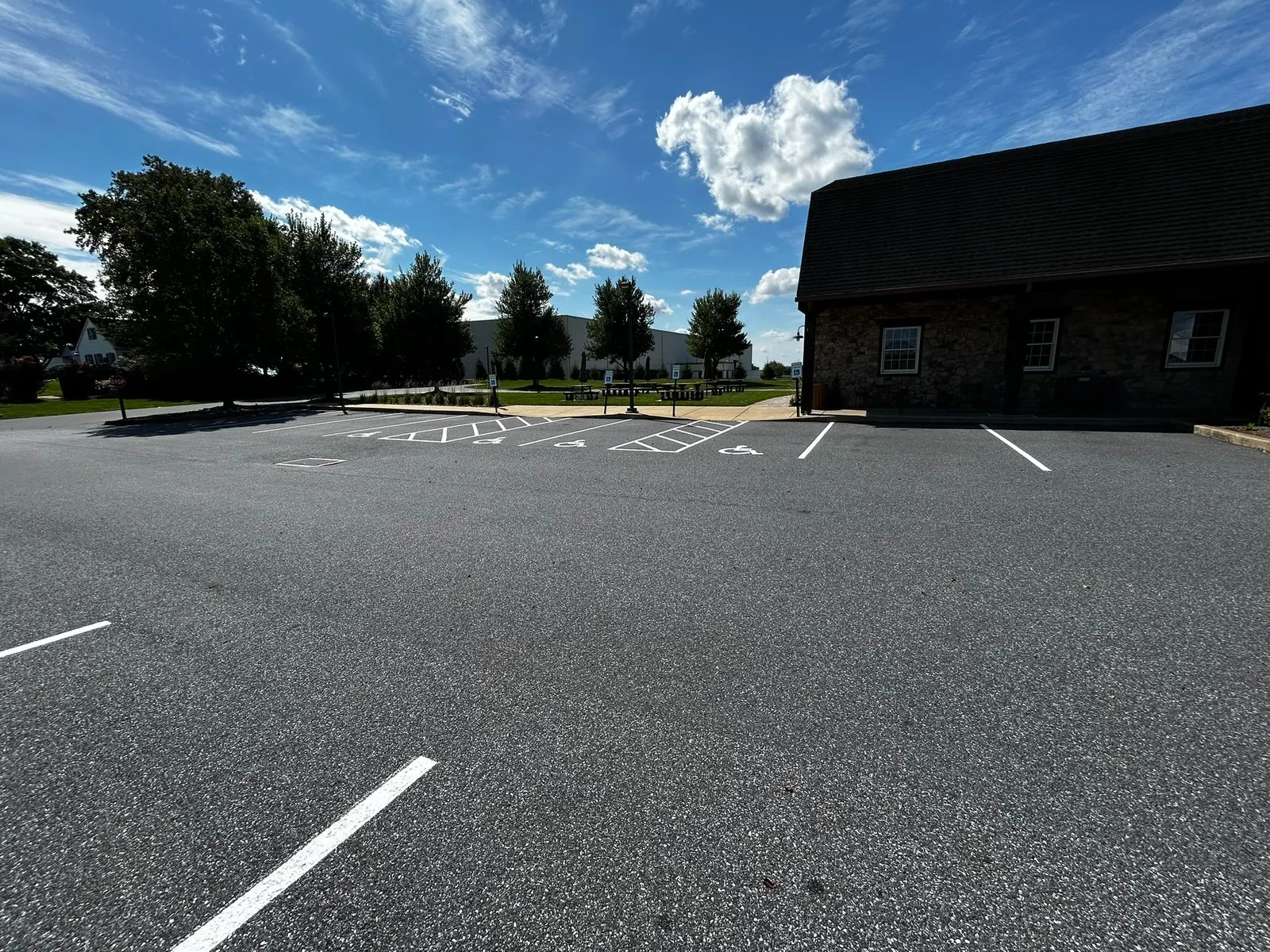
Here’s where I talk myself out of a few jobs, because it’s the right thing to do.
- Your asphalt is less than 6–12 months old. New asphalt needs to cure and release oils before sealing. Seal it too early and the sealer can trap those oils and fail. If a contractor offers to seal your brand-new driveway, that tells you something about the contractor.
- You sealed it within the last 2–3 years and it still looks black. More sealer on top of healthy sealer just builds up and eventually peels. Annual sealing is a myth that mostly benefits the person selling it.
- Your driveway is beyond saving. If it’s alligator-cracked across most of the surface, sealcoating is lipstick. You need repair or repaving, and we’ll tell you that at the estimate instead of taking your money.
- Rain is in the forecast. This one’s about timing, not whether, if there’s rain coming within the drying window, we reschedule. Wet sealer washes into your lawn, and nobody wins.
How the Weather (and PennDOT) Factor Into the Cost Equation
Lancaster County winters are the reason sealcoating here isn’t optional the way it might be in Arizona. Every winter your driveway goes through dozens of freeze-thaw cycles, water sneaks into the surface, freezes, expands about 9%, and pries the asphalt apart from the inside. Add the salt brine PennDOT and your township spread all winter, which tracks off the road and onto your driveway, and unsealed asphalt ages fast here.
That’s why the real cost question isn’t “what does sealcoating cost?” It’s “what does skipping it cost?” An unsealed driveway in our climate typically needs major repair years earlier than a maintained one. We see the difference every week, from New Holland to Mount Joy, the driveways that get sealed on schedule are the ones that outlive their neighbors.
Want to see what a professional application actually looks like from start to finish? This video shows the process, step by step:
How to Get an Exact Number for Your Driveway
Ranges are useful, but you probably want your number. Here’s how that works with us:
- You call or text 717-808-1600, or send the form on our contact page.
- We look at the driveway, size, condition, cracks, oil spots, edges.
- You get a written quote with everything included. No “oh, by the way” charges on the day of the job.
- If sealcoating isn’t the right move for your driveway yet, we say so and tell you what is.
The estimate is free, and you’re talking to the owner, not a call center. I’d rather explain a quote for ten minutes than have you wonder what you paid for.
FAQ: Sealcoating Cost in Lancaster, PA
How much does it cost to sealcoat a driveway in Lancaster, PA?
Most residential driveways run $400–700 in 2026, with $400 being our minimum job. The exact price depends on square footage, condition, crack repair needs, and how much hand work the edges require. Quotes are free and specific to your driveway.
How long does the job take, and when can I use my driveway?
The application itself usually takes a few hours. Then the sealer needs 24–48 hours to cure before vehicles drive on it. You can typically walk on it sooner, but keep the cars off, tire marks in fresh sealer are permanent tattoos.
What if it rains after you sealcoat?
We watch the forecast and won’t apply sealer if rain is expected during the curing window. If a surprise storm rolls in and damages fresh work, we come back and make it right. But the honest answer is prevention: if the forecast looks risky, we reschedule. It costs us a day and saves your driveway.
Is crack filling included in the sealcoating price?
It’s quoted as a line item, because some driveways need zero and some need a lot. Bundling crack filling with sealcoating is cheaper than doing them separately, and doing sealcoating without fixing cracks first is money down the, well, crack.
How often should I sealcoat?
Every 3–4 years for most Lancaster County driveways. Not annually, that’s overkill that leads to buildup and peeling. And never in the first 6–12 months of a new driveway’s life, while the asphalt is still curing.
Get Your Real Number, Free
If your driveway is going gray and you want an actual price instead of a range, reach out for a free estimate or call/text me directly at 717-808-1600. I’ll give you a straight number, tell you if anything can wait, and if sealcoating isn’t what your driveway needs right now, I’ll tell you that too. That’s the whole pitch.