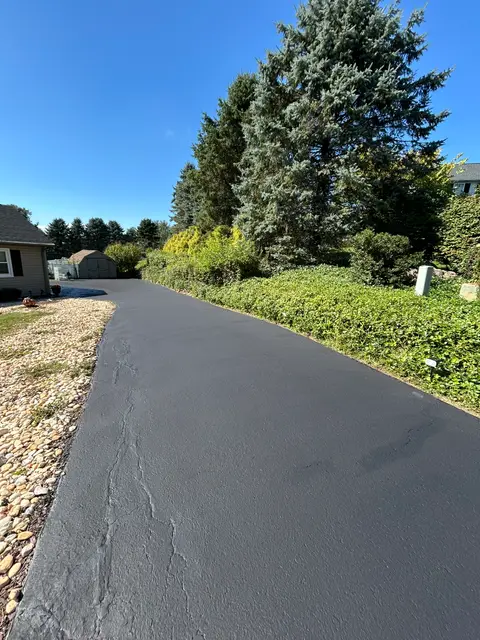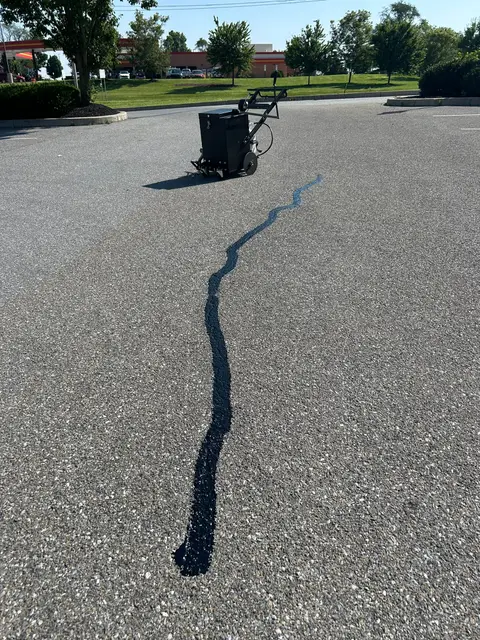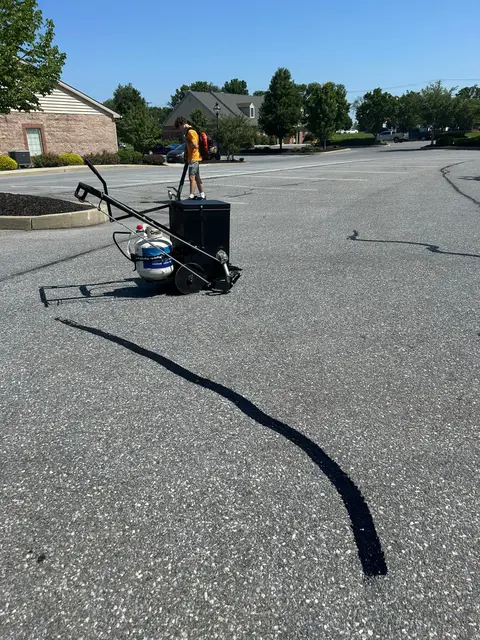
Every April, our phone rings with the same story. “There’s a hole in my driveway that wasn’t there in the fall.” And every April, we drive out, look at the crater, and see the ghost of a skinny little crack that could have been sealed in October for a couple bucks a foot. The pothole didn’t come from nowhere. It came from that crack, plus one Lancaster County winter, plus nothing being done about either.
This post is your chance to be the neighbor who doesn’t make that call. We’ll walk through the physics of what winter actually does to an open crack, why fall is the one window where crack filling works best, and a short checklist to run before the first hard freeze. Fair warning: there’s some ice science ahead, but it’s the fun kind.
The 9% Problem: What Ice Does Inside Your Pavement
Water is a rule-breaker. Almost everything in nature shrinks when it freezes, water expands, by roughly 9%. That’s why your forgotten soda can bursts in the freezer, and it’s exactly why your driveway falls apart in winter.
Here’s the sequence. Rain or snowmelt runs into an open crack and soaks down into the stone base beneath your asphalt. Temperature drops overnight, the water freezes, and that 9% expansion has to go somewhere, so it shoves. It widens the crack, lifts the pavement, and pushes apart the compacted stone that was holding everything up. Then the sun comes out, the ice melts, and the water sinks into the new, slightly bigger spaces it just created. Repeat.
Now the brutal part: in Lancaster County, that freeze-thaw cycle doesn’t happen once or twice a winter. Our temperatures seesaw across the freezing line dozens of times between December and March. Each swing is another push. The Federal Highway Administration lists freeze-thaw cycling among the primary mechanisms of pavement deterioration in northern climates, it’s not the plow trucks, it’s the physics.
An open crack is the delivery system for all of it. Think of it as a straw: every storm, your pavement takes a long drink of the one liquid that turns into a crowbar when it gets cold. Close the straw before December and the whole demolition project gets cancelled for lack of materials.
What One Winter Does to an Unfilled Crack
Let’s make it concrete. Say you head into December with a quarter-inch crack, 20 feet long. Innocent-looking. Here’s the typical timeline:
- December–January: Water infiltrates with every rain and melt. Early freezes start widening the crack and saturating the base beneath it.
- February: Deep freezes heave the pavement along the crack line. Secondary cracks branch off as the surface flexes. The base is now wet, disturbed, and losing its grip.
- March: Thaw season. The base is soft and unsupported in spots. Every car that rolls over the weakened area flexes the asphalt like a diving board.
- April: A chunk lets go. Congratulations, it’s a pothole. Your $50 crack is now a few-hundred-dollar patch, and pothole repair is the cheap ending. The expensive ending is alligator cracking spreading around the failure, which no filler can save; that’s patch-or-overlay territory.
Multiply that by every crack on the property and you can see why our spring schedule fills up with regret. The whole cascade gets stopped by one thing: don’t let the water in. That’s it. That’s the entire strategy, and organizations like the Asphalt Institute rank crack sealing among the highest-payoff preventive treatments in pavement maintenance for exactly this reason.
Why Fall Specifically? (Not Just “Before Winter”)
Fall isn’t just the last exit before winter, it’s genuinely the best time of year to seal cracks, for three technical reasons:
1. Cracks are at their happy medium. Asphalt expands in summer heat, squeezing cracks toward their narrowest. It contracts in winter cold, stretching them to their widest. Seal a crack in July and the sealant gets stretched thin when winter pulls the crack open. Seal in fall, when the crack sits mid-range, and the rubber flexes comfortably in both directions all year.
2. Conditions are dry enough to do it right. Hot pour sealant demands a clean, dry crack, we blow every one out with compressed air before filling, because sealant poured over damp dirt bonds to the dirt, not the asphalt, and pops out by spring. Fall reliably serves up the dry days this prep needs. Winter doesn’t.
3. The protection lands before the abuse starts. Sealing in fall means the rubber is in place for every single freeze-thaw cycle of the coming winter. Waiting for spring means paying full price for protection after the storm already looted the store.
How the Repair Actually Works
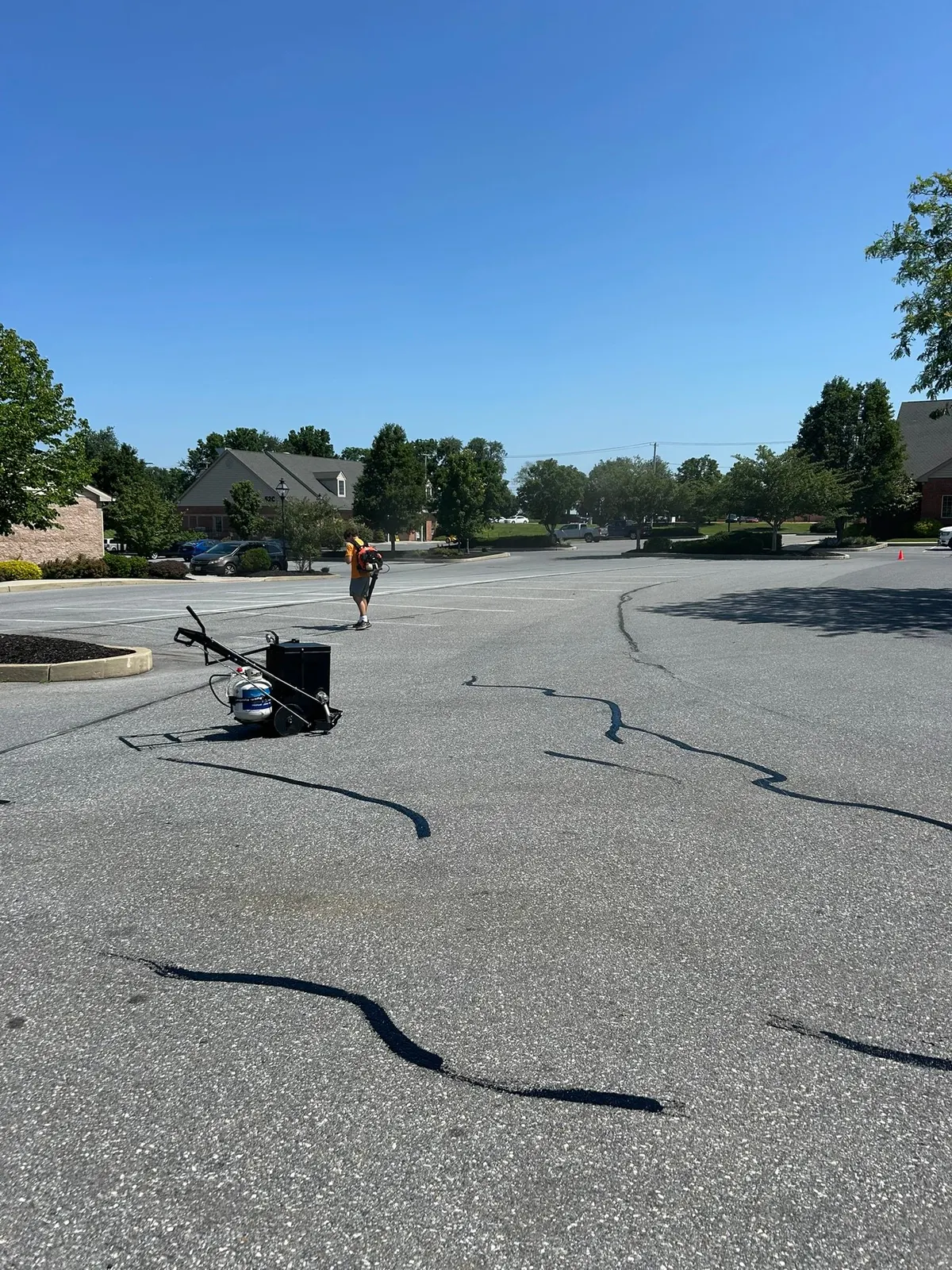
The short version: we clean each crack with compressed air (and rout out any vegetation), then fill it bottom-up with rubberized sealant heated to roughly 400°F. At that temperature the rubber flows deep, bonds to the crack walls, and cures into a flexible seal that stretches when winter pulls the crack wide and compresses when summer squeezes it shut. Traffic can roll over it within about an hour. The full play-by-play is in our post on how hot pour crack sealing works, and you can watch a municipal crew run the same process at scale here:
Notice that towns and townships do this work in the fall, on a schedule, every year. Municipal road budgets are ruthless about cost per mile, if fall crack sealing didn’t pay for itself many times over, they’d have stopped decades ago.
Your Fall Asphalt Checklist (15 Minutes, One Lap)
Grab a coffee some October Saturday and walk your pavement. Here’s what to look for:
- Linear cracks a quarter inch or wider. Prime candidates for hot pour sealing. Count rough footage as you go, it’s the main driver of your quote.
- Spiderweb (alligator) areas. Honesty time: filler won’t save these, the base underneath has failed, and they need patching or an overlay. Better to know in October than to discover it in April.
- Weeds in the cracks. Green stuff growing out of your driveway means the crack is deep, dirty, and well-watered. It gets routed out during prep.
- Standing water spots. Puddles that linger after rain mark low points where water concentrates, cracks there do double damage.
- Gray, faded surface. Oxidized asphalt is brittle asphalt, and brittle asphalt cracks more each winter. If the whole surface has gone gray, pair crack sealing with sealcoating in the same visit, the combo costs less than two separate appointments and protects the surface and the cracks together.
If you did nothing last fall and winter already got its licks in, start with our spring asphalt checklist instead, then put a fall reminder in your phone so you only have to read that post once.
“Can’t I Just Deal With It in Spring?”
You can, the way you can skip an oil change and deal with the engine later. Here’s the honest comparison. Sealing this fall: a couple dollars per foot, one afternoon, done. Waiting until spring: every crack goes through a full winter of 9%-expansion hits, comes out wider and longer, and some graduate to potholes or alligatored patches that filler can’t fix. You’ll pay for more footage at best, and for patching at worst, our guide to crack filling cost in Lancaster County breaks down how quickly that math snowballs.
There’s also the scheduling reality: everyone who waited calls in April, all at once. Fall booking is faster, and your pavement spends the winter protected instead of on the waiting list. We run fall crack sealing routes all over the county, from New Holland to Gap, the trucks are already nearby.
One more consideration for business owners: winter is also when your slip-and-trip liability peaks. A crack that heaves into a raised lip under snow cover is invisible to customers until their shoe finds it. Sealing in fall keeps the pavement plane flat through the season, cheaper than any conversation that starts with an incident report.
Crack Filling Before Winter: FAQ
How much does crack filling cost before winter?
Same as any other season: typically $1–$3 per linear foot of crack, with a $400 minimum service call. Most residential jobs land between $400 and $800. The difference is what you’re buying, fall sealing protects through the entire winter, which is when the damage actually happens. Exact quotes are free.
How long will fall crack sealing last?
Properly prepped and applied hot pour sealant typically lasts 3 to 5 years or more. Fall application actually helps longevity, because the sealant goes in while cracks are at a moderate width and cures before the extreme movement of winter begins.
Is it too late to fill cracks once winter starts?
Not always, but the odds get worse. Hot pour can go down in cool weather, but the cracks must be completely dry, and between snow, slush, and short days, dry pavement gets rare after Thanksgiving. If a dry window shows up in December, we can often still work. October is the appointment you don’t have to gamble on.
Can I just squeeze store-bought filler in before the freeze?
As emergency triage, it’s better than an open crack. But cold pour bottle filler shrinks as it dries, sits near the surface, and hardens rigid, most of it fails within a winter or two of freeze-thaw movement. Hot pour rubber applied at 400°F fills the crack top to bottom and flexes with the pavement for years. If the driveway matters to you past March, get the real thing.
Should I sealcoat at the same time?
If your asphalt is more than a few years old, usually yes, cracks first, sealcoat over top, one visit. The sealcoat shields the surface from oxidation and water while the crack seal guards the deep entry points. Bundled together, it’s cheaper than two separate mobilizations and your pavement goes into winter fully buttoned up.
Beat the Freeze, Book Your Fall Crack Sealing
Somewhere out there is a version of next April where your driveway looks exactly like it does today. It’s the version where you sealed the cracks this fall. Lancaster Lines & Asphalt provides hot pour crack filling across Lancaster County, measured honestly, prepped properly, and done before the first hard freeze. Get your free quote or call 717-808-1600. Winter’s coming either way; the only question is whether your cracks are open when it gets here.