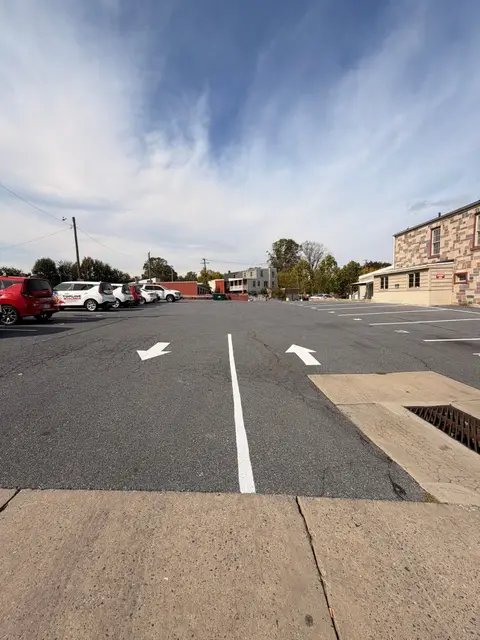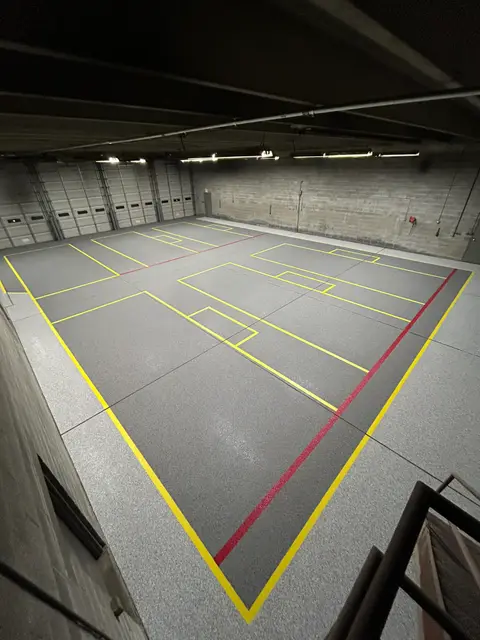
Ever watched a parking lot get striped? Probably not, because if we’re doing it right, it happens at 2 a.m. while you’re asleep, and by morning your lot looks like it got a haircut and a new suit. But plenty of business owners ask us how it actually works. Is it just a guy with a paint roller? (No.) Does the machine drive itself? (Also no.) Here’s the whole parking lot striping process, from empty blacktop to crisp lines, exactly the way we run it on Lancaster County lots every week.
Step 1: The Walk-Through (Before Any Paint Exists)
Every job starts with eyes on the pavement. We walk the lot and answer three questions. First: is this a restripe (old lines still visible, we follow them) or a new layout (bare asphalt, we design from scratch)? Second: is the surface actually paintable, or is it cracked, oxidized, and crumbling? Third: what does the traffic flow need, where do cars enter, where do they hesitate, where do delivery trucks swing wide?
We also ask about your schedule at this stage, open hours, delivery windows, the day the food truck shows up. That’s how we decide whether your job is a night job, a weekend job, or a phased daytime job. Most owners are surprised that this is even a question; they assume they’ll have to close. They won’t.
That second question matters more than people expect. Paint bonds to pavement, and if the pavement is falling apart, no paint will fix it. When a lot is too far gone, we say so and point you to sealcoating first, fresh lines on fresh black sealer last longer and look twice as sharp. If you want the science of why, here’s what sealcoating actually does. Painting over a dying surface just means paying for striping twice.
Step 2: Measure Twice, Paint Once
For a new layout, this is where the job is won or lost. We measure the whole lot and work out:
- Stall width, usually 9 feet for retail and offices. Go narrower to squeeze in more spaces and you’ll trade two extra stalls for a hundred door dings.
- Drive aisle width, two-way aisles need roughly 24 feet so two SUVs can pass without a standoff.
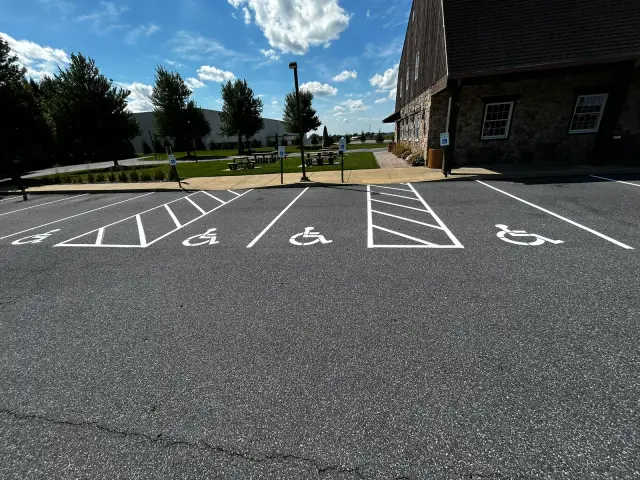
- ADA spaces, federal rules set the count based on your total spaces, plus access aisles and signage. Non-negotiable, and we calculate it for you.
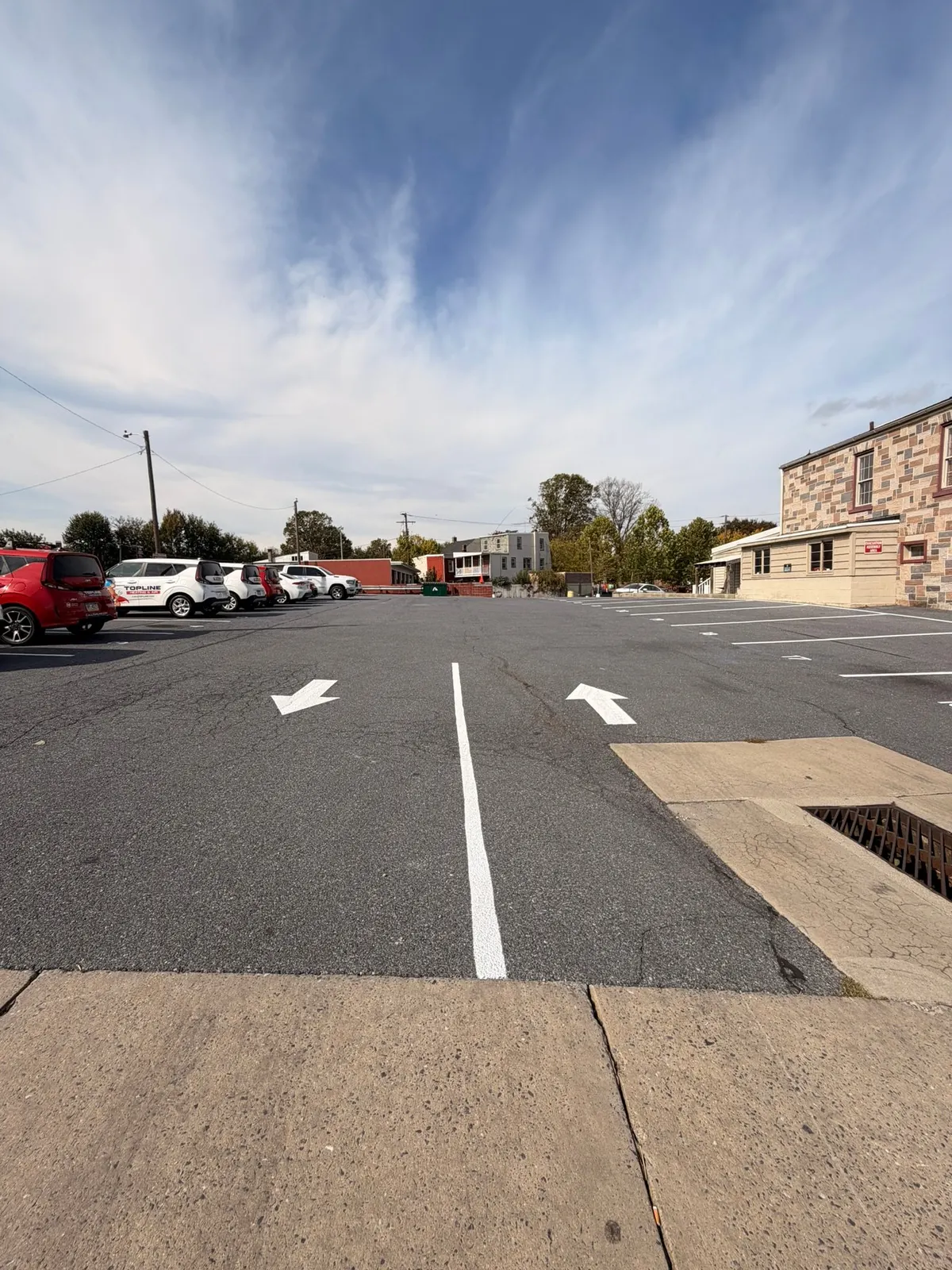
- Flow, arrows, stop bars, fire lanes, loading zones, and how a car naturally moves from entrance to space to exit.
Good layout follows the same logic highway engineers use, the Federal Highway Administration publishes standards on pavement markings for a reason: markings are instructions, and unclear instructions cause accidents. Your lot is a tiny road network. We treat it like one.
Step 3: Chalk Lines, the Skeleton of Every Straight Lot
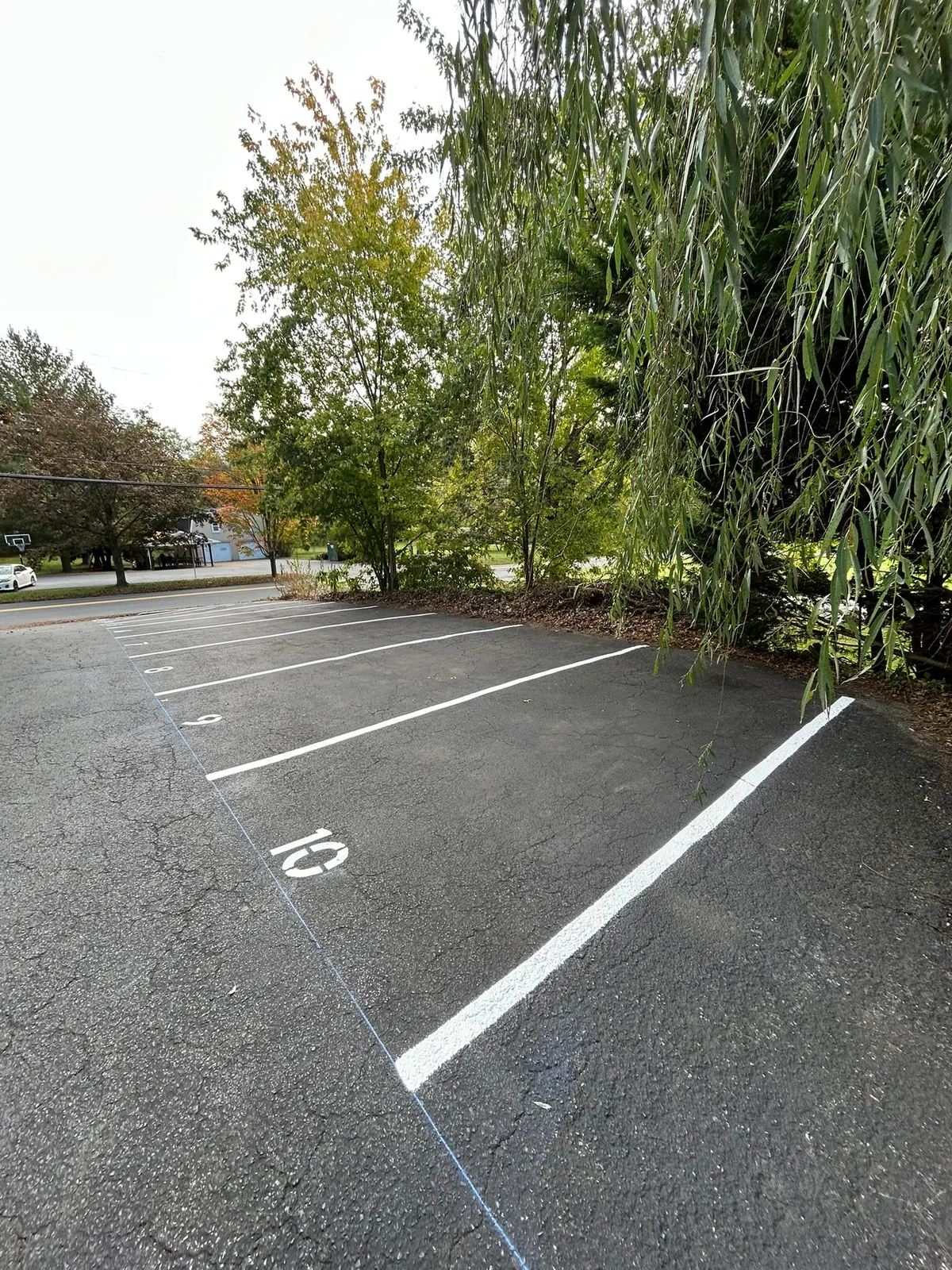
Here’s the unglamorous secret of crisp lines: chalk. Before the striping machine moves an inch on a new layout, we snap chalk lines, long, taut string coated in chalk dust, stretched between measured points and snapped against the pavement. That leaves a perfectly straight guide line the machine operator follows.
Why bother? Because asphalt lies to your eyes. Lots slope, curve, and play tricks with perspective, and a line that “looked straight” freehand will wander like a shopping cart with a bad wheel. The chalk line doesn’t care about optical illusions. We square the first baseline off a fixed reference, usually the building face or the curb, and everything else gets measured off that. Get the baseline right and 60 stalls fall into place. Get it wrong and every single line inherits the error.
Step 4: The Machine Does the Painting (the Operator Does the Thinking)
The striping machine is a walk-behind rig with a pressurized spray gun that lays a clean 4-inch line of traffic-grade waterborne paint at a consistent thickness. Consistency is the whole point: a line that’s thick at one end and thin at the other wears unevenly, and in two years your lot looks like a fading photograph.
The operator walks the chalk line at a steady pace, feathering the trigger at the start and end of each stall line so there’s no blob at either end. Blobs are the signature of a rushed job. So are wavy lines, overspray shadows, and stall lines of slightly different lengths. None of that shows up in a quote, it shows up six hours later in the finished lot, which is why who does your striping matters more than what machine they own.
Step 5: Stencils, Where Neat Jobs Get Separated From Sloppy Ones
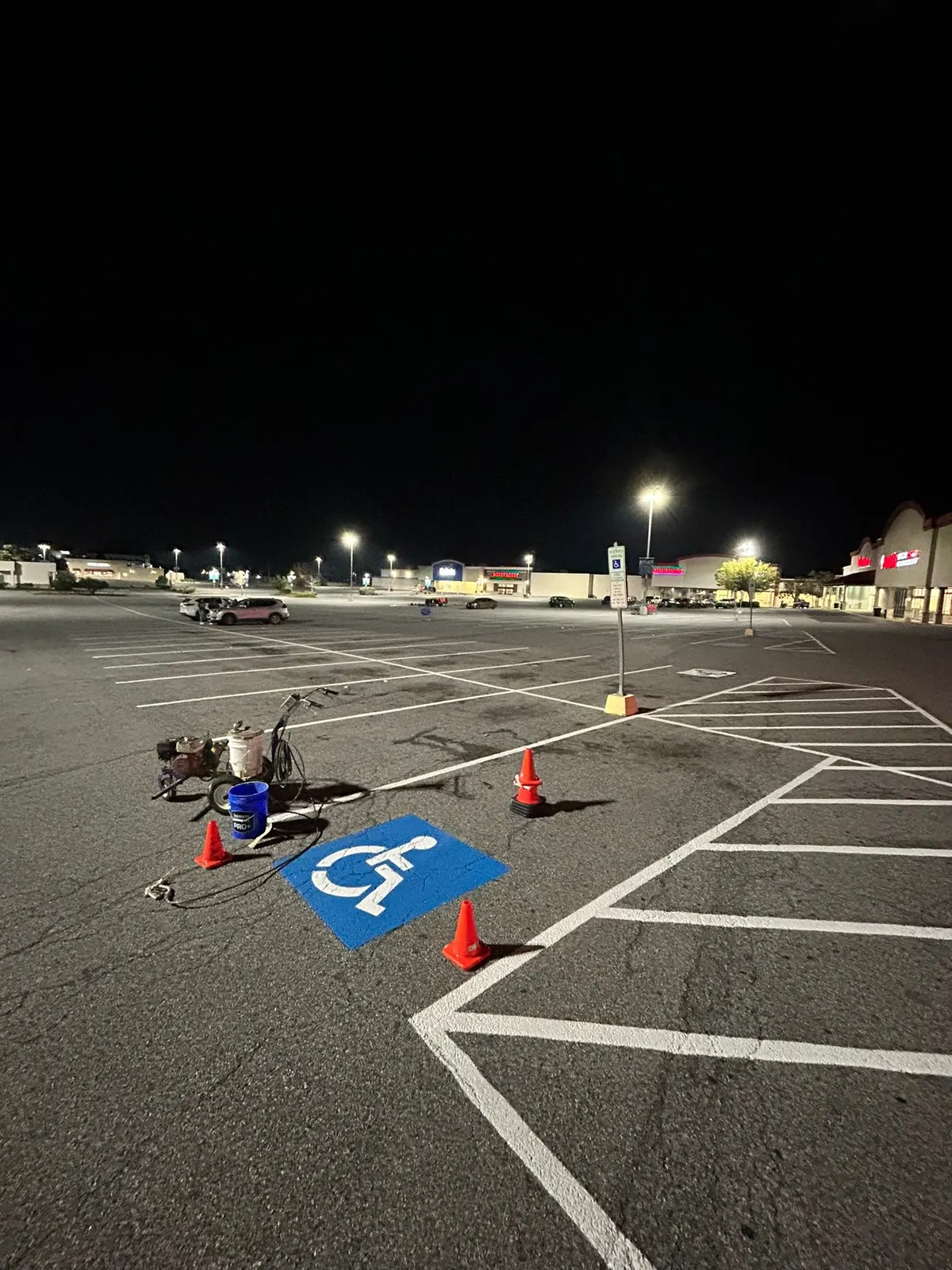
Arrows, ADA symbols, RESERVED, FIRE LANE, VISITOR, all stencil work. A stencil is a big cut-out template we lay flat on the pavement and paint through. Sounds idiot-proof. It isn’t.
A stencil has to be squared to the stall, measured off the stall lines, not eyeballed, or your wheelchair symbol tilts like it’s leaning into a turn. It has to sit dead flat, because paint sneaks under any raised edge and blurs the outline. And the paint has to go on in light passes; flooding it causes runs under the template. On ADA spaces, we paint the blue background field first, let it tack up, then lay the white symbol over it. That two-stage job is why accessible spaces cost a bit more, and why they look terrible when someone rushes them.
Step 6: Drying, Cones, and Reopening
Waterborne traffic paint dries to the touch in 30–60 minutes in good conditions and takes traffic shortly after. “Good conditions” means 50°F and rising, dry pavement, and no rain in the forecast, paint applied below its temperature limit stays soft, picks up tire marks, and can peel by spring. If the weather isn’t right, we reschedule. A one-week delay beats a one-season redo.
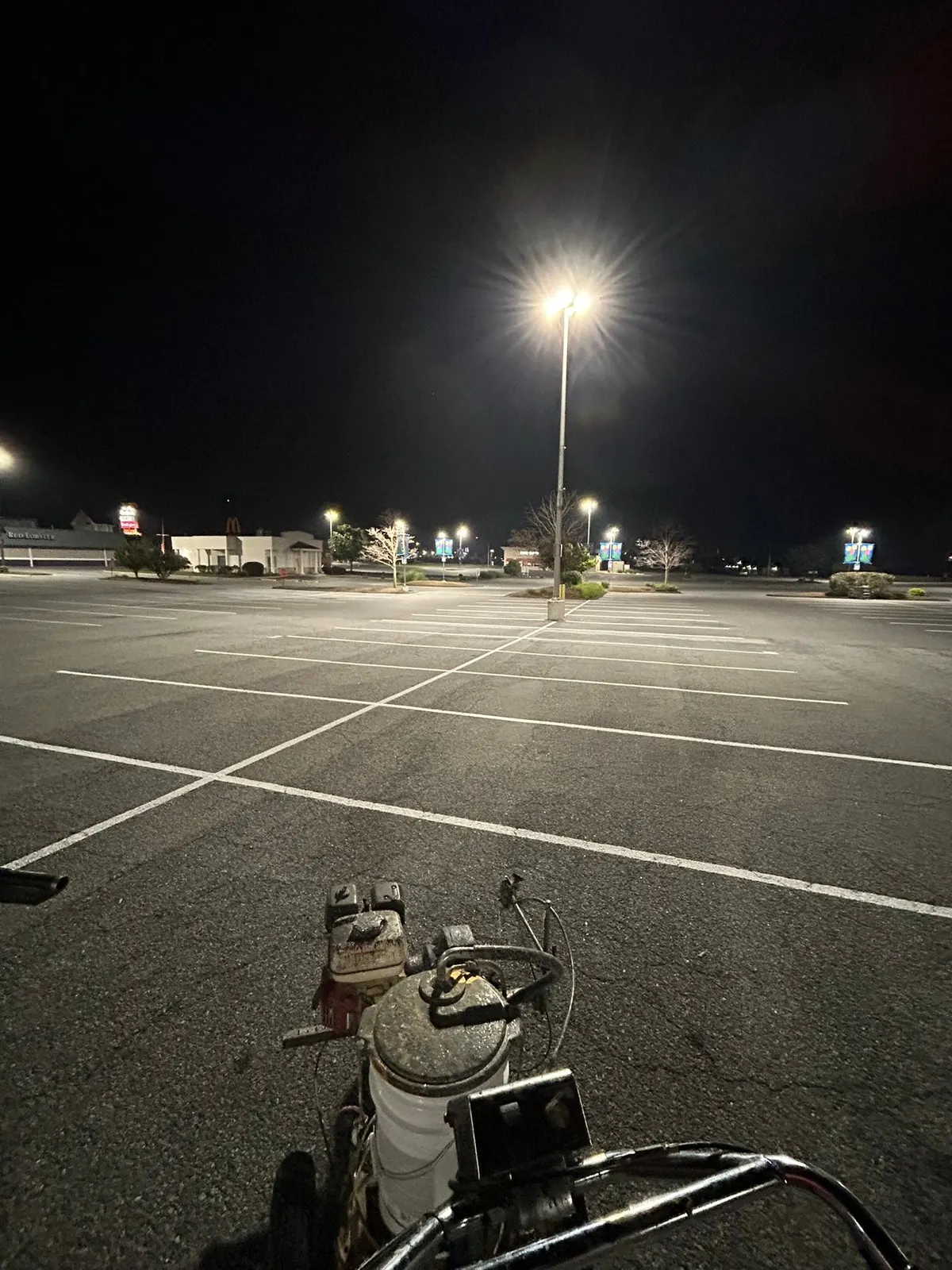
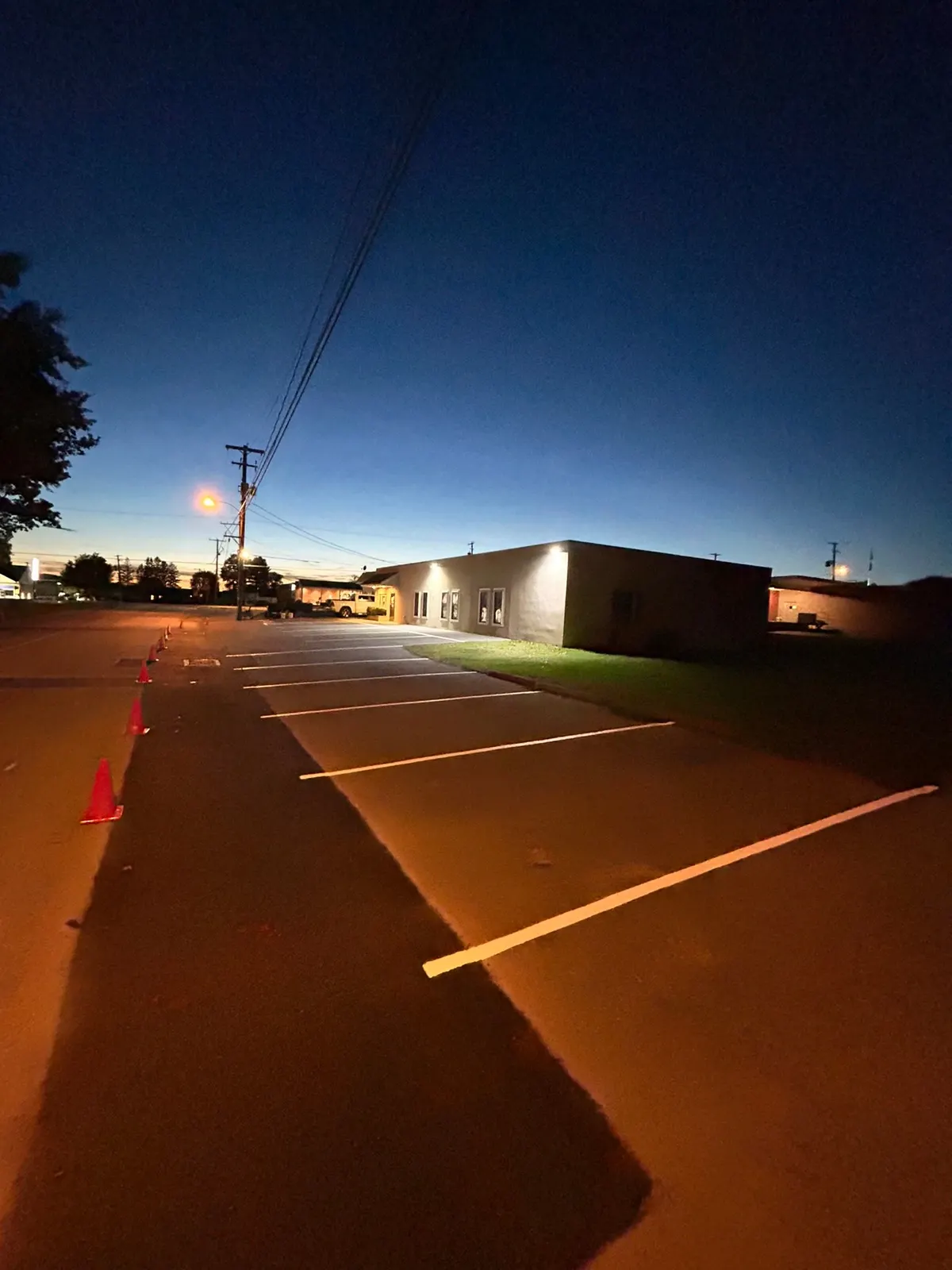
While the paint cures, cones guard the fresh sections. On phased daytime jobs we stripe the lot in halves so your customers always have somewhere to park. On night jobs, which is most of our commercial work, we start after close and the lot is dry, open, and looking sharp before your first employee shows up. Your business never closes. That’s not a premium service; it’s just how we schedule, whether the lot is in Quarryville or Leola.
Step 7: The Final Walk-Through
Before the trailer leaves, we walk the lot one more time with fresh eyes. We’re checking line sharpness end to end, stencil alignment, complete coverage on the crosshatched areas, and, on ADA spaces, that the dimensions actually tape out to what the law requires, because “close” doesn’t count in a compliance inspection. We also count the finished stalls against the plan. It sounds obsessive. It is. But this ten-minute walk is where a stray thin line or a missed arrow gets caught while the machine is still on site, instead of three days later when it means a second trip.
Then we photograph everything. Partly for our records, partly because owners love getting a “your lot is done” text at 6 a.m. with pictures of crisp lines under the morning light. If you’ve ever wondered why our gallery has so many night shots, that’s why. The work happens when your lot is empty.
A Real Job, Start to Finish: the 26-Space Lot
If you want to see every one of these steps applied to an actual Lancaster property, read the write-up of how we re-striped a 26-space commercial lot. It had everything: faded lines to trace, an ADA space to bring up to spec, crosshatching, and stencils, plus the small judgment calls that never make it into a brochure, like adjusting a stall line a few inches so a door stops swinging into a bollard. The details are the job.
Watch a Lot Get Striped
Reading about striping is one thing. Watching a lot go from blank to finished, layout, machine work, and ADA stencils, makes it click:
For material standards and pavement basics, the National Asphalt Pavement Association is a solid rabbit hole, that’s the industry body behind most of the best practices we follow on the surface your paint depends on.
Frequently Asked Questions
How long does it take to stripe a parking lot?
A straightforward restripe on a 20–40 space lot is usually done in a few hours, including stencils and dry time. New layouts take longer because of the measuring and chalk work, often half a day. Big multi-phase commercial lots get spread over a night or two.
Do I need to close my business while you stripe?
No. We work nights and weekends specifically so you don’t have to. For daytime jobs we stripe in phases with cones, keeping part of the lot open at all times. The only thing we ask is help getting cars off the sections we’re painting.
Can you stripe over old, faded lines?
Yes, that’s a restripe, and it’s the most economical option, typically $4–6 per stall (typical range; exact quote free). If the old layout is bad, stalls too narrow, missing ADA spaces, we can black out old lines and re-lay sections while we’re there.
What weather do you need?
Dry pavement, 50°F and rising, and no rain for a few hours after application. In Pennsylvania that means roughly April through October is prime striping season, with night work in midsummer actually being ideal, warm pavement, no sun beating on the crew, no traffic. If a contractor offers to stripe your lot in late November, ask them what happens to waterborne paint below its cure temperature. If they don’t have an answer, you just saved yourself a redo.
Is there a minimum job cost?
Yes, $400, that covers mobilizing the crew, machine, paint, and stencils to your property. Most small commercial lots land right around that number for a full restripe.
Ready for Lines Your Customers Can Actually Follow?
Whether it’s a tired restripe or a blank-slate layout, we’ll walk your lot, measure it properly, and give you a free, exact quote, then do the work while your business keeps running. Contact us here or call 717-808-1600. By this time next week, your blacktop could be wearing crisp new lines and pretending it’s young again.