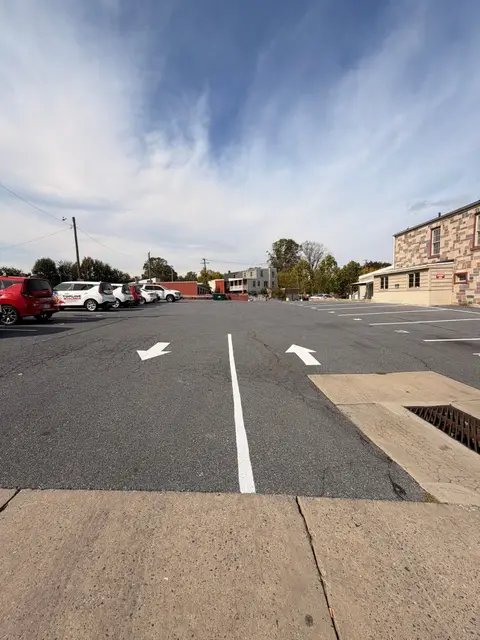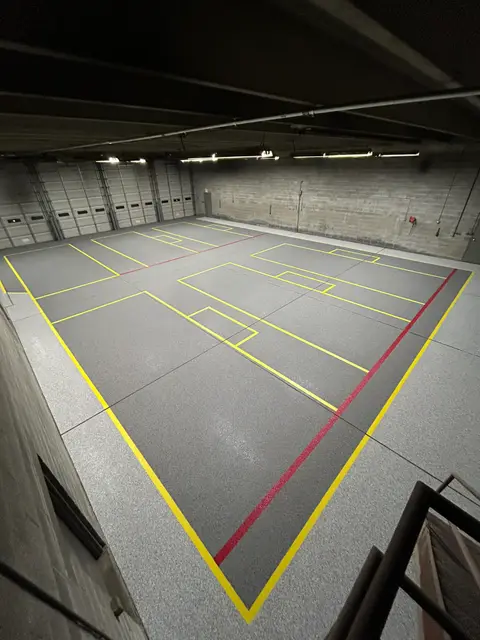
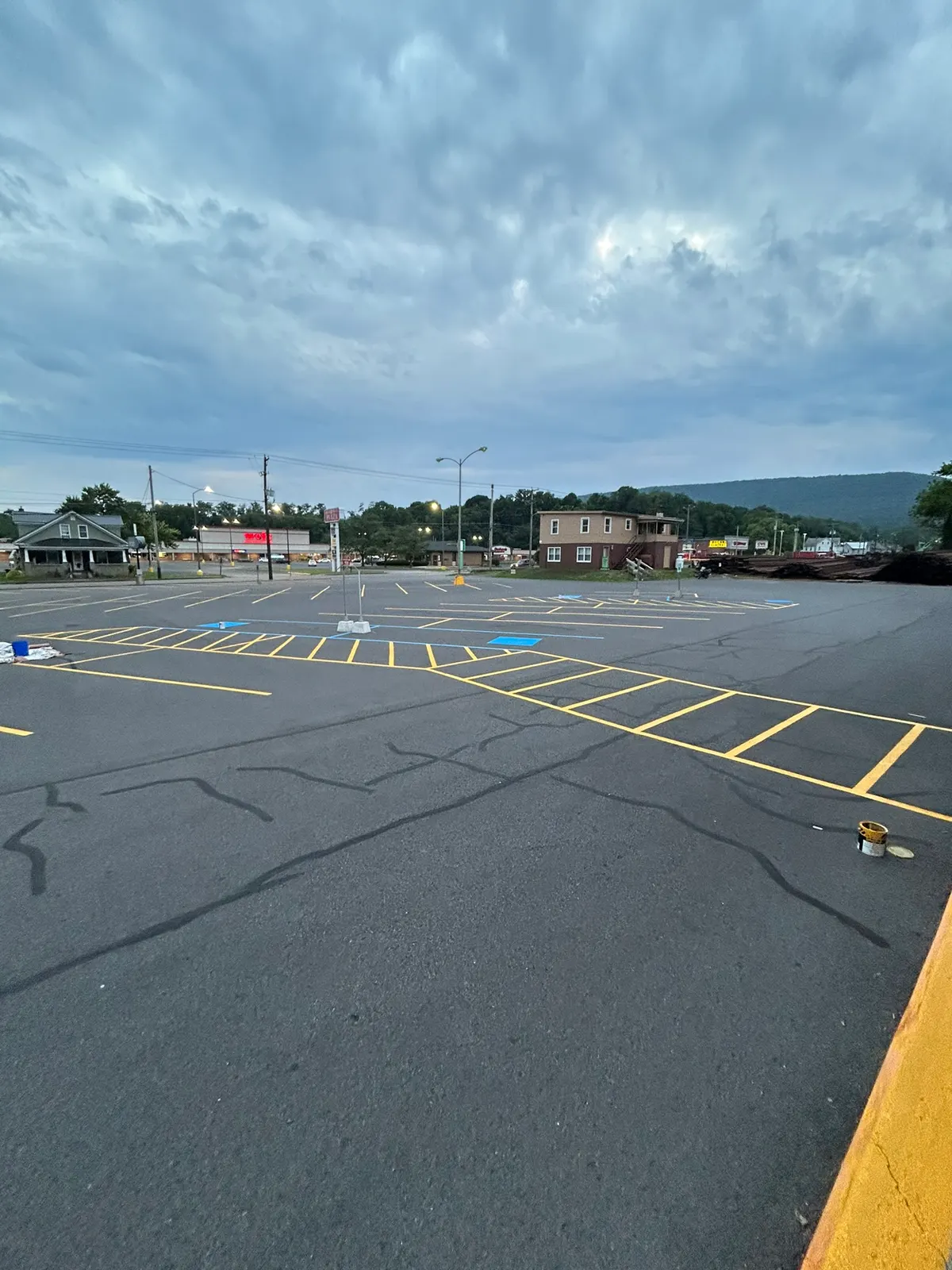
Your parking lot lines are fading, and you’ve noticed customers parking like they’re playing a game with no rules. One truck takes up two spots. Somebody’s wedged sideways near the entrance. And you’re standing at the window thinking, “How much is this going to cost me to fix?” Fair question. Most striping contractors treat pricing like a state secret. We don’t. Here’s what parking lot striping actually costs in Lancaster County, what drives the number up or down, and how to avoid paying for things you don’t need.
The Short Answer: What Striping Costs in Lancaster County
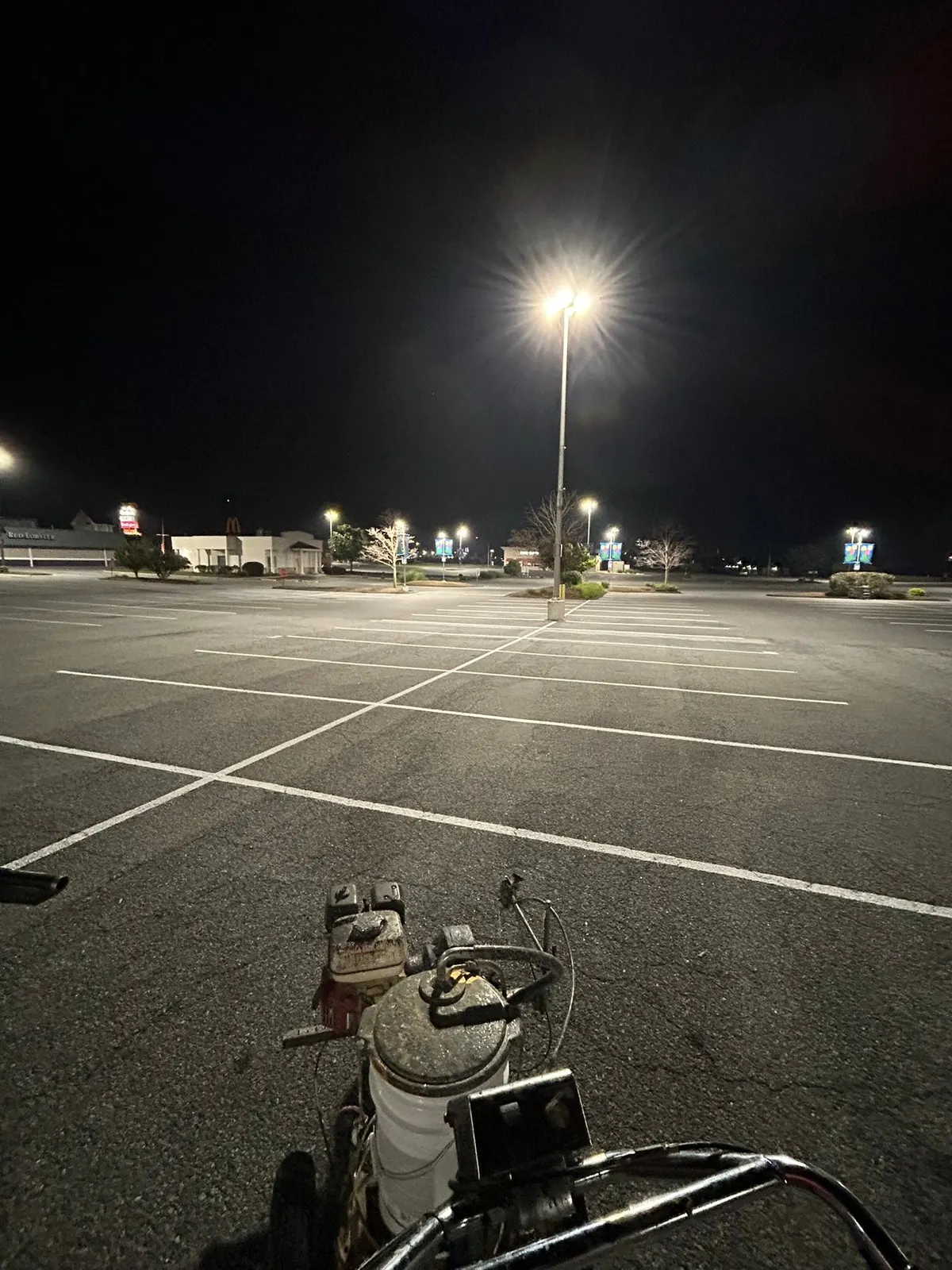
For a standard restripe, painting over existing lines that are still visible, you’re typically looking at $4 to $6 per stall. That’s the typical range, and your exact quote is free. A 30-space lot usually lands in the $400–700 zone once you add stencils and hatched areas. Our minimum job is $400, because loading a striping machine, paint, stencils, and a crew onto a trailer costs roughly the same whether we paint 10 lines or 60.
A brand-new layout, bare blacktop with no existing lines, costs more. Usually 1.5 to 2 times the restripe price. Not because the paint is fancier, but because someone has to do math before anyone pulls a trigger on a paint gun. More on that below.
If you want the full picture of what we offer, our parking lot striping service page covers the details. But stick around, the numbers get more interesting.
Restripe vs. New Layout: Why One Costs Double
A restripe is straightforward. The old lines are our map. We clean the surface, follow the existing layout, and lay fresh paint right over the ghosts of the old lines. Fast, efficient, cheap.
A new layout is a different animal. We measure the lot, plan stall widths (typically 9 feet for retail), figure out drive aisle widths, count how many ADA spaces you legally need, and then snap chalk lines across the entire lot before the machine ever moves. Every line gets a chalk guide first, because “eyeballing it” is how you end up with stalls that shrink from 9 feet to 8 feet by the end of the row. We’ve re-measured lots where that exact thing happened. The chalk takes time. Time costs money. But crooked lines cost more, in redo fees and in how your business looks.
Rule of thumb: restripe from $4–6 per stall, new layout from $8–12 per stall, both plus stencils and specialty markings.
What’s Actually in the Price
When you get a striping quote, here’s where the money goes:
- Traffic-grade paint. Not the stuff from the hardware store. Commercial waterborne traffic paint is built to survive tires, plows, and Pennsylvania winters.
- The machine. A professional line striper lays a crisp 4-inch line at consistent thickness. Consistent thickness means consistent wear, so the whole lot fades evenly instead of in patches.
- Labor and layout. Measuring, chalking, masking, and the actual painting.
- Mobilization. Getting the crew, trailer, and equipment to your lot. This is why the $400 minimum exists, the drive to your property costs the same whether the job is big or small.
The Asphalt Institute has plenty to say about pavement surfaces and coatings if you want to go deep, but the short version is: good materials on a sound surface last years. Cheap materials on a bad surface last one winter.
The Extras: Stencils, ADA Spaces, and Custom Markings
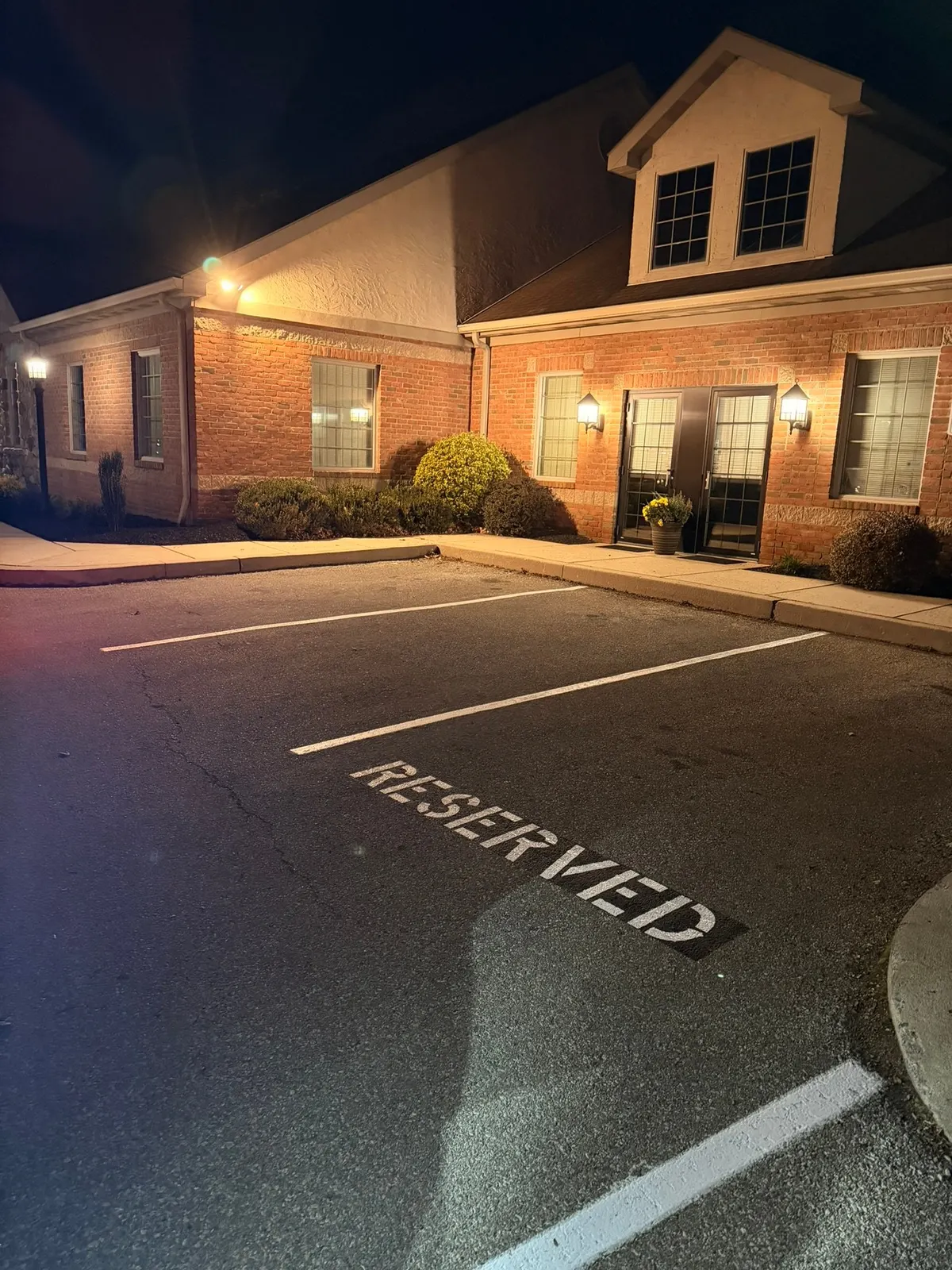
Lines are only half the job on most commercial lots. The rest is stencils and specialty markings, each priced per unit:
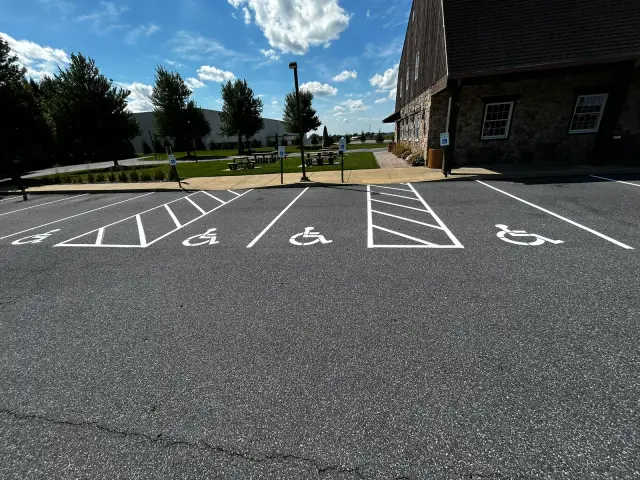
- ADA accessible symbols, the blue background with the white wheelchair symbol, typically $25–45 each depending on size.
- Directional arrows, $15–30 each.
- Text stencils, RESERVED, VISITOR, NO PARKING, FIRE LANE, priced per word or per marking.
- Crosshatched areas, access aisles, no-parking zones, loading zones, priced by area.
One thing worth knowing: ADA markings aren’t optional decorations. Federal rules under the Americans with Disabilities Act set exactly how many accessible spaces you need and how they must be marked. If your quote doesn’t mention ADA spaces, ask why. A striping job that leaves you out of compliance isn’t a bargain, it’s a lawsuit with fresh paint on it.
What Makes the Price Go Up (or Down)
Two identical-looking lots can get two different quotes. Here’s why:
- How faded the old lines are. Barely-there lines mean we’re half re-laying the layout, which takes longer than tracing crisp ghosts.
- Number of colors. Every color change means flushing the machine or running a second gun. White-only is cheapest. White plus yellow plus blue costs more.
- Surface condition. Dirty, sandy, or crumbling asphalt needs cleaning first, paint sticks to pavement, not to the dirt sitting on it.
- Obstacles and occupancy. A lot we can stripe empty goes fast. A lot where we work around parked cars in phases takes coordination.
- Weather windows. Waterborne traffic paint wants 50°F and rising, and a dry surface. Squeezing a job into a cold snap or before rain isn’t something we’ll do, paint that goes down in the wrong conditions peels, and then everyone pays twice.
One more pricing lever nobody mentions: timing. Book striping in the same season your neighbors do, usually the panicked two weeks before a grand opening or a property inspection, and schedules tighten. Book it as planned maintenance in late spring or early fall, and you get first pick of dates and a crew that isn’t sprinting. The paint costs the same either way; the calendar flexibility is free money.
Night and Weekend Work: What It Does to Your Bill
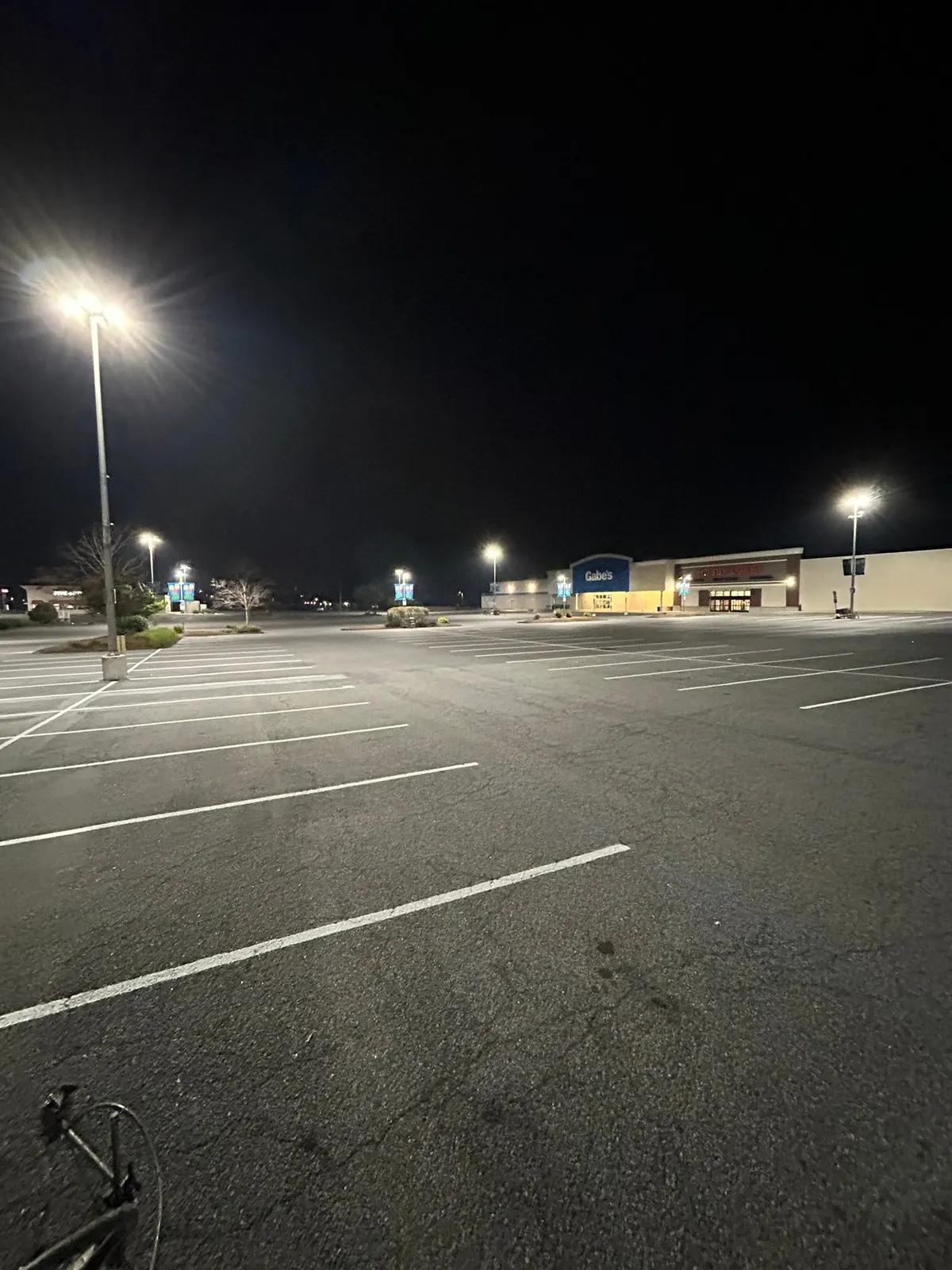
Here’s the part most business owners worry about: “Do I have to close?” No. We stripe a lot of Lancaster County lots at night and on weekends, specifically so your business never stops. Retail lots get striped after close. Restaurants get striped Monday morning before the lunch rush. Churches get striped on a Tuesday.
Waterborne traffic paint is dry to the touch in 30–60 minutes in decent conditions, and ready for tires shortly after. We cone off fresh sections and open them as they cure, so even a phased daytime job doesn’t shut you down. Night work sometimes adds a modest premium for the crew hours, but for most clients it’s a wash, the cost of closing your lot for a day is far higher than the cost of us working while you sleep.
We do this all over the county, from New Holland to Mount Joy. Same pricing structure everywhere, no “your zip code looked expensive” math.
A Real Example: The 26-Space Lot
Numbers on a page are one thing. Here’s a real one: we re-striped a 26-space commercial lot in Lancaster, stalls, an ADA space with access aisle, crosshatching, and stencils. The whole job ran a few hundred dollars, took one visit, and the owner’s biggest task was moving two cars. That post walks through exactly why the details matter, right down to how we square the stencils so the wheelchair symbol doesn’t end up leaning like it’s had a long day.
The takeaway from that job applies to almost every quote we write: the per-stall number is only the starting point. What the owner actually paid for was the layout math, the ADA compliance check, and paint that went down on a clean, dry surface at the right temperature, the invisible stuff that decides whether the lines still look sharp in year three.
When Striping Alone Won’t Save Your Lot
Honesty time. Fresh paint on failing asphalt is lipstick on a pothole. If your lot is gray, cracked, and crumbling, new lines will look great for about a season, and then the surface underneath keeps deteriorating and takes your paint with it. In that case, the smarter money goes to sealcoating first, then striping on top of the fresh black surface. You get better paint adhesion, a lot that looks brand-new instead of half-new, and you’re protecting the asphalt itself, which is the expensive part.
If you’re not sure which situation you’re in, our post on parking lot restriping breaks down the signs. Or just send us a photo, we’ll tell you straight, even if the answer is “don’t hire us yet.”
See How Striping Jobs Get Quoted
Want to see how contractors actually build a striping quote? This video walks through the process, stall counts, stencils, and mobilization, the same math we described above:
Frequently Asked Questions
How much does it cost to stripe a 20-space parking lot?
For a restripe, a 20-space lot with basic markings usually lands at our $400 minimum, sometimes a bit above if there are ADA spaces, arrows, or crosshatching. A new layout on the same lot would run more because of the measuring and chalk work. Exact quotes are free, send us the address and we can usually price it from a satellite view plus a couple of photos.
Do you charge extra for ADA symbols and access aisles?
Yes, stencils and hatched areas are priced per unit on top of the per-stall rate. But we’ll also tell you exactly how many accessible spaces your lot needs, so you’re not guessing at federal requirements. It’s included in every quote by default.
How long before cars can drive on fresh lines?
Waterborne traffic paint is typically dry to the touch in 30–60 minutes and ready for traffic within an hour or two in warm, dry weather. Cooler or humid days stretch that out, which is one reason we watch the forecast like farmers.
Is there a minimum job size?
Our minimum is $400. Below that, the cost of mobilizing the crew and equipment exceeds the job itself. If your job is small, ask about bundling, striping plus crack filling or sealcoating in one visit stretches that mobilization cost across more work.
How often should a lot be restriped?
Most Lancaster County lots need it every 18–36 months, depending on traffic, plowing, and sun exposure. High-traffic retail wears faster; a quiet office lot can go three years. When the lines are more suggestion than instruction, it’s time.
Get an Exact Number for Your Lot
Typical ranges are useful, but your lot isn’t typical, it’s yours. Send us the address and a photo or two, and we’ll give you a firm, free quote with no “starting at” games. Our line striping service covers everything from a 10-space office lot to shopping centers, days, nights, or weekends. Contact us online or call 717-808-1600, we’ll get you a number before your lines fade another shade.