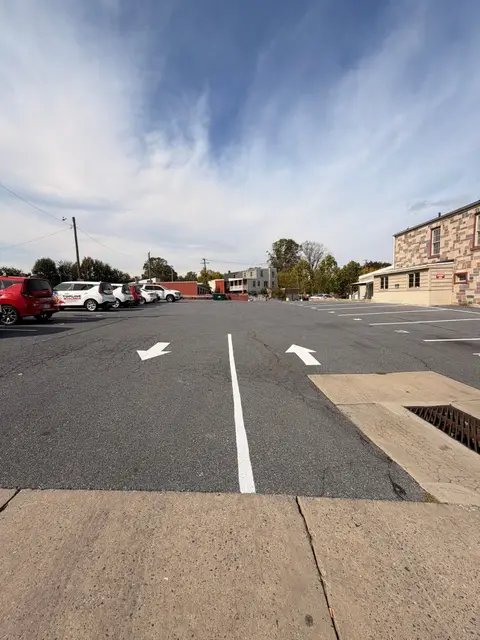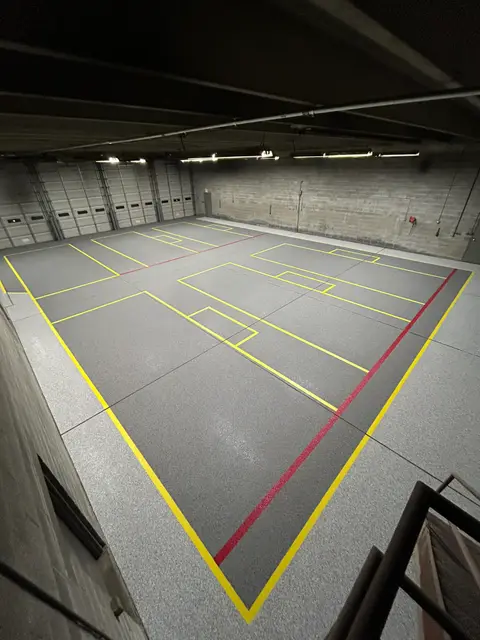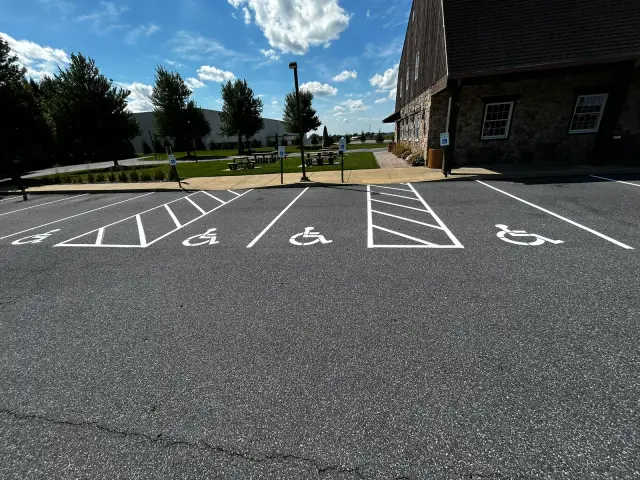
Your parking lot is the first thing every customer sees, before your signage, before your front door, before your friendly staff. And here’s the uncomfortable truth: a badly striped lot quietly tells people your business doesn’t sweat the details. Crooked lines, vanished paint, stalls sized for 1985 sedans, customers notice, even if they never say it. We’ve fixed hundreds of lots across Lancaster County, and the same parking lot striping mistakes show up again and again. Here are the ten worst offenders, why they happen, and how to avoid paying for them twice.
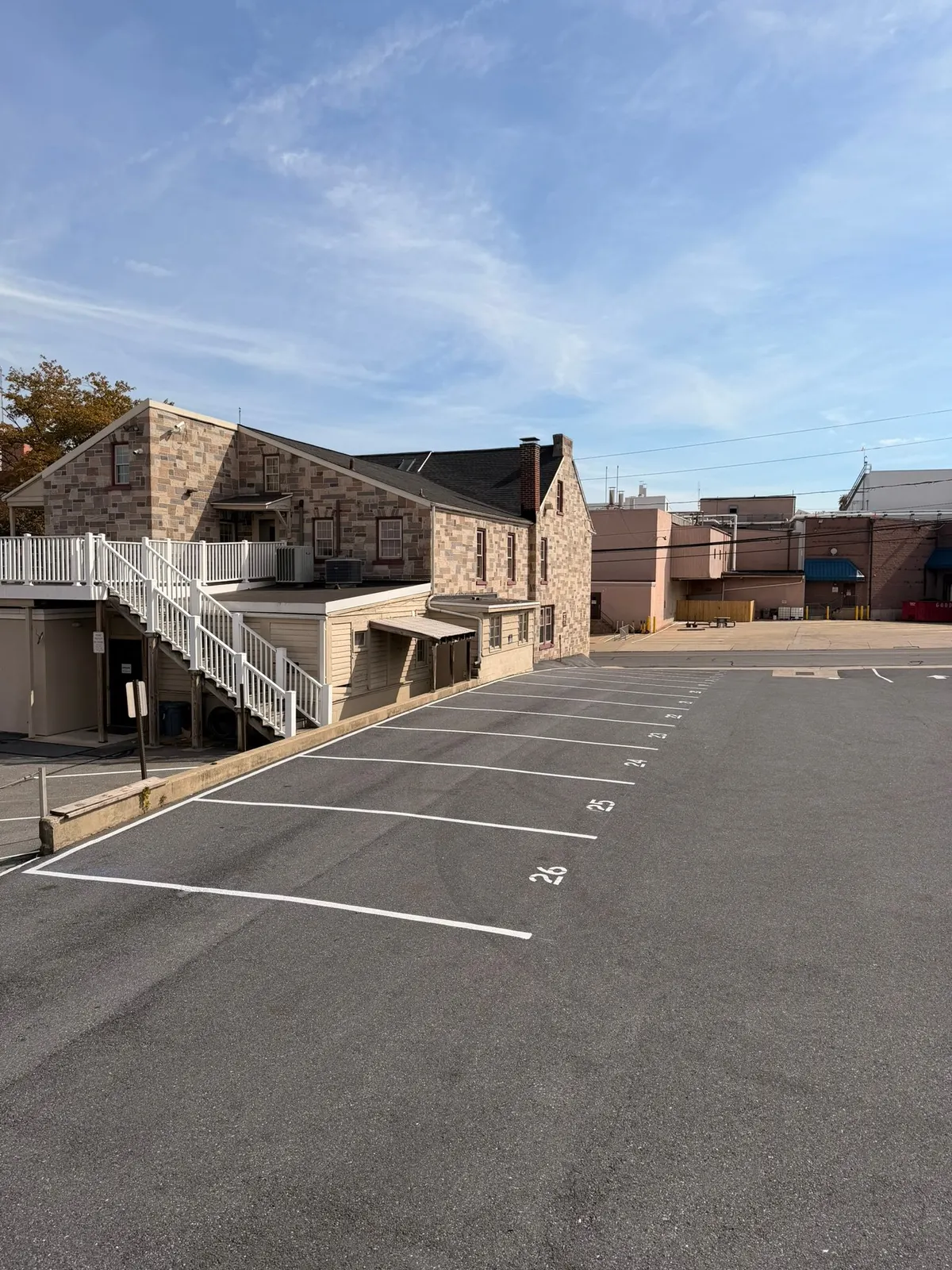
Mistakes 1–2: Crooked Lines and Freehand Layout
Mistake #1: skipping the chalk lines. Straight lines don’t happen by feel. Pros snap a chalk line, a measured, taut string guide, before the machine moves. Skip that step and the lines wander, because asphalt slopes and curves fool the eye every time. One wavy line looks like an accident. Forty of them look like a policy.
Mistake #2: not squaring the layout to a fixed baseline. Every stall line should be measured off one reference, the building face or curb line. When each line is measured off the previous one instead, tiny errors compound. We’ve re-striped lots where stalls started at 9 feet and quietly shrank to 8 by the end of the row. The last three cars in that row park like they’re in a compactor.
Mistakes 3–4: Stalls Too Narrow, Aisles Too Tight
Mistake #3: squeezing in extra stalls. The temptation is real, narrow every stall by six inches and gain two more spaces. But 8-foot stalls in a retail lot mean door dings, awkward exits, and customers who choose the shopping center down the road with room to open a door. Standard is about 9 feet for a reason. Two extra stalls aren’t worth annoying a hundred customers a day.
Mistake #4: ignoring traffic flow. No arrows, no stop bars, aisles that dead-end, two-way aisles narrow enough to trigger standoffs. Pavement markings are instructions, the Federal Highway Administration builds entire manuals on this principle for public roads, and your lot is just a small road network. When drivers have to guess, fenders eventually meet.
Mistakes 5–6: The ADA Blind Spot
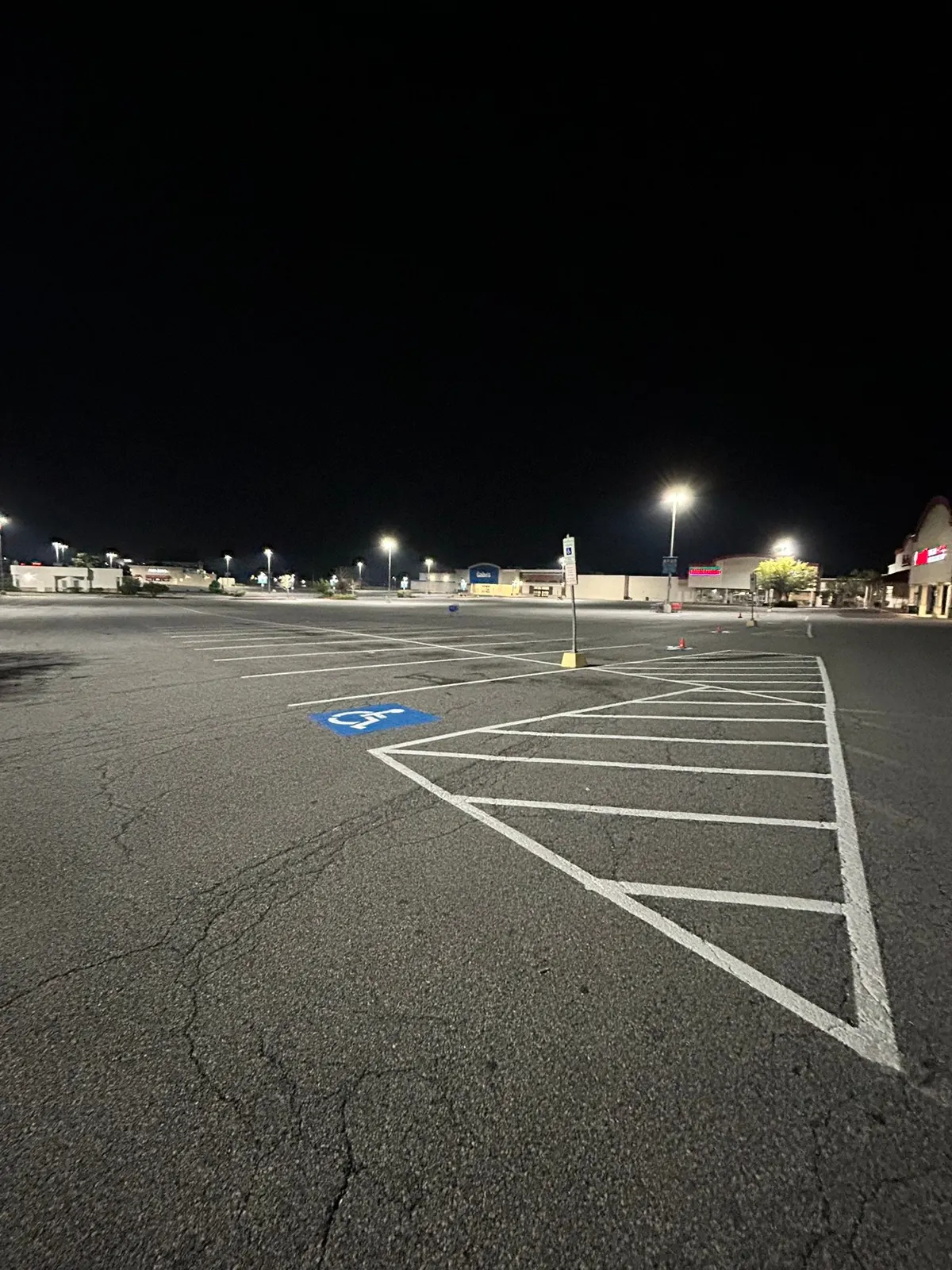
Mistake #5: not enough accessible spaces. Federal rules set a minimum, roughly one accessible space per 25 total, and lots striped “the way they’ve always been” are often short. That’s not a cosmetic problem; it’s a legal exposure that shows up as a demand letter.
Mistake #6: no van-accessible space. At least one of every six accessible spaces must be van-accessible, with a wider access aisle for wheelchair lifts. The U.S. Access Board publishes the exact specs. This is the single most common compliance miss we find on Lancaster County lots, and our guide to ADA parking lot requirements walks through everything your lot needs, in plain English.
Mistakes 7–8: Painting Over Dirt, Painting in the Cold
Mistake #7: striping a dirty surface. Paint bonds to pavement, not to the sand, dust, and leaf litter sitting on top of it. Stripe over grime and the paint peels off with the grime, sometimes within months. Proper prep means blowing and sweeping the line paths clean first. It’s boring. It’s also the difference between paint that lasts three years and paint that lasts one winter.
Mistake #8: painting below the temperature limit. Waterborne traffic paint needs roughly 50°F and rising, plus dry pavement. Paint applied on a cold November afternoon never cures properly, it stays soft, tracks under tires, and flakes by spring. A contractor willing to stripe your lot in 40-degree drizzle is charging you for paint that’s already planning its exit.
Mistakes 9–10: Sloppy Stencils and Striping a Dying Surface
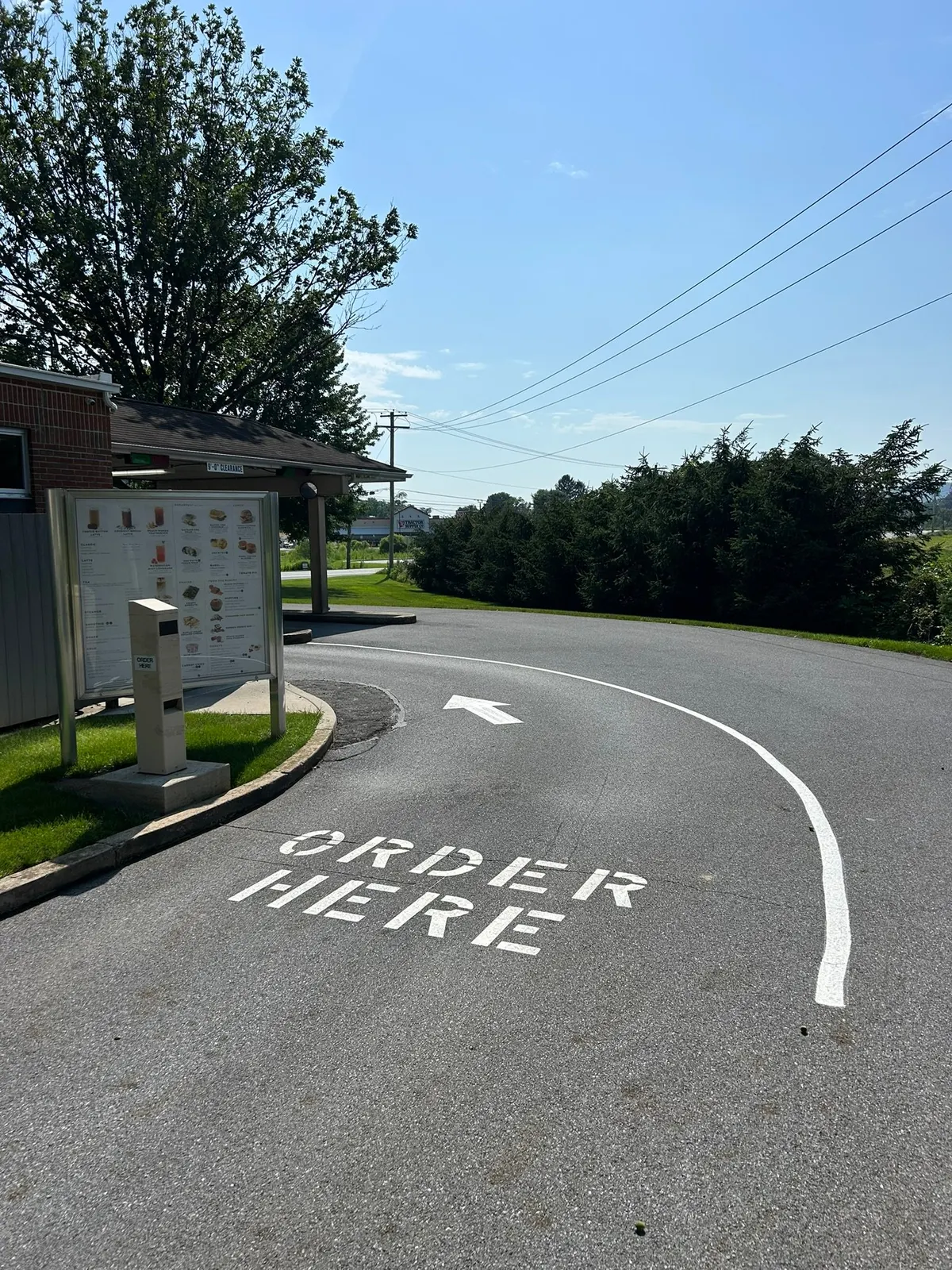
Mistake #9: crooked, blurry stencils. Arrows, RESERVED markings, wheelchair symbols, a stencil has to be squared off the stall lines and held dead flat, or paint creeps under the edges and the symbol comes out tilted and fuzzy. A leaning handicap symbol is the parking lot equivalent of a crooked picture frame: everyone notices, nobody can stop noticing.
Mistake #10: striping asphalt that needed sealcoating first. This is the honest one. If your lot is gray, cracked, and crumbling, fresh paint is a bandage on a broken leg. The lines will look fine for a season while the surface underneath keeps failing. The right order is repair, then sealcoat, then stripe, and if there’s cracking, crack filling comes before all of it. A good contractor will tell you when striping alone won’t save the lot, even if it means a smaller invoice today.
Why These Mistakes Keep Happening
Almost every mistake on this list traces back to one of two causes: speed or price. A crew rushing to the next job skips the chalk lines, skips the surface cleaning, and slaps stencils down by eye. A rock-bottom bid gets that low by cutting the steps you can’t see in the quote, the prep, the layout math, the weather patience. The paint on two competing quotes might be identical; the process behind it rarely is.
There’s also a knowledge gap. Striping looks simple from a distance, it’s paint on the ground, how hard can it be? so it attracts sideline operators who bought a machine last spring. They’re not dishonest; they just don’t know what they don’t know, and what they don’t know includes federal accessibility dimensions and paint chemistry. Your lot becomes the classroom.
Here’s a useful test when comparing quotes: ask how they handle layout. If the answer doesn’t include measuring and chalk or string lines, you’re looking at a freehand artist, and your lot is the canvas. Ask what temperature they stop working at. Ask how many accessible spaces your lot needs, a striping contractor who can’t answer that off the top of their head hasn’t read the rules they’re painting.
And if you’re wondering whether faded lines are really costing you anything, we wrote up the business case in why your business needs fresh parking lot striping, spoiler: the lot is marketing, whether you treat it that way or not.
What These Mistakes Cost You (a Quick Tally)
Let’s put numbers on it, because “looks bad” is easy to shrug off until it isn’t:
- Peeling paint from bad prep or cold-weather application: you pay for the same striping twice. A typical restripe runs $4–6 per stall (typical range, exact quote free), so a botched 50-space lot is a few hundred dollars burned, plus another mobilization fee.
- ADA gaps: demand letters and settlements routinely cost thousands, while the striping fix itself is often a single visit starting at our $400 minimum. It’s the worst trade in commercial property.
- Bad layout: harder to price, easier to feel. Confused drivers, near-misses, a delivery truck that can’t turn, one fender-bender claim, any of those outweighs the cost of doing the layout right the first time.
- First impressions: your lot greets every customer before your staff can. A faded, chaotic lot whispers “we defer maintenance”, and customers quietly wonder what else you defer.
What a Clean Job Looks Like
Done right, striping is almost invisible as a process. We measure, snap chalk lines, clean the surface, and run the machine at night or on a weekend so your business never closes, most Lancaster County restripes run $4–6 per stall (typical range, exact quote free) with a $400 minimum visit. By morning: straight lines, square stencils, compliant ADA spaces, and a lot that looks managed instead of tolerated. That’s the standard whether the job is in Denver or Gap.
Want to see what careful striping actually involves, step by step? This walkthrough covers the fundamentals, and if you watch closely, you’ll spot exactly where the shortcuts on this list would creep in:
Frequently Asked Questions
How do I know if my lot’s layout is wrong, not just faded?
Watch how people park. If cars regularly straddle lines, doors hit neighbors, or drivers hesitate at aisle intersections, the layout is fighting them. Faded paint gets a restripe; a bad layout gets blacked out and redesigned. We’ll tell you which one you have during a free walk-through.
Can bad striping actually get me sued?
Missing or non-compliant accessible spaces can, yes. ADA compliance claims against businesses are common and expensive, and “the last contractor striped it that way” is not a defense. The fix, correct symbols, access aisles, and signage, usually costs a few hundred dollars. The lawsuit costs more.
Can crooked or wrong lines be fixed without repaving?
Yes. We black out the bad lines with pavement-matching paint and lay the correct layout over top. On older gray asphalt, sealcoating first hides old lines completely and gives the new paint a fresh black background, the lot ends up looking repaved for a fraction of the price.
How often should lines be repainted?
Every 18–36 months for most Lancaster County lots, depending on traffic and plowing. High-traffic retail wears fastest, since every tire pass and every winter plow blade takes a little paint with it. A quiet office lot with covered parking can stretch toward three years. The practical test: stand at your entrance and look at the far row. If you can’t tell where one stall ends and the next begins, neither can your customers, and you’re overdue.
Will striping disrupt my business hours?
It shouldn’t. We stripe nights and weekends so lots are dry and open before business hours, that’s standard scheduling for us, not a premium add-on. Waterborne paint takes traffic within an hour or two in warm weather, so even phased daytime work keeps most of your lot usable. The most common thing owners say the morning after a night job is that they forgot we were coming.
Get a Lot That Makes the Right First Impression
If you spotted your own lot anywhere in this list, the fix is cheaper than you think, and faster, since we work while you’re closed. We’ll walk the lot, flag any compliance gaps for free, and quote the job with no surprises. Reach out here or call 717-808-1600. Your parking lot is talking to your customers every single day, let’s make sure it’s saying something good.