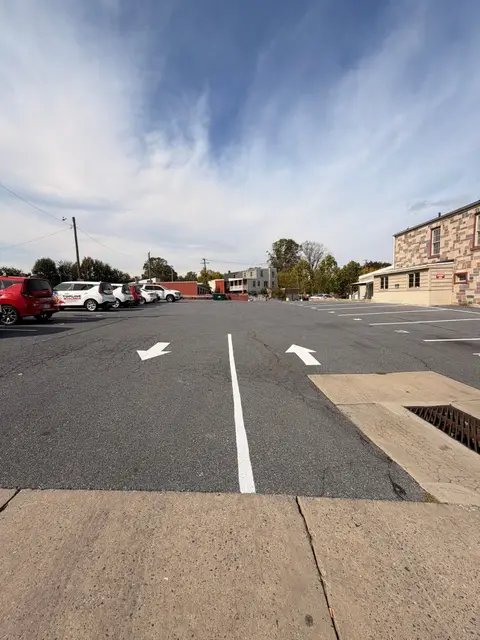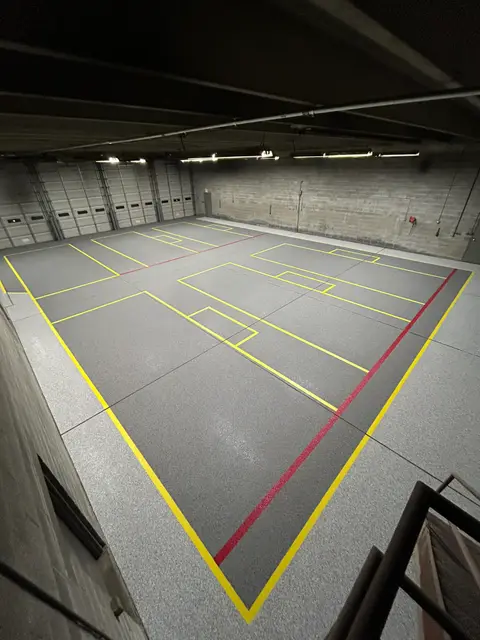
A parking lot is the first thing most customers touch. They see it before they see your sign, your storefront or your staff. If the lines are faded, the stalls are crooked and the ADA markings are gone, they get an impression before they walk in the door, and it is not a good one.
Fresh striping is one of the least expensive things a property owner can do, and it affects more than looks. It touches safety, accessibility, liability, capacity and the way people feel about your business. This guide explains why it matters and how to tell when your lot is due.
1. It makes the lot safer
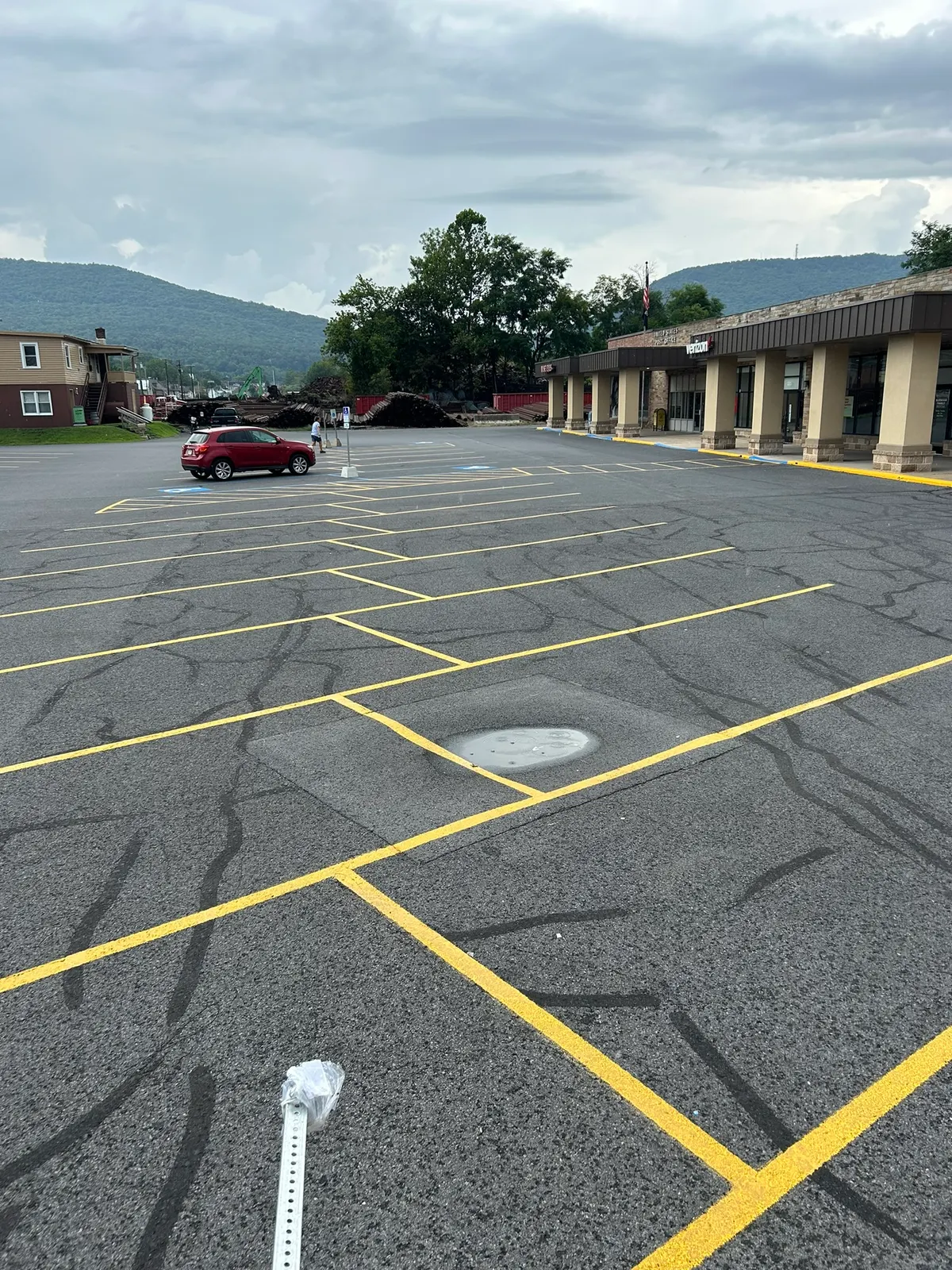
Lines tell drivers what to do without anyone having to explain it. They show where to park, which way traffic flows, where to stop, and where pedestrians cross. When the paint is gone, drivers guess, and guesses cause fender benders.
The most common problems we see on faded lots are:
- Cars parked at all angles. Without clear stalls, people park wherever it is convenient, which blocks aisles and makes it hard to back out.
- Unclear drive aisles. Two-way and one-way flow becomes a free-for-all without arrows or center lines.
- No visible crosswalks. Pedestrians walking through unmarked lanes are harder for drivers to see.
- Blocked fire lanes. If the curb paint and lettering are worn, people park in lanes they would not park in if they were marked.
A lot with clear markings moves traffic more smoothly and puts fewer people in awkward situations. That matters most at busy times, when the lot is full and everyone is in a hurry.
2. It keeps you on the right side of ADA rules
Accessible parking is one of the most common points of complaint and legal trouble for businesses. The federal ADA Standards set the number of accessible stalls based on how many stalls the lot has, and they set minimum dimensions for the stalls and the access aisles next to them. A lot with 1 to 25 stalls needs at least one accessible stall. A lot with 26 to 50 needs at least two, and so on.
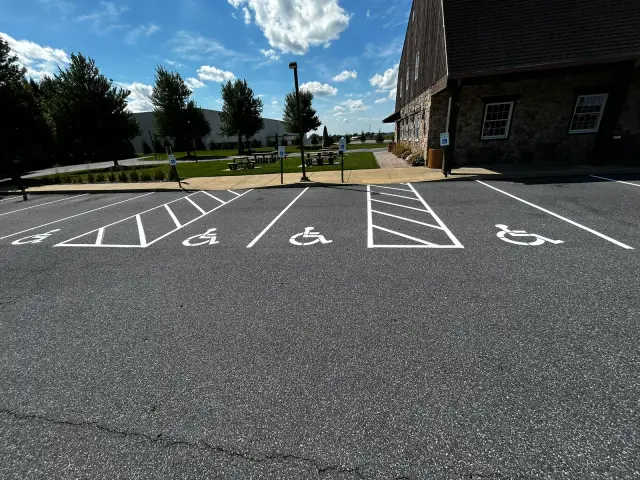
At least one in every six accessible stalls must be van accessible. Each accessible stall needs an access aisle, and that aisle has to stay clear of parked cars. In practice, aisles are marked with diagonal hatching to discourage parking in them.
When the symbol is faded and the hatching is gone, the stall looks like any other stall. Drivers who do not need it park in it, and the people who do need it cannot use it. That is a service problem, a legal problem and a reputation problem at the same time.
We wrote a full guide to the rules, including the Pennsylvania details, in ADA parking compliance in Pennsylvania. If you want help with your lot, see our ADA parking markings page.
Note that signs are part of the requirement, not just paint. Each accessible stall needs a sign with the symbol of access, mounted at a minimum height. Paint is not a substitute, and a sign is not a substitute for markings. A properly marked stall has both.
3. It protects you from liability
Slip and fall claims, collisions and accessibility complaints all point back to the property owner. A well-maintained lot with clear markings does not make you immune, but it makes your position stronger, and it removes the easy arguments. If someone claims they could not tell where a pedestrian crossing was, and the crossing is faded, that is a harder conversation.
Insurance carriers also pay attention. A property that clearly maintains its lot, including markings, is a lower risk than one that visibly does not. It is worth asking your agent what they look for at renewal.
4. It gets the most from the space you have
A lot is only as useful as the number of cars it holds, and a faded lot holds fewer. When lines disappear, people park wide, leave gaps and take up space inefficiently. Over a day, that adds up to a handful of stalls lost on a busy lot.
A fresh layout, especially if it is re-measured, can recover that space. We sometimes find that a lot has room for additional stalls when angles and aisle widths are tuned to the available width. The change is usually small, but on a busy site a few extra stalls are worth real money.
A new layout also gives you a chance to fix other problems: a loading zone that never worked, an accessible stall in a bad place, a one-way flow that confused people. Those are easier to fix on paper and with paint than after an accident.
5. It improves the first impression
People judge a business by its surroundings. A neat lot says the owner pays attention. A worn one says the opposite, even if the inside of the building is spotless.
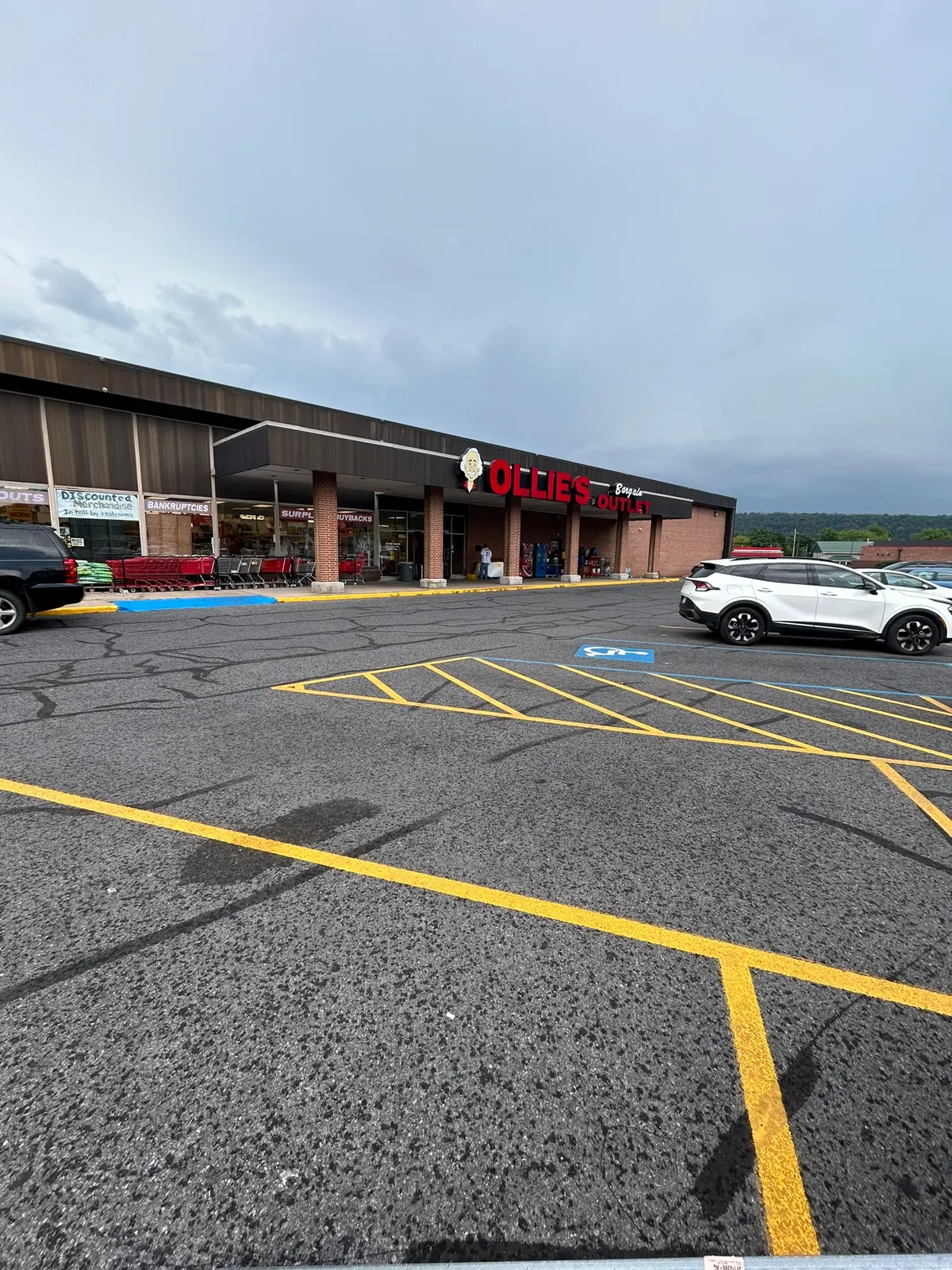
This is especially true for medical offices, restaurants, retail and professional services, where the customer is deciding whether to trust you. Crisp white or yellow lines on dark pavement are one of the cheapest ways to look put together. They also make the rest of the property look better, including the building and landscaping.
6. It costs less than people expect
Striping is not an expensive service relative to its effect. In Lancaster County, a re-stripe over existing lines usually runs $4 to $6 per stall, and a new layout from scratch runs $8 to $12 per stall. ADA symbols and arrows are added on top. Our minimum job is $400. A basic re-stripe of a 20 to 30 stall lot typically lands between $400 and $700.
The full breakdown is in what Lancaster businesses actually pay for parking lot striping.
A word about cheap paint jobs
It is tempting to choose the lowest bid for striping, because it looks like a simple service. The differences show up later. Thin paint can look fine on the day and be gone in a season. Lines put down by eye instead of from chalk marks end up uneven. ADA stalls that are not measured can be a few inches off, which is enough to fail an inspection. Stencils placed in a hurry sit crooked in the stall.
None of that is visible in a quote. It shows up in the finished lot, a few months later, and by then the contractor has been paid. The way to protect yourself is to ask how the lines will be laid out, what paint will be used, and how ADA stalls will be checked. A crew that does careful work will be happy to explain it.
How to tell when your lot is due
Walk the lot and look for these signs:
- You cannot see the lines from 50 feet away. That is the simplest test.
- Lines are worn through in the wheel paths. The paint disappears first where tires roll.
- ADA markings are faded or missing. These need immediate attention.
- Arrows, stop bars and crosswalks are hard to read. They wear faster than stall lines.
- People park crooked or across lines. That is the lot telling you the lines have failed.
- You have recently sealcoated or patched. New pavement needs new lines.
Most commercial lots need fresh striping every one to two years. Retail, restaurants, medical offices and churches with weekly crowds tend toward the shorter end.
The right order of work
If your lot also needs cracks filled, potholes patched or sealcoating, do those first. Striping goes last, on a clean and cured surface, so that the paint looks sharp and lasts. If you stripe first and then seal over it, you lose the point. We cover the sequence on our parking lot maintenance page.
After sealcoating, the surface needs to cure before it is painted, usually 24 to 48 hours. We coordinate both so your lot goes from sealed to striped quickly.
What good striping looks like
Not all striping is equal. Here is what to look for in the finished job:
- Straight lines with consistent width. Chalk lines and a proper machine, not freehand.
- Clean starts and stops. No wobbly ends or overspray.
- Correct ADA dimensions. Measured, not eyeballed.
- Sharp stencils. Letters and symbols are square and centered in the stall.
- No tracked paint. The lot is coned off until the paint is dry.
We describe how we do it in how we stripe a parking lot, and we list the most common errors in 10 parking lot striping mistakes.
Frequently asked questions
How long does re-striping take?
A small to mid-sized lot is usually done in a few hours. We can work early in the morning, in the evening or on a weekend so your business does not have to close.
Can you re-stripe without shutting down the lot?
Usually yes. We work in sections and use cones to protect wet paint. Traffic paint dries quickly in good weather, and most lots reopen the same day.
Do I need a permit?
Re-striping an existing layout generally does not. Changing the layout, adding accessible stalls or altering fire lanes can involve your municipality or fire official, and we will tell you when it applies.
How is it priced?
Per stall for the lines, plus a charge for stencils, ADA symbols and arrows, with a $400 minimum. We give a written quote after seeing the lot or photos of it.
Ready for lines your customers can follow?
If your lot is overdue, we are happy to take a look. Send the address and a few photos and we will tell you what it needs and what it will cost. See our parking lot striping page or request a free quote.