
This plaza sits along a commercial strip in Burnham, in the Lewistown area of Mifflin County, with a ridge of mountains behind it. It is about two hours west of Lancaster, farther than our usual 40 mile radius, and it is a good example of the kind of commercial job we will travel for. A lot this size takes a full crew and most of a day, and the plaza wanted it done right the first time.
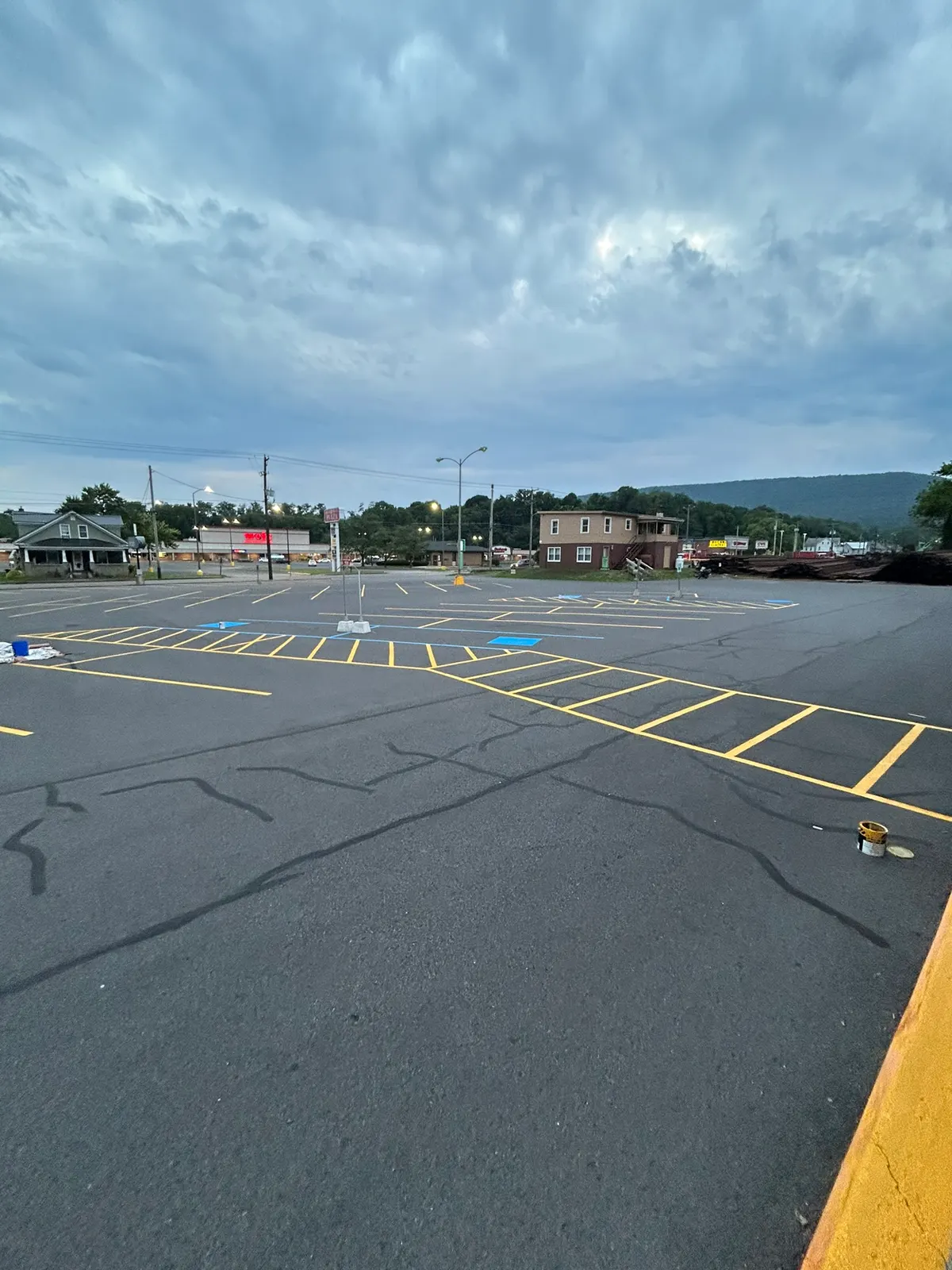
The work happened over two visits in the summer of 2024. In July we re-striped the stall lines and hatched areas across the lot. In August we came back for the accessible stall, the access aisle and the painted curb along the storefront. Splitting it that way kept each visit to a manageable closure for the tenants.
The lot before we started
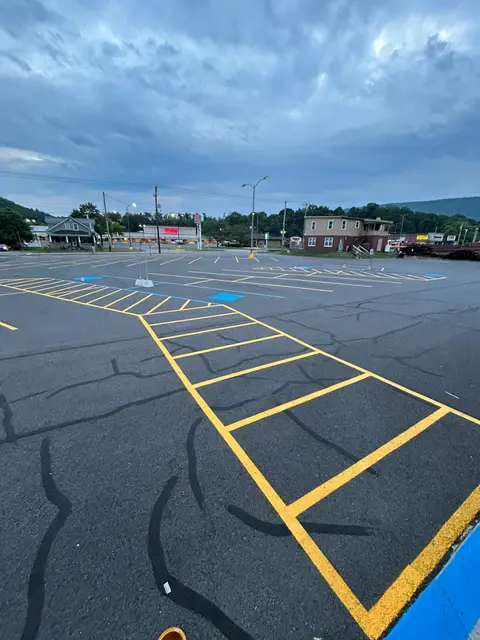
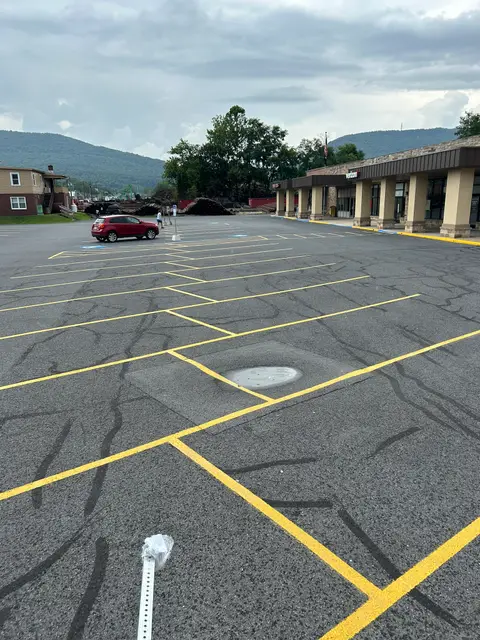
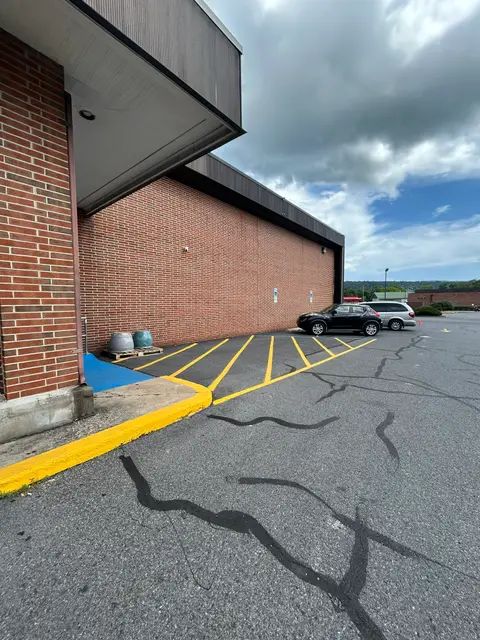
A plaza lot like this takes a beating. Delivery trucks, shopping carts, snow plows and constant turning traffic wear the lines off faster than a quiet office lot. By the time we arrived, the old yellow lines were faint across most of the lot and gone in the drive aisles. The asphalt had long cracks running through it, which had been sealed with hot rubber. You can see the black sealed cracks under the new yellow lines in the photos. That is the right order of work: cracks first, so water cannot get in, then paint on top.
Re-striping over faded lines is faster than laying out a new lot because the layout already exists. But it is not just tracing. We check the old layout before we paint over it. Lines that were painted by eye on a previous visit drift, stall widths vary, and hatched areas end up with uneven spacing. We measured, corrected what needed correcting, and painted the lot so that every row matched.
Yellow lines on a big open lot
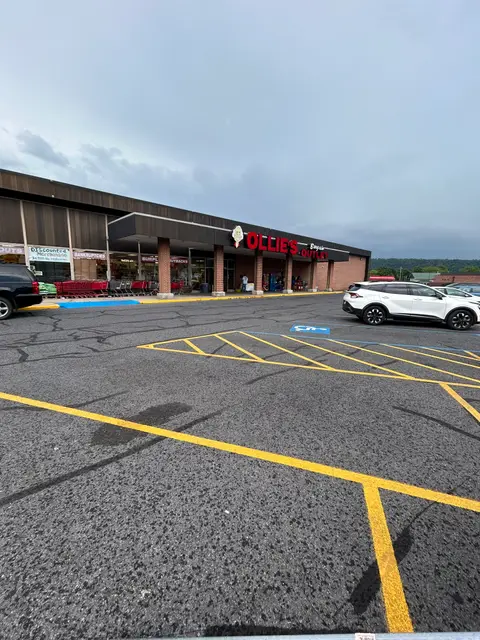
Yellow is the plaza's standard, and it shows up well on weathered grey asphalt. The stall lines were painted at a consistent width with clean starts and stops at the ends. The angled stalls near one of the storefronts were laid out so the angles matched row to row.
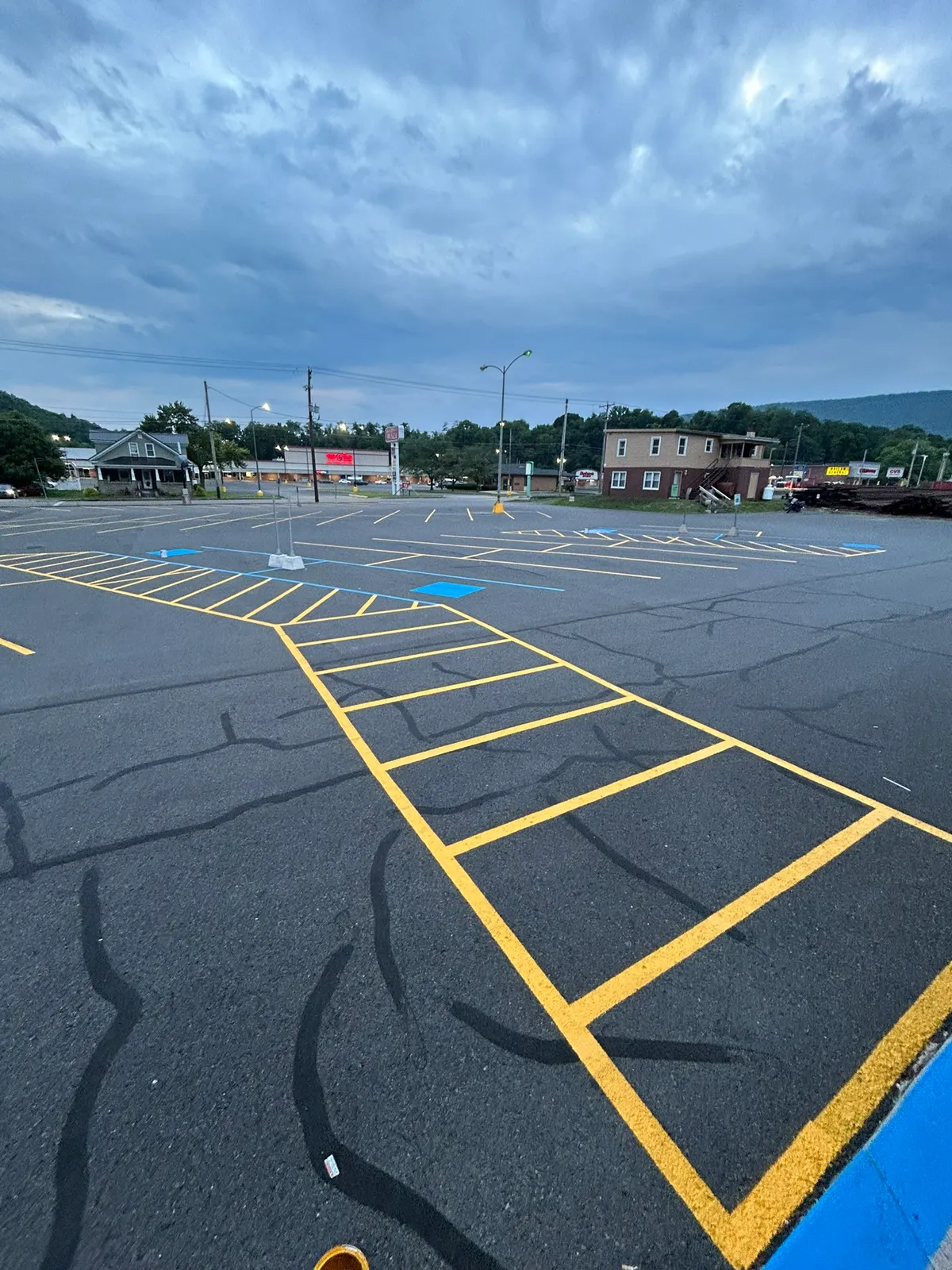
The hatched areas, the diagonal striping that keeps cars out of a zone, are where sloppy work shows most. Each diagonal has to be evenly spaced and run at the same angle. We snapped chalk for the outline and the diagonals before painting, so the hatching came out uniform across the lot.
The August visit: ADA stall, aisle and curb
The second visit was about accessibility and the storefront.
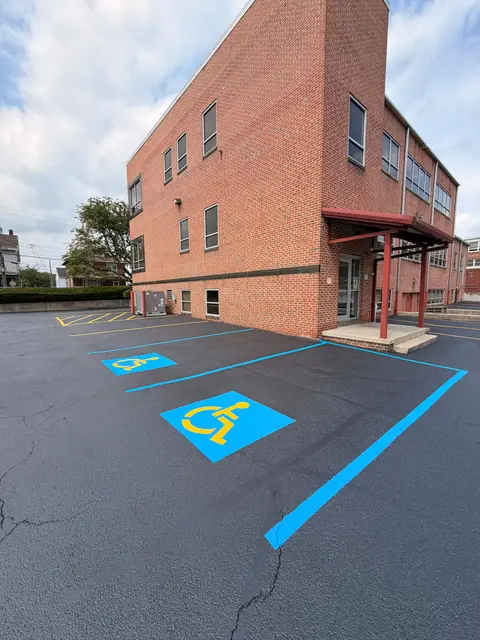
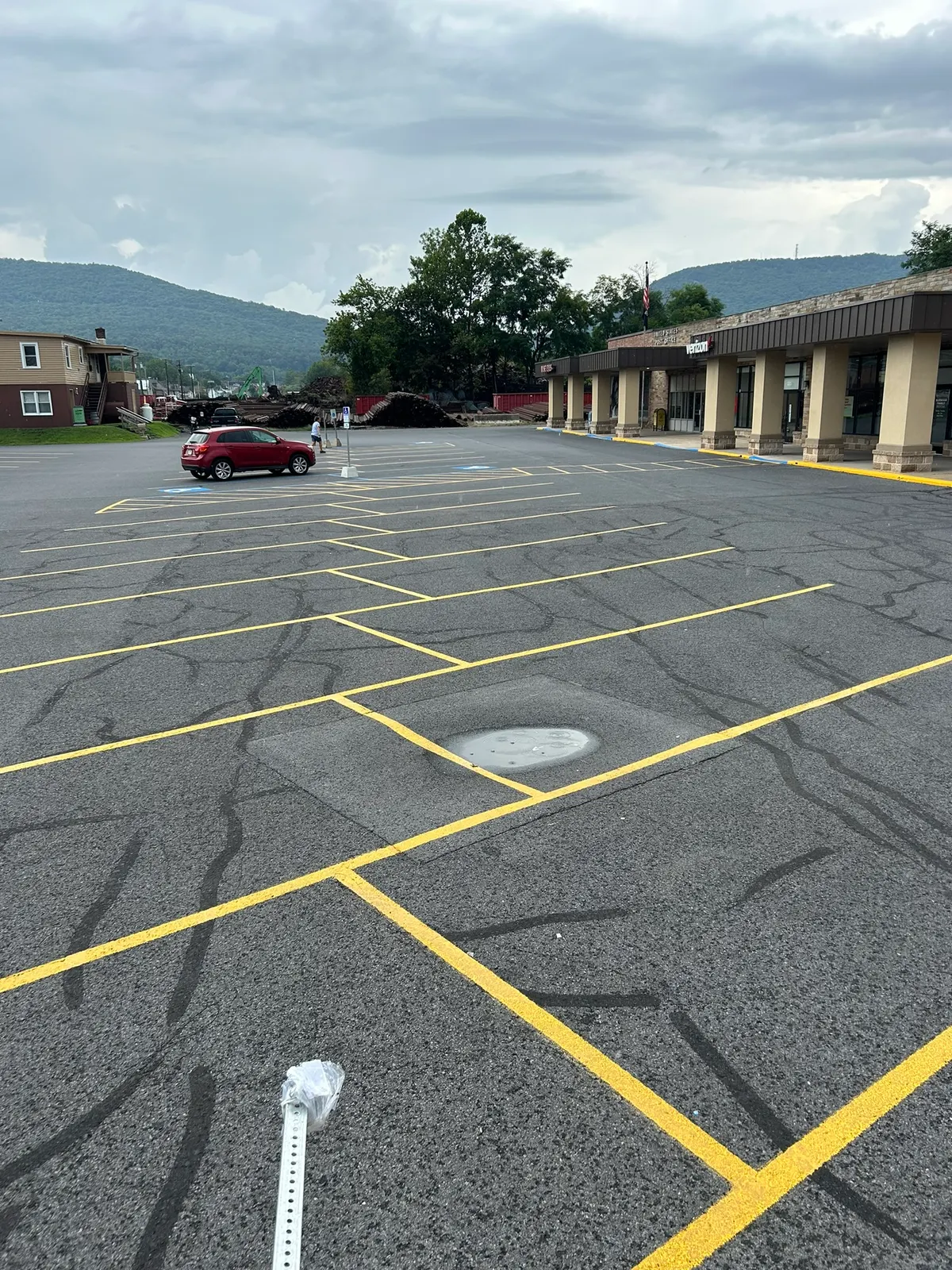
The accessible stall got a full blue background with the white symbol of access painted in the center of the stall, not just a symbol floating in the corner. Beside it, the access aisle was outlined and hatched so nobody parks in it. The aisle is the part people most often ignore, and it is the part a person using a wheelchair or a van lift actually needs. We sized the stall and aisle to the current ADA standards and set the symbol square to the stall lines.
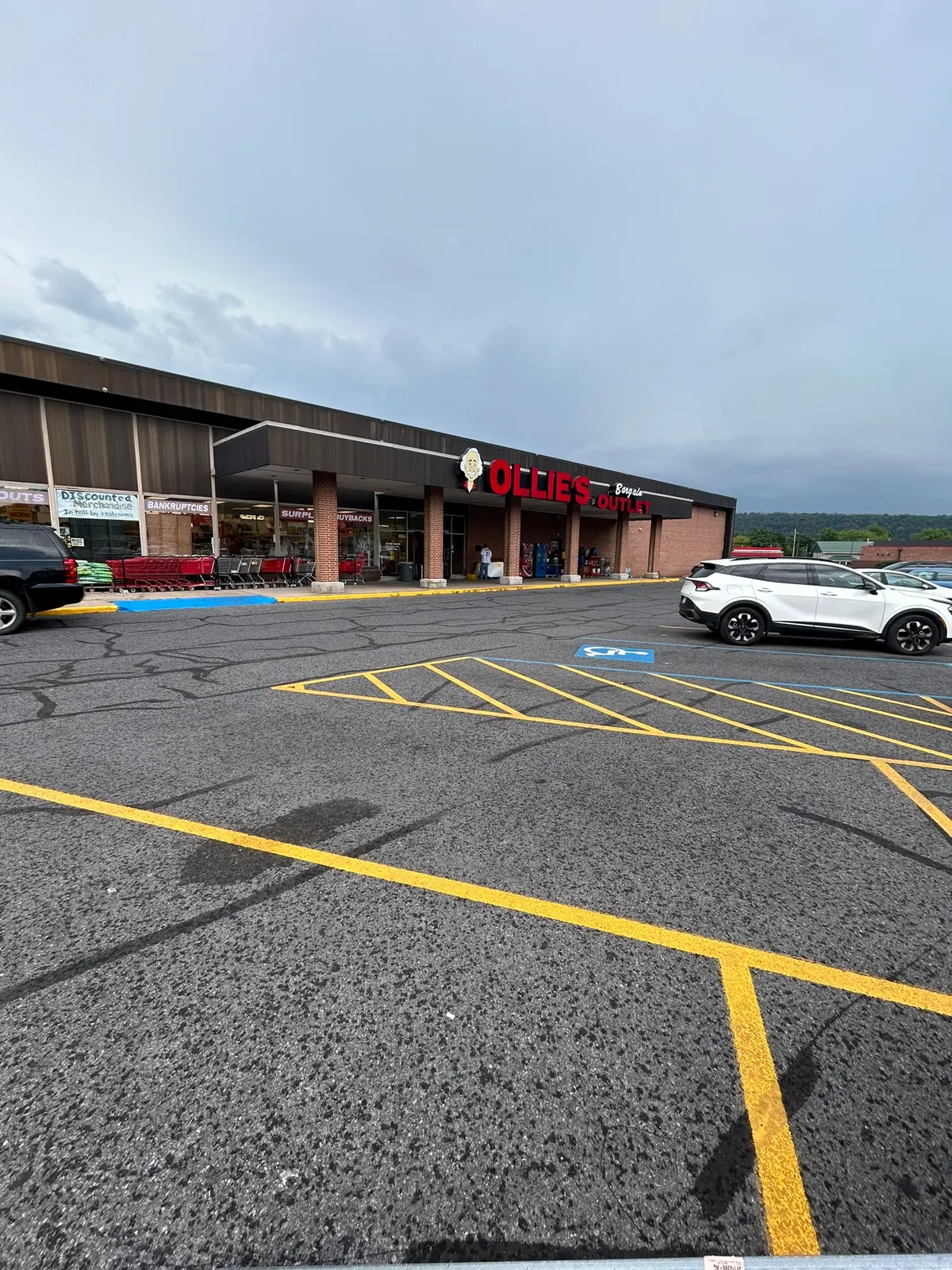
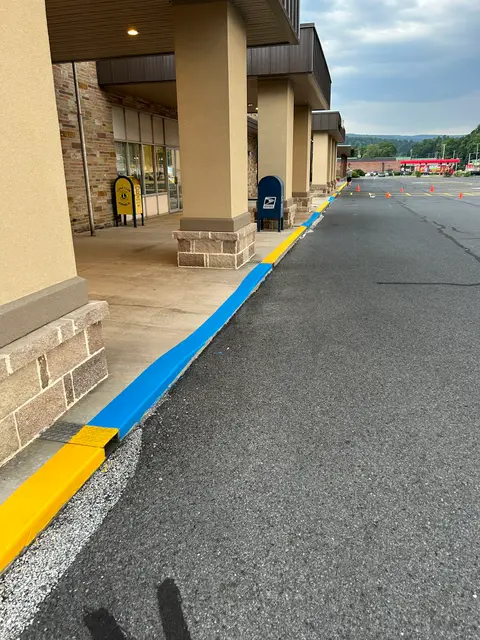
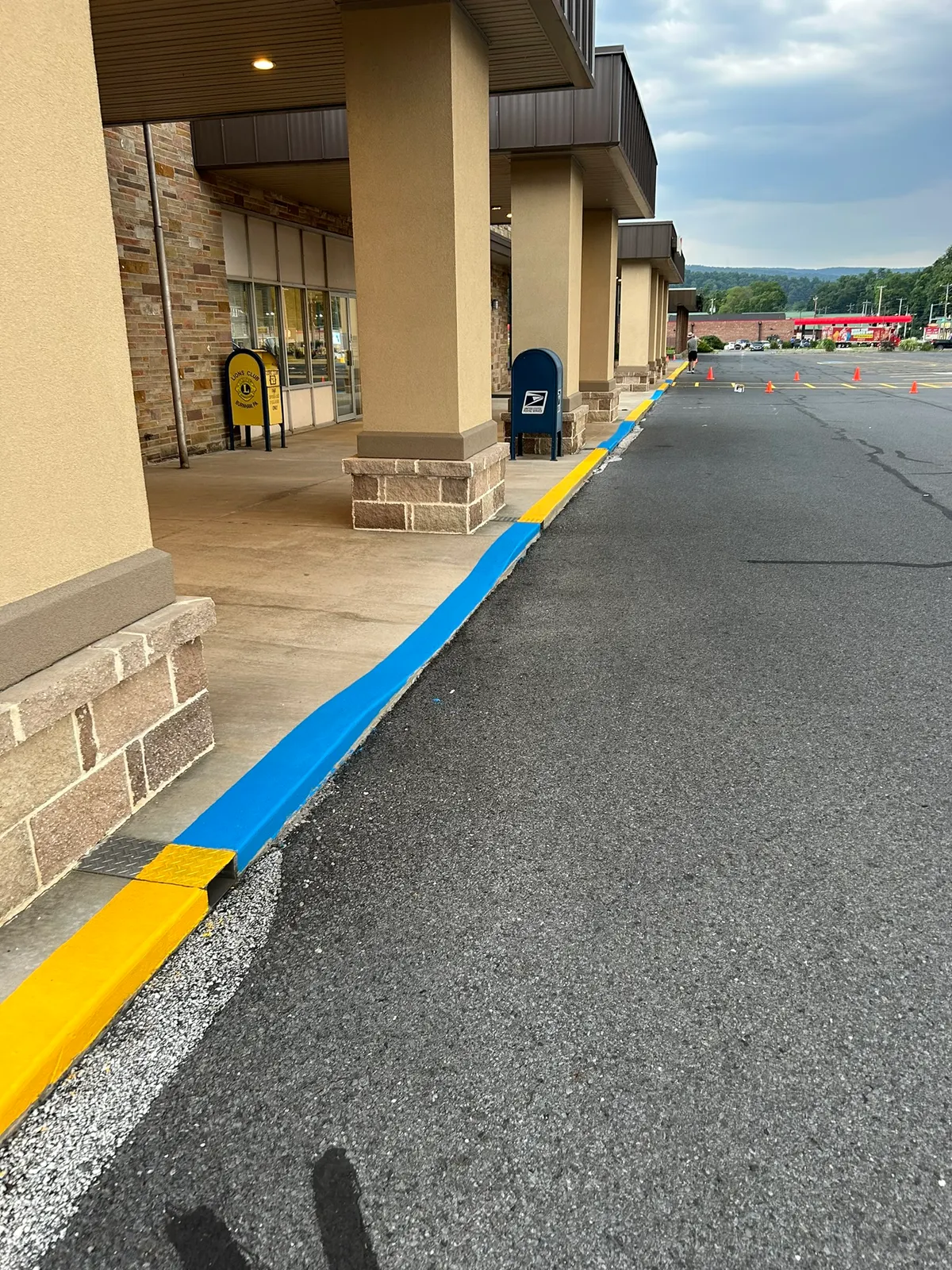
Along the storefront, we painted the curb. The curb face got a yellow band along the main run, and the section at the accessible entrance got a blue band to match the stall and show where the accessible route meets the sidewalk. A painted curb does two things: it makes the step visible to people walking in, and it tells drivers where they are not supposed to pull up.
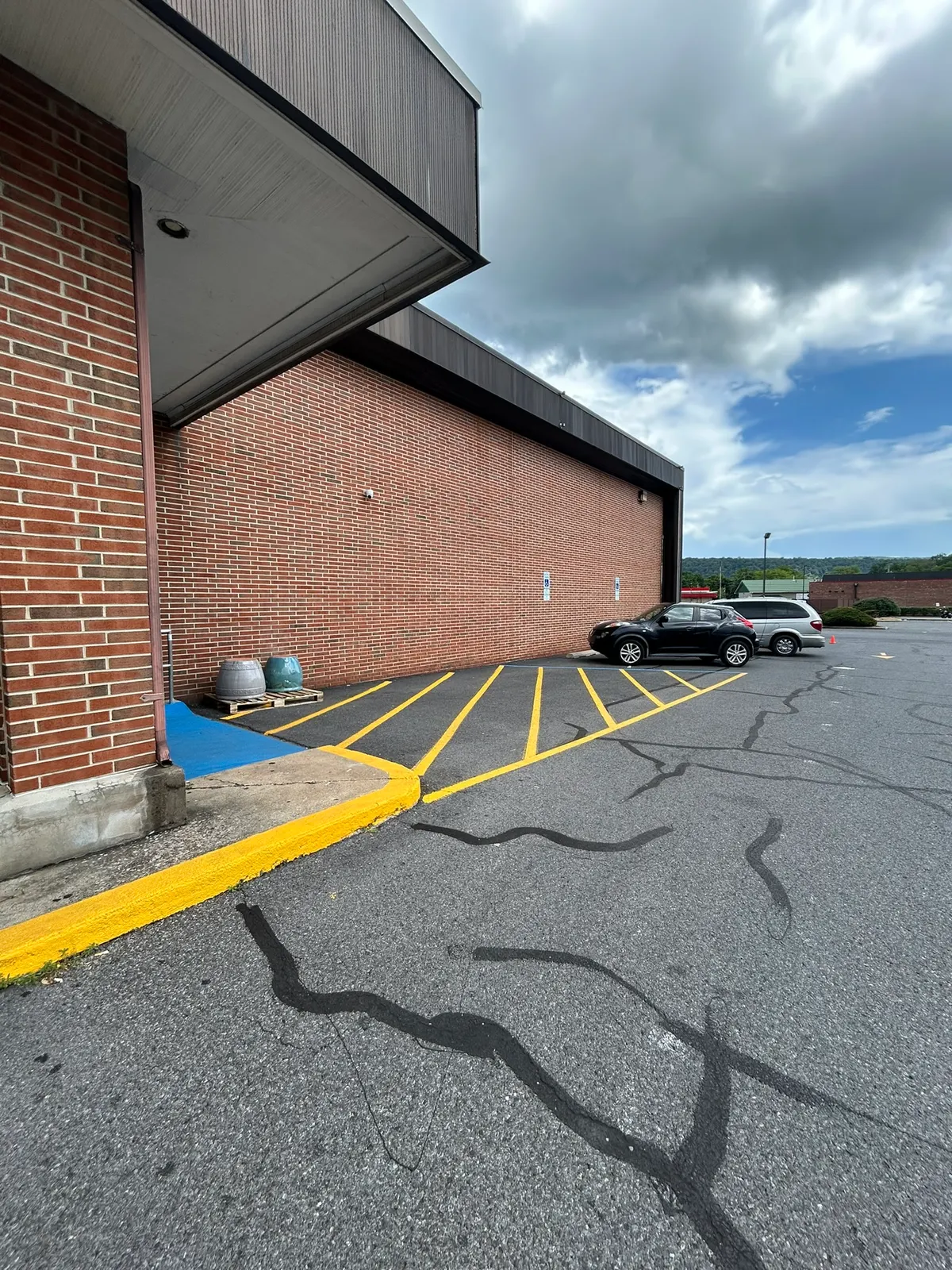
At the end of the building, by the brick wall, another access aisle was hatched in yellow so the accessible route from the stall to the sidewalk stays clear.
Keeping the plaza open
Nobody closes a shopping plaza for painting. We worked in sections, coning off a few rows at a time, painting, letting the paint dry, and moving on. Traffic paint is dry to the touch in about an hour in summer weather, so a section was back in use not long after we left it. Customers parked in the open rows while we worked in the closed ones.
Starting early is the other half of the plan. The lot is emptiest first thing in the morning, before the stores open, so that is when we paint the busiest areas in front of the doors.
Why the two visit approach worked
Splitting the job into two visits did a few things for the plaza:
- The lot got its lines back quickly in July, when it was busiest and the old lines were the most worn.
- The accessibility work in August could be done carefully, with time to lay out the stall and aisle to the standard rather than squeezing it into the end of a long day.
- Each closure was short, so tenants were not dealing with a full day of cones.
For property managers, the lesson is that a big lot does not have to be an all or nothing job. Re-striping and ADA work can be scheduled as separate visits, and the ADA work in particular deserves its own attention.
About travelling for commercial work
Our day to day work is in Lancaster County and the towns around it. For a commercial lot this size we will go farther, because the job makes the trip worthwhile for everyone. The crew, the equipment and the paint are the same whether the lot is in Lititz or in Mifflin County. If you manage a plaza, a chain of stores or a group of properties in central Pennsylvania, send us the addresses and we will tell you whether we can take it on.
How we check a plaza layout before painting
Re-striping is the time to catch layout problems, because fixing them costs nothing more than a little chalk. On a plaza lot we check four things.
Stall width. Standard stalls on a retail lot are usually around nine feet wide. Over the years, crews painting by eye let stalls drift narrower in some rows and wider in others. We measure a few stalls in each row and bring them back to the same width.
Aisle width. Two way drive aisles need room for two cars to pass and for a car to back out of a stall. If stalls have crept into the aisle over several repaints, the aisle gets tight and bumpers get scraped. We measure the aisles too.
Accessible stall count. The number of accessible stalls depends on the total number of stalls in the lot, under the current ADA standards:
| Total stalls in the lot | Accessible stalls required |
|---|---|
| 1 to 25 | 1 |
| 26 to 50 | 2 |
| 51 to 75 | 3 |
| 76 to 100 | 4 |
| 101 to 150 | 5 |
| 151 to 200 | 6 |
At least one of every six accessible stalls has to be van accessible, with a wider stall or a wider aisle. We count the lot and compare it with the table before we paint a single stall.
Traffic flow. Arrows, stop bars and the direction of angled stalls need to agree with each other. A lot where the arrows say one way and the angled stalls say another is confusing and a little dangerous.
What this means for your plaza
If you manage a shopping center or a strip plaza, here is what to take from this job.
- Lines wear fastest in front of the doors and in the drive aisles. Those are the spots to watch, and the first spots we paint in the morning while the lot is empty.
- Crack sealing goes before paint. The sealed cracks on this lot were the right call; paint over an open crack just highlights the crack.
- Accessible stalls are not a stencil. They are a measured stall, a measured aisle, a symbol and a sign, and they carry legal weight that ordinary stall lines do not.
- A big lot can be done in phases. There is no need to close the whole plaza for a day.
- Distance is less of a problem than people think. For a full day of commercial striping, we travel.
Questions plaza managers ask
How long does re-striping a plaza take?
A lot this size is a full day for a crew, sometimes split across two visits as we did here. Each coned section reopens within about an hour of being painted.
Do we need to tell tenants?
Yes, a short notice a few days ahead. Tenants need to know which rows will be coned and when, and delivery drivers need to be routed around the work. Our checklist for getting a property ready for striping day is in how to prepare for sealcoating or striping day.
Yellow or white lines?
Either works. Yellow shows well on faded grey asphalt and is common on older plazas. White gives the strongest contrast on freshly sealcoated black asphalt. We match what the property already uses unless you want to change it.
How often should a plaza be re-striped?
Every one to two years for most retail lots, with the busiest rows sometimes needing a yearly touch up. The guide to how often to re-stripe a parking lot goes into the signs to look for.
Details
- Retail plaza parking lot in Burnham, PA, Mifflin County, about two hours west of Lancaster.
- July 2024: full re-stripe of stall lines and hatched areas in yellow over a lot with sealed cracks.
- August 2024: blue ADA stall with the symbol of access, hatched access aisles, yellow and blue painted storefront curb.
- Work done in coned sections, starting early, with the plaza open throughout.
Lancaster Lines & Asphalt re-stripes lots of every size and keeps ADA stalls to the current standard. See the parking lot striping page and the ADA markings page for what is included, or request a free quote.